
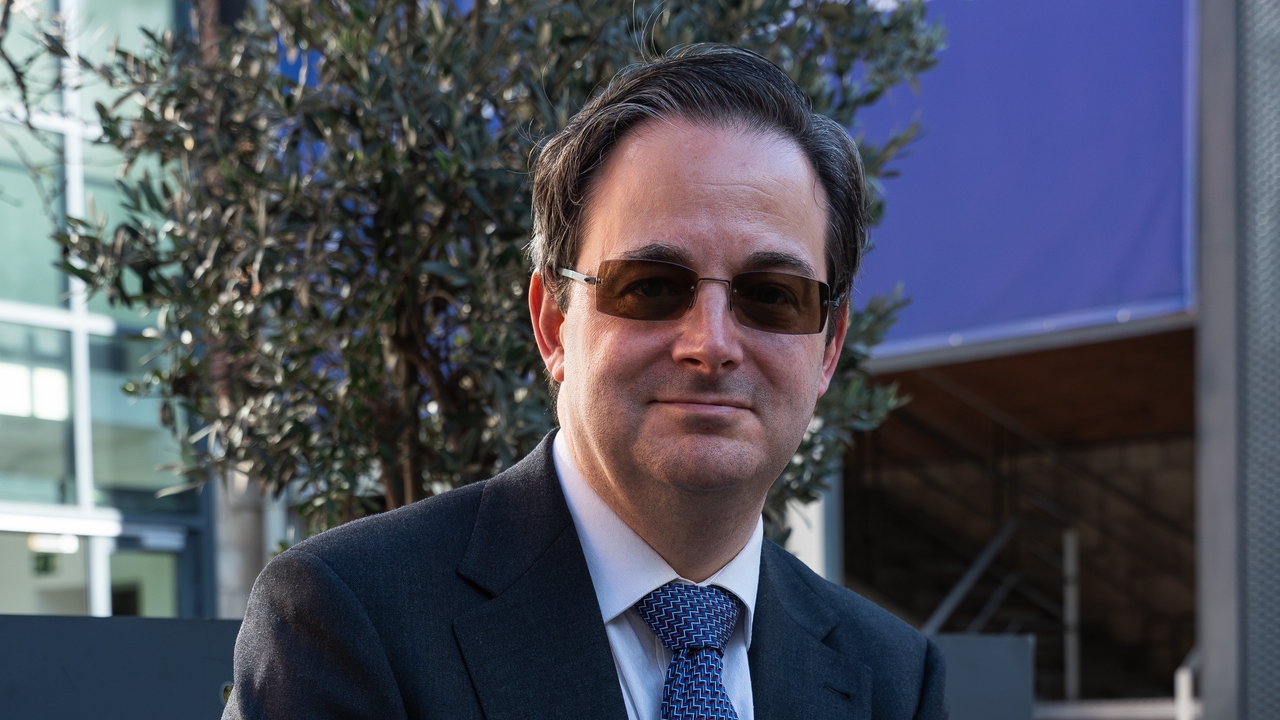
Andy Mayer is a well-known Energy analyst at the Institute of Economic Affairs (a British liberal think tank), who often refers to the so-called energy trilemma, “security of supply, price affordability and decarbonization”, when analyzing the European green transition. Although, as a Briton, he “speaks cautiously” about the European Union, he does not hesitate to point out its mistakes in energy policy.
What have been Europe’s big mistakes?
Mainly, it is that, for years, it has been jumping from one conceptual framework to another: first industrial policy, then net zero and now industrial policy again. The problem with the government’s industrial approach is that it does not work at European or national level. It is one thing for institutions to set general priorities, but when they start deciding which technologies should be prioritized, they fall into the same mistakes as central planners throughout history.
Is the energy relationship between the UK and the EU getting closer?
An agreement on the emissions market has just been signed. Ties are strengthening because the United Kingdom has had a bad energy policy. Currently around 10% of energy must be imported, which explains this agreement and other initiatives. More than the EU, our main partner is Norway: we depend on its gas, while the renewable system relies on Chinese solar panels, Danish turbines and other imported components.
Does dependency explain this bad energy policy?
The energy trilemma is based on three objectives: security of supply, affordable prices and decarbonization. “Net zero” was a mere illusion, because it was assumed that a high cost would not be paid. Savings of around £300 per family were promised, but today prices have risen. If the target were abandoned today, the savings would be £5,000 per household over the coming decades. Decarbonization does not save money: it is very expensive for households. These are data from the regulator. In Spain it is still not perceived with the same intensity, but regulators are not clearly warning of these consequences.
Cost consequences?
Yes. Affordability is the most important element of the trilemma, because it is what matters most to voters. Furthermore, it is assumed that there is no supply problem, when the blackout in Spain showed that everything starts there. If supply is not guaranteed, everything else is secondary. The hierarchy should be clear: first security of supply, then prices, and thirdly decarbonization. However, the United Kingdom and many countries have started with decarbonization, have taken some care with prices and have forgotten security of supply.
What do you think of the Spanish nuclear closure?
I don’t know what the Government has not learned from the German experience. I worked at BASF and we saw how production was offshored to China. Shutting down nuclear power and aspiring to depend on Russian gas was political and energy suicide, with enormous consequences, including a war on European soil. When you need stability in the electrical network, you cannot give up technologies that provide it. Spain may have a good renewable mix, but it cannot do without solutions that guarantee stability.
But nuclear also has great costs…
Hinkley Point C is the most expensive building on the planet. In Europe, nuclear is very expensive, although not necessarily in other regions. In the United Kingdom and France, many projects have become more expensive due to excessive regulatory obligations.
Are you talking about security?
Nuclear power is a victim of exaggerations without scientific support. Europe went from the precautionary principle to a zero risk paradigm, which is absurd. Projects whose emissions would be equivalent to eating a banana have been paralyzed. In the United Kingdom regulations are changing. The Fingleton report includes 47 recommendations to reduce time. Today, building a plant takes between 14 and 17 years; in South Korea it takes between 4 and 6. Fingleton’s goal is to reduce it to 8 or 10. It is almost paradoxical that a left-wing government is deregulating nuclear.
Would it also benefit SMRs?
A more flexible regulatory framework makes traditional projects cheaper and accelerates the development of small modular reactors. Its deployment allows economies of scale, which puts downward pressure on prices. The risk is falling into industrial populism.
What is it referring to?
To choose national champions. France ended up rescuing EDF. In the United Kingdom, Rolls-Royce has been favored. As a consumer, what matters to me is the most competitive energy. If the national operator is not the best, there is no reason to privilege it. SMRs are not a single technology, but a way of producing. There are between 75 and 100 companies developing them, with very different technologies. An economist should not decide which will win, but rather allow the market to do so.
But does so much interest in putting kW on the market when demand remains low in Europe make sense?
Demand responds to prices. If these are high, people consume less. If it were for efficiency it would be positive, but if it is because economic growth slows down, it is bad news. You cannot decarbonize by repressing demand with high prices. If we want net zero, we need growth. Only with an investment strategy will there be innovation and new technologies. In short: freedom is growth, and growth is decarbonization.