
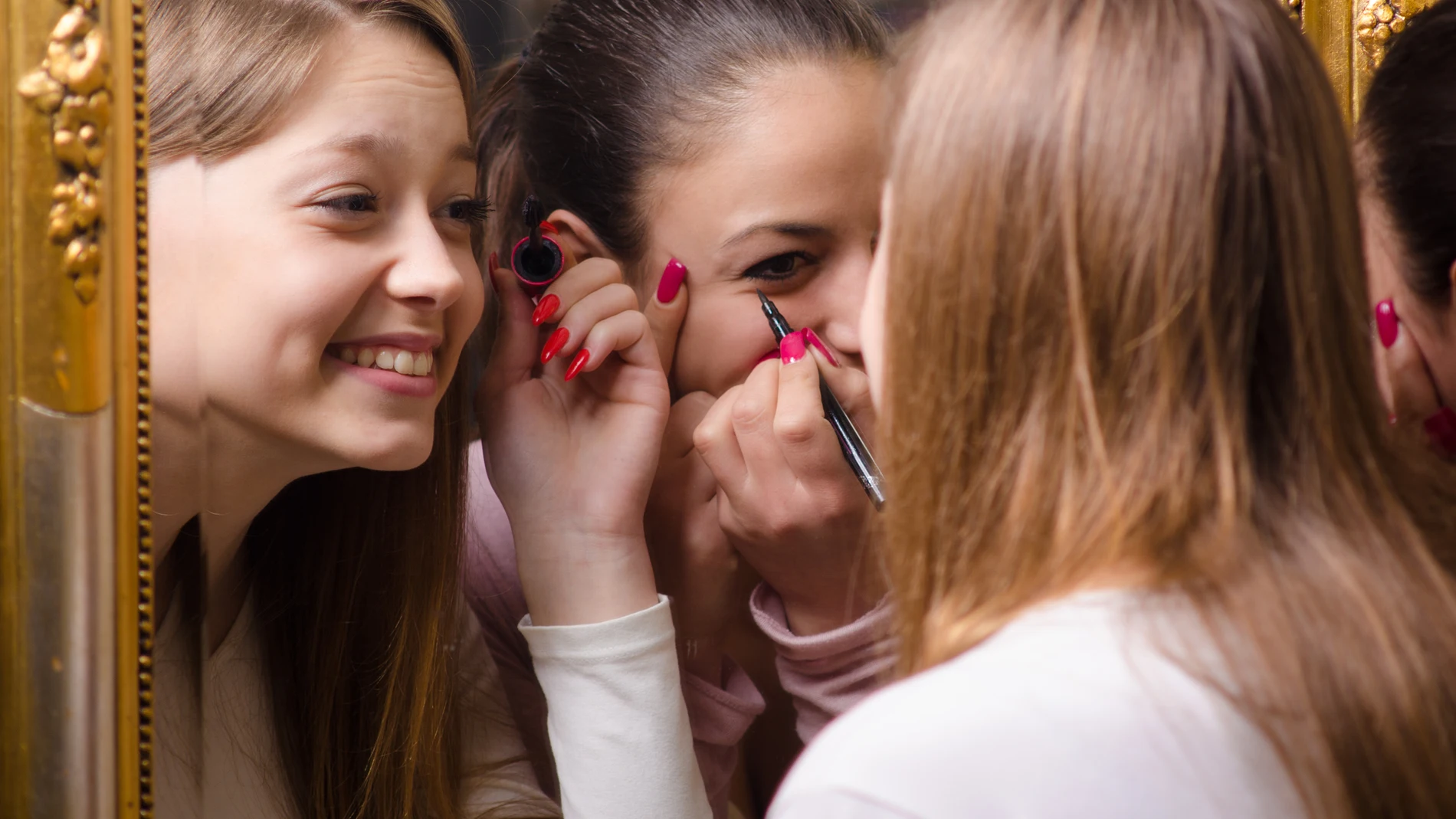
They call it “cosmeticorexia”, a obsession with achieving “perfect” skin at an age early onset leading to almost compulsive use of cosmetic products. The term, coined by dermatologists and academics, focuses on a fashion that is spreading through social networks and that leads increasingly younger girls to maintain very demanding beauty routines that far exceed the classic fight against acne.
The search for skin without imperfections, luminous and even wrinkle-free can compromise skin health and cause irritation and dermatitis due to the use of products not suitable for girls and adolescents. The Italian dermatologist Giovanni Damiani was one of the first to sound the alarm with a text published in the journal Dermatologic Therapy. Claims to have detected an increase in cases of dermatitis in girls between 8 and 16 years old. Many of them used products with active ingredients, such as retinol, marketed as treatments against imperfections.
Parabens, phthalates, fragrances, retinoids, AHA and BHA exfoliants, sulfates or formaldehyde releasers They are hidden in many of these products, which are not intended for children’s or adolescent skin and which, however, are presented with designs in pastel colors or childish shapes to attract minors. Are covert marketing strategies used to encourage purchases among this audience? This is what the Italian Competition Authority is trying to elucidate, which has kept two investigations open since spring into the beauty company LVMH, owner of Sephora and Benefit, to analyze whether the firm promotes addiction to cosmetics.
«Sephora Kids»
In the United States, the term “Sephora Kids” was coined to refer to girls and preteens who went to shopping centers in search of luxury cosmetics, influenced by social networks, and now the trend has spread to Europe. In 2024, the Danish Consumer Council evaluated 62 face creams purchased in stores and on websites. When reviewing the lists of declared ingredients, their researchers found that in 15 of them there were perfumes or plant extracts that may be associated with allergies and 12 contained substances suspected of acting as endocrine disruptors or affecting fertility.
Now, a new scientific study warns about the possible hormonal risks associated with the excessive use of cosmetics among girls and adolescents. Published in The Journal of Pediatric Pharmacology and Therapeutics, it warns that marketing on social networks is favoring the increase in the use, by pre-adolescent and adolescent girls, of cosmetics aimed at adult women.
According to the study, this can expose them to endocrine disruptors, allergens and possible carcinogens. “Girls and adolescents have thinner and more permeable skin, which allows greater absorption of harmful substances, such as endocrine disruptors, which can alter their hormonal balance and modify their development and reproductive health,” the authors point out. Among the possible effects, they mention alterations in the timing of puberty, menstrual irregularities or fertility problems, also in boys since it alters the quality of the sperm. On the other hand, Some fragrances and preservatives can cause allergic reactions or irritations, and lead to contact dermatitis and acne exacerbation. Researchers call for stricter regulation.
Carlos de Prada, responsible for the initiative Home without Toxics, denounces that “neither in the United States, where the study was published, nor in the EU is there a regulation that adequately protects minors against these risks.”. According to him, “the EU has recently decided not only not to improve general cosmetics regulations, but even to weaken them. It has refused to adequately restrict in these products, in a general way, the presence of any substance that is an endocrine disruptor and not just a few very specific ones, as is the case until now. All this, despite the fact that endocrine disruptors are, precisely, one of the main health concerns on this issue, especially in the case of girls.
Home without Toxics points out that, despite scientific warnings, the text of the omnibus package is expected to be definitively approved in October, which, according to the organization, has weakened some aspects of the European regulation of cosmetics.
Psychological damage
This is another facet alluded to in the study, which highlights that adolescent girls’ insecurity regarding their image can often be exploited to promote the use of cosmetics that, supposedly, would correct certain “defects.” “In addition to the mental pollution that being hooked on social networks means for many girls and adolescents, there is also the unnecessary chemical pollution to which they may be exposed as a result,” says de Prada.