
The transition towards renewable sources takes center stage given the need to reduce emissions and guarantee security of supply. In this scenario, biomethane emerges as a strategic solution to accelerate compliance with climate objectives and strengthen territorial cohesion throughout the European Union.
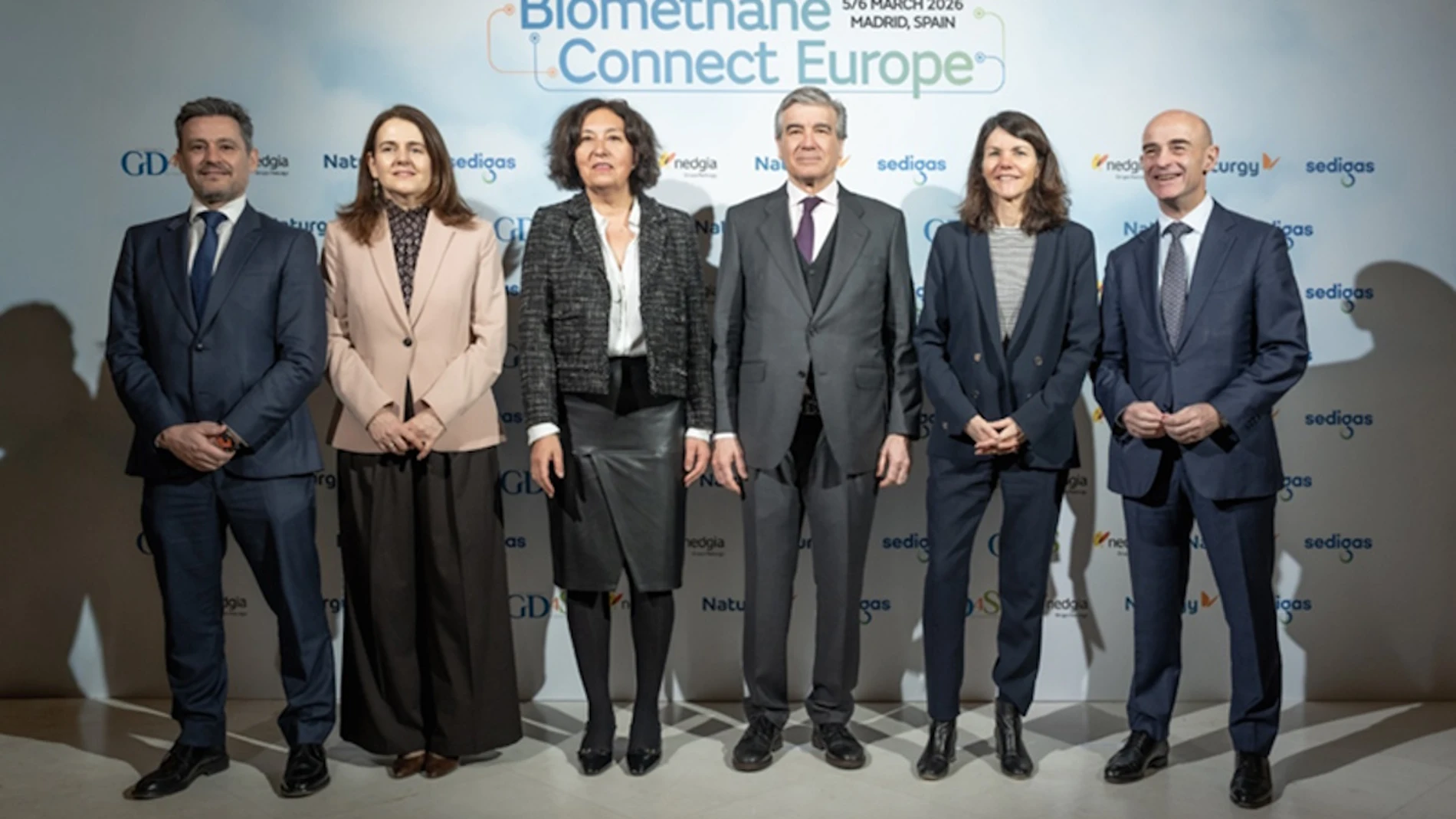
This has been one of the main conclusions of Biomethane Connect Europe 2026, the main European forum dedicated to renewable gases, organized in Madrid by the association of European gas distributors, Gas Distributors for Sustainability (GD4S), with the support of Nedgia, the gas distributor in Spain of the Naturgy group.
The participants in the congress, which brought together prominent institutional and business representatives to analyze the role of biomethane in the energy transition, have pointed out the urgency of accelerating both the development of this renewable gas to advance decarbonization, and of materializing its effective execution with stable regulatory frameworks, clear demand signals and greater administrative agility that allows for the acceleration of investments and projects on the ground.
Advantages and challenges
Biomethane, produced from organic and agro-industrial waste, offers a clean and circular alternative that contributes to the reduction of CO₂ emissions. Its integration into existing gas networks allows an efficient transition towards more sustainable energy models, facilitating the decarbonization of sectors that are difficult to electrify and boosting the rural economy. However, the sector faces obstacles such as the lack of stable regulatory frameworks, the agility in granting permits and the need to encourage demand.
During the meeting, Francisco Reynés, president of Naturgy, highlighted the importance of accelerating the production of biomethane to reinforce energy security and reduce dependence on imported fossil fuels.
“We cannot advance in decarbonization without guaranteeing security of supply or without taking into account the impact on industry and homes. Today more than ever there is a pressing need to ensure security of supply in our energy strategies,” he explained. For Reynés, “biomethane is an immediate opportunity for Europe: it is a mature technology, competitive in costs and supported by robust and resilient gas infrastructures that allow us to advance in energy autonomy with resources produced at home.”
For its part, Laurence Poirier-Dietz, general director of the association of European gas distributors (GD4S), underlined the role of gas distribution networks as enablers of the integration of biomethane into European energy systems. From a regulatory point of view, Rocío Prieto, Director of Energy of the National Commission of Markets and Competition (CNMC)called for greater administrative agility and regulatory frameworks that provide certainty to investors and promoters. Mechthild Wörsdörfer, Deputy Director General for Energy of the European Commission, He pointed out that biomethane is key to achieving decarbonization objectives and strengthening territorial cohesion. For its part, Enrico Letta, former Italian Prime Minister and president of the think tank on European competitiveness, He highlighted the need for a common strategy that promotes innovation and investment in renewable technologies.
Competitiveness and decarbonization
The conference was also attended by Mechthild Wörsdörfer, Deputy Director General for Energy of the European Commission, and Enrico Letta, former Prime Minister of Italy, who highlighted the need to combine decarbonization and competitiveness through an efficient and homogeneous development of renewable gases in Europe.
“Biomethane and biogas are essential to simultaneously advance competitiveness, decarbonization and energy security, especially in those sectors that are difficult to electrify,” said Metchild Wörsdörfer. “After the energy crisis, Europe is better prepared, but we need to accelerate the transition with renewable solutions that reduce dependence on imports and protect consumers and industry against the volatility of fossil fuels. Biomethane not only contributes to energy and climate objectives, but also to rural development, the circular economy and European strategic autonomy.”
Enrico Letta, for his part, linked the development of renewable gases with the future of the European Single Market, stressing that “decarbonization must become an engine of competitiveness and strategic autonomy, and not a factor of disadvantage for European industry.”
Biomethane Connect Europe 2026 concluded with a message shared by institutions, industry and regulators, Accelerating the development of biomethane is crucial to advance decarbonization, strengthen energy security and guarantee territorial cohesion in Europe. Overcome regulatory and administrative challenges, along with the use of gas infrastructurewill allow biomethane to be consolidated as one of the pillars of the energy transition and European competitiveness in the coming years.