
Currently, there are many approaches to restore vision in blind people, but almost all of these treatments face obstacles such as electrical interference or lack of long -term efficacy. At the same time, researchers also try Increase the capacity of the human eye to detect other light wavelengths, including near infrared. Now a team of Chinese scientists has managed to kill two birds with a shot.
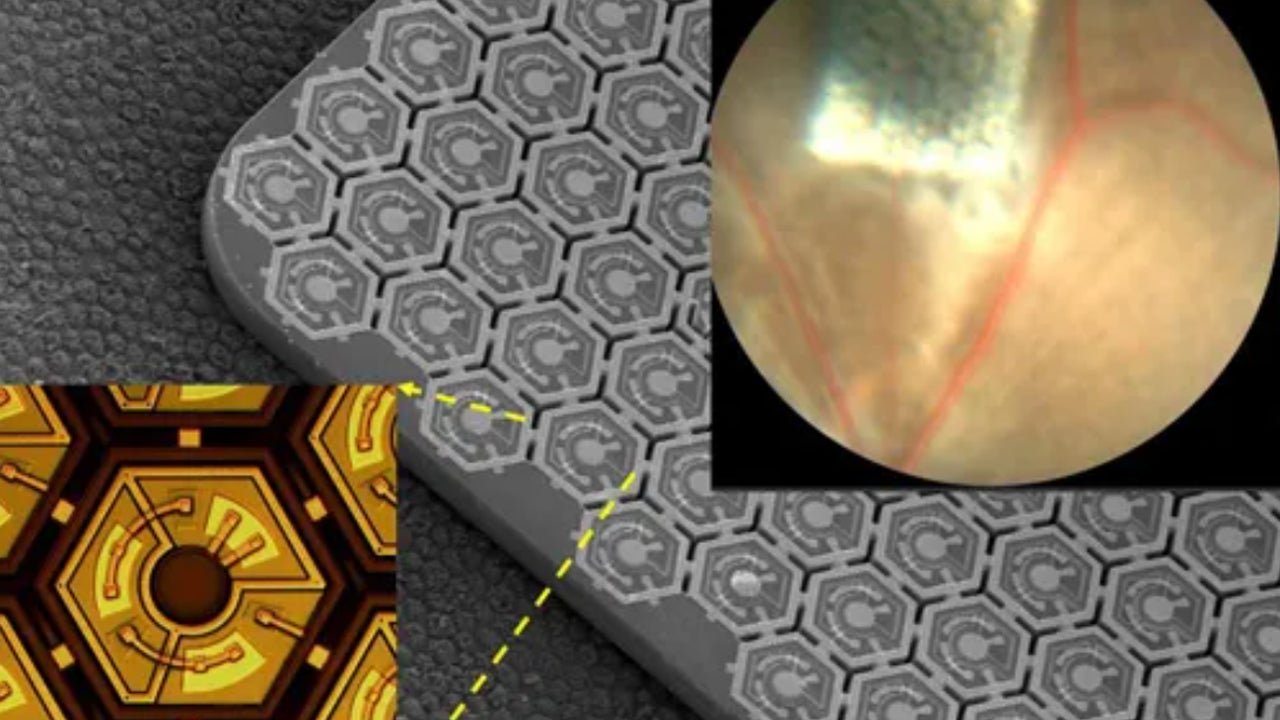
According to a new study, Posted in Sciencescientists led by Peng Zhou, have developed a new prosthesis for the retina, woven with nanocables, who partially restored the vision in blind mice and allowed the detection of infrared light Close in Macacos, an anatomical model even closest to human vision.
The viability and safety of the new technology mark a milestone in the development of artificial vision, which could be invaluable for patients around the world who live with blindness or retina diseases. This technology could be very helpful for vision restoration efforts, since The detection of nearby infrared light would provide a better color contrast and could be useful in dark conditions.
The authors designed a nanoprothesis for the retina based on Telurio, a silver white element, sensitive to light, which is used as a semiconductor. Using Telurio nanocables formed a reticular network, creating an easy to implement architecture that CEfficiently visible and infrared light on electrical signals efficiently. Through electrophysiological images and records, the Zhou team discovered that the implementation of the prosthesis in genetically blind mice restored the reflections in the pupil and caused neuronal activation in the visual cortex.
Blind mice with implants They also obtained better results in pattern recognition tests and could detect LED lights During a behavior test, reaching almost equal performance to that of normal mice. Nanoprosthesis was also safe and biocompatible when implanted in a blind macaque, and increased the sensitivity of the eye to infrared light.
Prosthetic retinal implants are promising to improve vision in blind people and visual disabilities. The interesting thing is that these implants not only showed being biocompatible, they also have another advantage: they do not need an external power supply: neither battery nor wiring.
“This successful animal study feels the basis for future human rehearsals, demonstrating the potential of this prosthesis to restore visible vision and expand increased infrared perception in blind people, offering a safer, more effective and greater range than existing technologies”The authors conclude.