
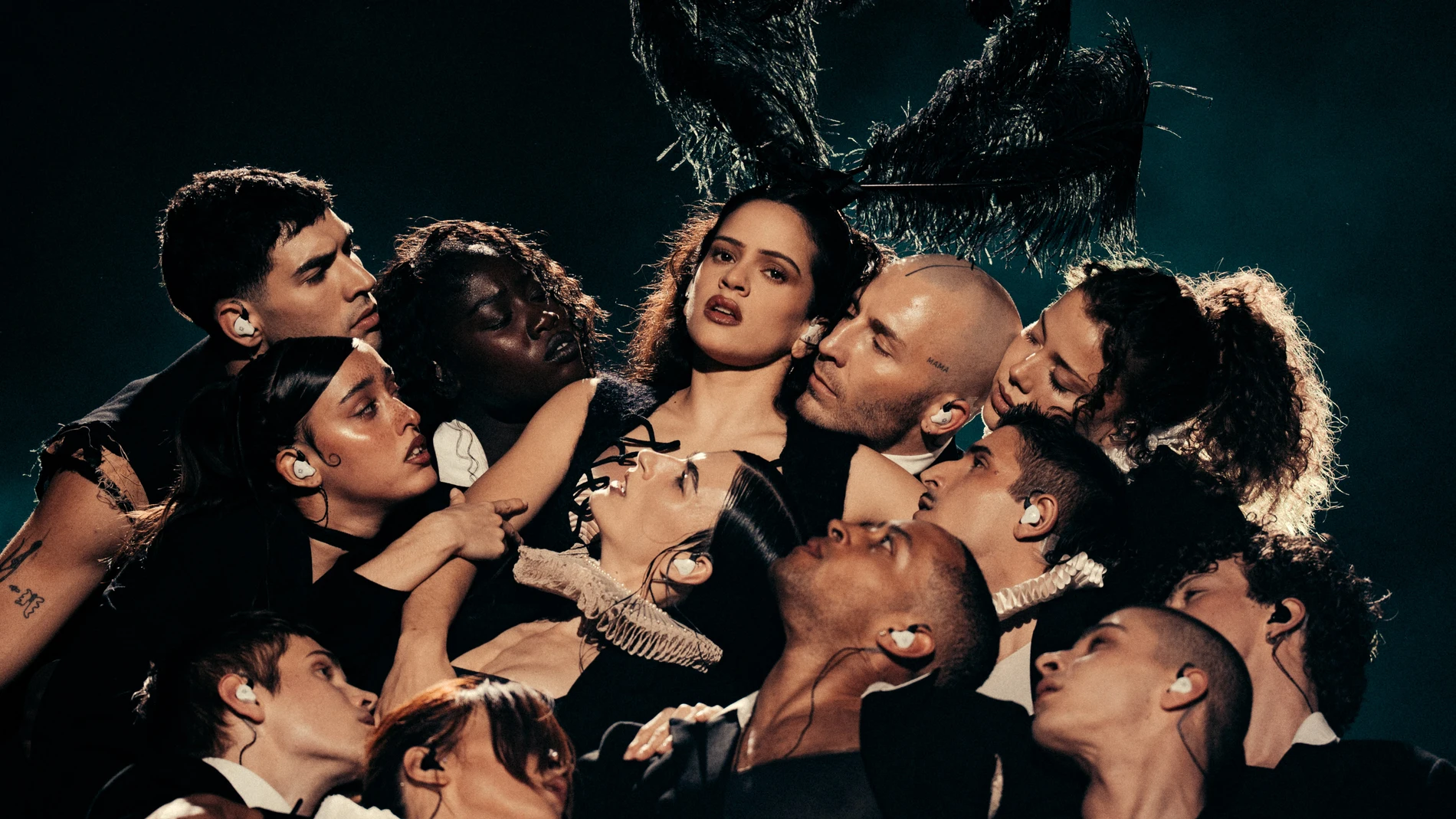
When Rosalía came out on stage at the Movistar Arena in front of almost 15,000 people, practically everyone believed they knew what was going to happen. In these times dominated by social networks, we knew the repertoire exactly, the most spectacular choreographies had already been filmed and the costume changes dissected in photographs ad nauseum. The Catalan artist’s long-awaited and highly anticipated tour had been ruthlessly ruined by thousands of fans who, we hope, were not limited to capturing a pale reflection of her power with their phone cameras. Thus, most of us could think that, knowing the points, joining them to reveal the figure of the events was a piece of cake, perhaps a mere shortcut to the spectacle. Well, whoever thought that way was completely wrong. Because, paradoxically, if something was demonstrated (again) last night, in the Catalan artist’s first stop in Madrid and the first of her eight nights in Spain, it is that Rosalía She is not only a tremendous performer, she is a medium capable of subduing with her energy and a torrent of emotion. to those who were there to contemplate a spiritual pop journey. In the middle of Holy Week, the capital processions to the Movistar Arena, where an immense botafumeiro with strobe lights even swung: consecrated techno.
In the minutes before his appearance, a striking audience massively dressed in heavenly white, as part of a secret cult, enjoyed Vivaldi and various symphonies with piped music. Even Luminous saint’s crowns could be seen among the public. The performance needed to be completed by his faithful to make complete sense. Since the beginning of her career, Rosalía understands music as a conceptual impulse, a performative act that expresses itself, layer upon layer, with all its ambition. There is a concern, a theme, in the background. On it, a form is built, a sound that seeks answers to the first question from different tones and vibrations. Finally, things must be experienced live with a staging that enhances the message. Thus, in “Lux”, the last and well-known work of the Catalan, to the question of whether there is a God who contemplates us, 15 approaches are proposed, never answers, in their various forms: from bel canto to techno, from bolero to flamenco. Each genre has its temper and tone and the Catalan performs them all like no one else on this planet can. Because that is the third step to heaventhe Gospel according to Rosalía: the live mass, trance and ecstasy. A latest viral controversy says a lot about her only acting qualities: does Rosalía playback? Is it possible to sing like angels and move at the same time as if possessed by some spirit? The answer is yes, although it is difficult to believe it. And this places us on the threshold of another issue: dancing, that act reviled by those who think about music instead of feeling it. There are many who see a weakness in those perfect choreographies. She understands them as the final proof, like the dancers, that death, life, love and God can be expressed with the elbows, the hands and, especially, the hips. Don’t try to think about it or feel it on a phone screen. Rosalía sought promotion at a “rave” and in a perreo she took it to the earth, to the sinful flesh.
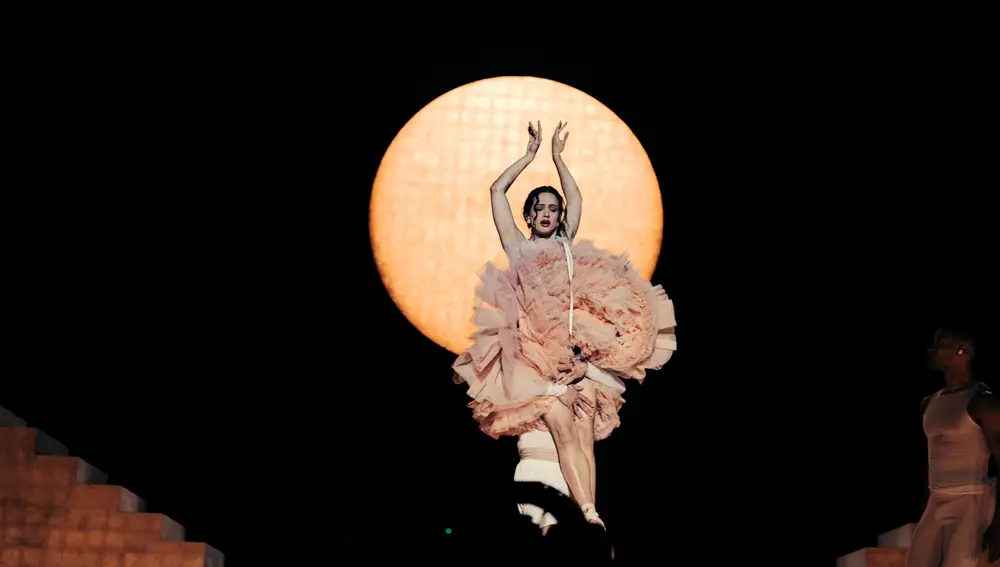
Because, apart from this whole theory, it is difficult to explain the power, the telluric and savage force of its presence. Theirs is an alien magnetism, a power that tears the air. Last night was an excessive, perfect spectacle. Like watching twenty season finale episodes of an HBO blockbuster. Like an AK 47 in the silence of Antarctica. Rosalía stuck to the established script because hers is not a concert, it is a manifesto. He emerged from a wooden box, like a wind-up music box, in front of a giant canvas-like curtain. She wore a white tutu that recalled an impressionist ballerina, a Degas figure, in all its existential lightness. And he advanced “en pointe” on the pianissimo to «Sex, violence and tires»: “Who could live between the two / first love the world and then love God,” he recited like the first step of a ladder to heaven amidst thunderous applause. Then it gave way to one of the jewels of the work, “Reliquia”, in which he takes a vital and mundane tour of the scenes of his life, some of blinding beauty, others of unbearable tedium, of a life that moves at 200 kilometers per hour in his early thirties. Both pieces, of classical sobriety, play with the museum, with the canonical, but are unleashed in the present, after erasing the borders with pop. She is the one who makes the artistic decisions, she is her own producer, her deus ex machina. He explores the paths of holiness but does not obey anyone’s dictates, ironically. In “Divinize”, for example, she experiences an almost erotic passion, like a modern Saint Teresa.
“I’m very happy to be here. Last week I was in a bit of poor health, but I’m better. I love being back. I’ve been coming for more than a decade and it’s a city that I love very much. I came to sing at Casa Patas and I felt the duende like nowhere else,” she said through tears. “The twists and turns that life takes,” he stammered, and began to blow his nose with that disarming naturalness. “Do I have my hair in place, yes or no?” he said, changing gears with a big flat. And “Mio Cristo piange diamanti” started with eyes shining with tears like two stars. It was a supernatural performance, as the sopranos would have liked in all their lyrical and icy perfection. By the way, have you seen many performers cry at the Teatro Real? Rosalía is pure temperament, a wounded horse crossing a plain.
A museum concert
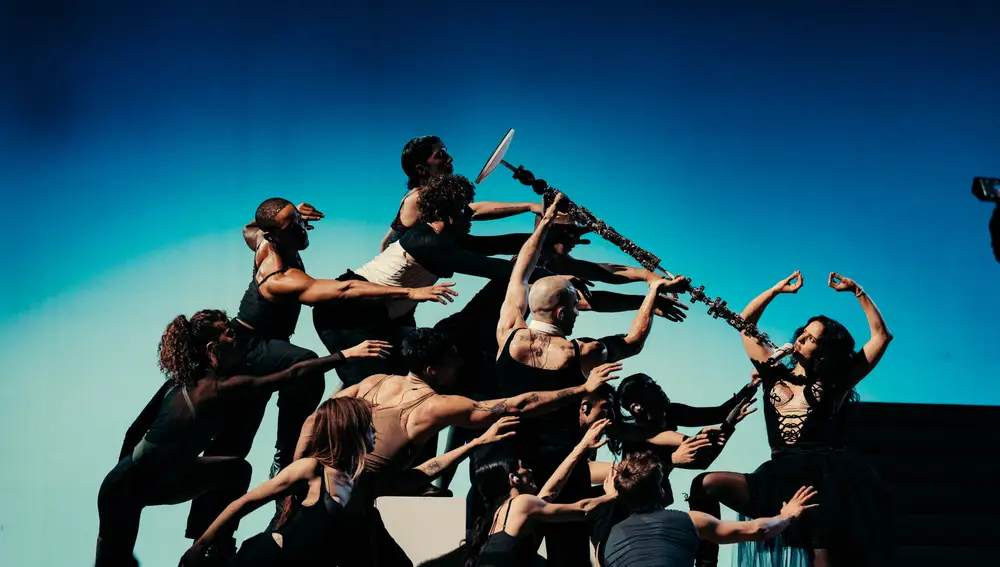
“Berghain” (remix) revealed Rosalía’s wild face as if we hadn’t seen her bleeding from her side like a martyr three minutes ago. He finished and she was breathing as if she had just committed murder. “Madrid! How are we doing? Who has the energy to keep dancing? Well, let’s go.” “Saoko” arrived and she transformed into the demon itself, temptation in feminine flesh. Cheeky, in black, brandishing her middle finger at the camera. Through the staging, the work acquires a side that does not appear on the album: art and painting as references for the search, as springs to unleash the spirit, as access doors to the sublime. In addition to her transformation into an impressionist dancer, her corps de ballet imitates a second of Goya’s “El Aquelarre”, winks to Picasso and mythology, and at all times the scenery plays with canvases and picture frames, where her face is highlighted as an ephemeral work of art, like a Mona Lisa with a microphone.
By the way, in case the spectacular choreographies – created by the French collective (La) Horde – could mislead the viewer, Rosalía wants the message to get across. Despite the visual accent of the tour, the lyrics are not neglected, the words matter. For this reason, and because he wrote an album in 13 languages, the tour includes, as is done in the opera or theater, some labels with the texts he sings, so that they are recorded in the retinas of the spectators, closing the circle of his visionary work. To Rosalía They have always put buts to it. She sings flamenco but she is not a gypsy, she has great songs but does she make them or does a (male) producer?; Do you do reggaeton? huge “but” in itself. The last of those little arguments was: he sings very well, but there are no live musicians. After having dismantled, one by one, all the adversaries throughout his life, last night he performed with orchestra (Heritage) and conductor included. And pre-recorded bases, obviously, something continues to scandalize those who stayed to live a few decades ago. But there is no one to answer it anymore.
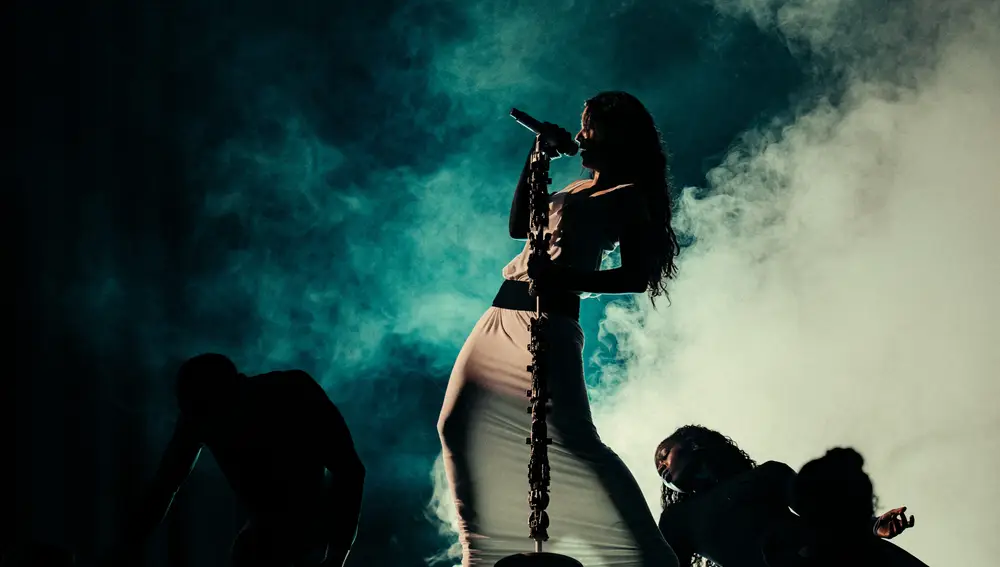
Throughout the four acts of the show, Rosalía explores the operatic and theatrical aspects but also integrates the dance of “Motomami” in the second act, inaugurated by “Berghain.” What has disappeared from the repertoire is his first love, flamenco (with the exception of “El redentor”, from his first work, Los Ángeles). He will return to flamenco because it has never left, it beats, for example, in the background of “Early”but the sound of the dance songs from his third work (such as «Saoko», «Fame» and «La Combi Versace», present on this tour), fit better into the vision of this album. In some way, “Sex, Violence and Tires” refers to the universe of “El mal quer” and “La Perla” could have been another song from “Motomami.” But the flamenco is still there: when he sang “La Rumba del Perdon” with the 20-player orchestra, it sounded as if Las Grecas had plugged into ACDC’s wall of Marshall amps.
He set up a live confessional. He also became interested in a fan in the front row, after she announced that “she has no vices.” Eugenia, that was her name, answered him loudly: “Do you know why you don’t have vices? Because the vice is you.” And everyone burst out laughing. There was even time for covers: that of “Can’t Take My Eyes Of You” by Frankie Valli and even a hint of “Sweet Dreams (Are Made of This)” in the techno euphoria. Because, as we announced, the techno botafumeiro made his stellar appearance in “CUUUuuuute”. In many moments, the concert seemed like a succession of ideas obtained after pronouncing the phrase: “Aren’t there any ovaries…?” “Bizcochito” and “DesphᔓThey turned the Movistar Arena into a bachatodrome. Feet and hips were burning, smiles were immense… Rosalía said: “Madrid, I see that you like mambo. Long live the Dominican mambo and flamenco and all music. I don’t want to leave without first thanking you. I’m enjoying myself tonight and I’m not going to forget this one.” “Robot Bride” and “Focu ‘rann”i” before an epilogue of “Magnolias”, the artist’s funeral. Rosalía was a couple of feet above the ground. Maybe we were too.