
Artificial intelligence needs two things to advance: models capable of learning and responding, and enormous computing power to train them and put them to work. For years, China has had a difficulty with the second. Their companies could develop competitive models, but they depended largely on the most advanced processors from Nvidia, an American company. This dependency is about to become one of the great battlefields of global technology.
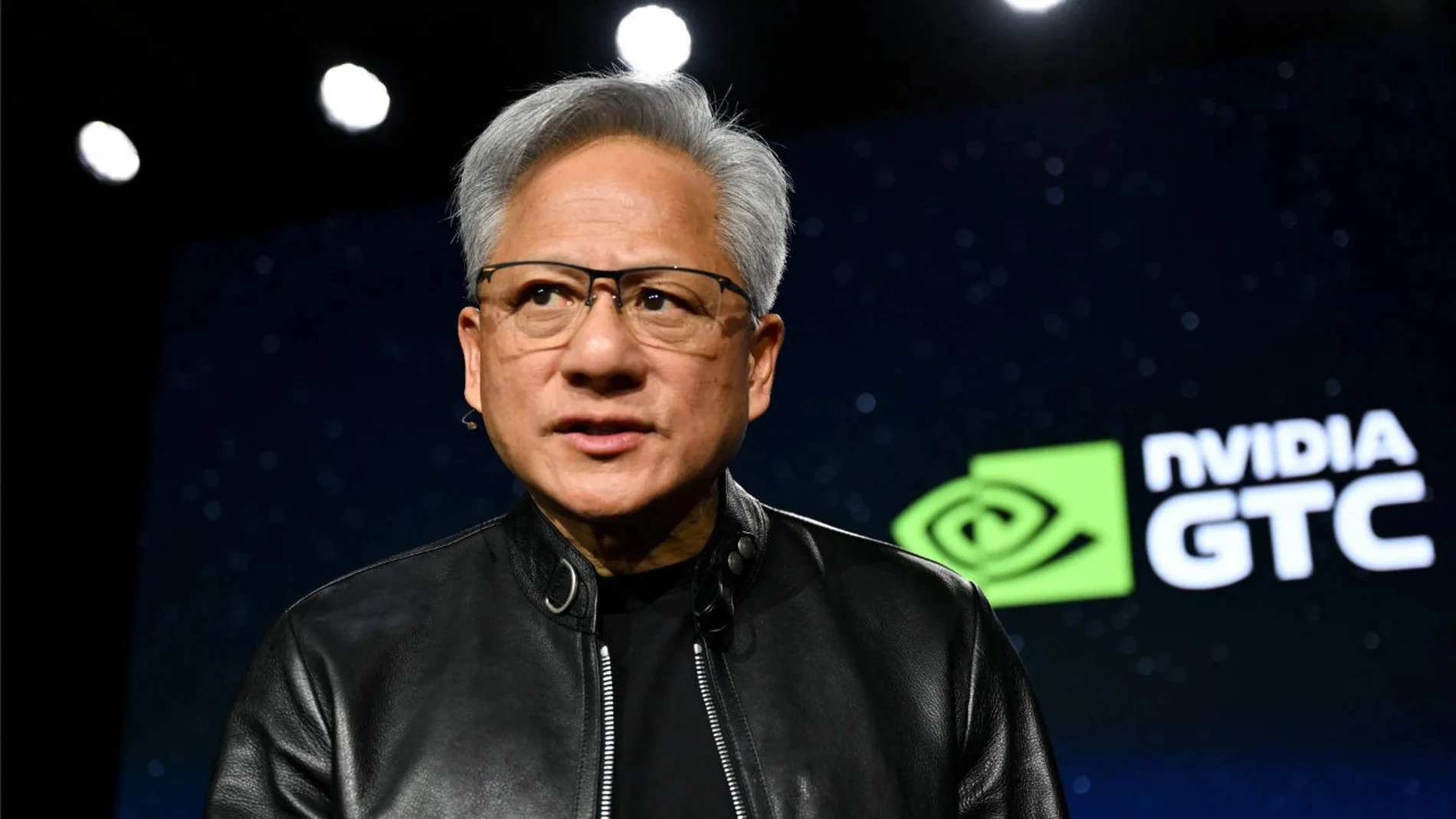
The departure of Jensen Huang, founder and until now CEO of Nvidia, may accelerate the change. Huang had been a leading advocate in Washington of keeping an open door to the Chinese market. His argument was simple: If companies in that country continued buying American chips, they would also continue to use its technology and development ecosystem.. If they were expelled from the market, they would have no choice but to build their own alternative, one that would take years, but would arrive. Huang’s resignation, announced this week amid controversy over his personal relationships and the suspicions of the US services about one of the people involved (accusations that have not been publicly proven), leaves that position without its main defender.
And the moment couldn’t be more delicate. In Washington, consensus is growing between Republicans and Democrats to tighten restrictions on technology that can reach China and Chinese advances that make their way into US territory. Congress studies new measures to control the export of advanced chips, pursue its diversion through third countries and even limit the rental of computing capacity in data centers located outside China.
Until now, the licenses had allowed some limited operations. Nvidia’s H20 and, more recently, H200 processors could be authorized for certain Chinese customers, always under specific conditions. But The possibility of these exceptions disappearing is gaining strength. In fact, Nvidia itself acknowledges in its financial documents that US restrictions and the limitations imposed by Beijing have prevented a good part of the authorized chips from being marketed. The company has gone so far as to describe the Chinese market for data center processors as practically closed to them.
Analysts at Gavekal Dragonomics point to a more far-reaching consequence: Washington and Beijing seem to be moving towards a situation in which American chips will no longer be a relevant piece of Chinese artificial intelligence infrastructure. It is not that both capitals have signed an agreement to do so, but that their decisions are pushing in the same direction. The United States wants to prevent its most advanced processors from strengthening the technological and military capacity of its rival; China wants to reduce a dependence that can become a strategic vulnerability. The coincidence of interests can accelerate a separation that a few years ago seemed difficult to imagine.
In this scenario, a fundamental protagonist appears: Huawei. The company that Washington tried to isolate from access to American components and technologies has become one of the pillars of the Chinese response. Its Ascend family of processors offers an alternative to Nvidia GPUs, although there are still differences in performance, availability and software maturity. The Ascend 910C, for example, has allowed Chinese companies to develop their own computing systems, but its production and access to advanced memory remain bottlenecks.
Huawei is not limited to making chips. It’s building an entire infrastructure around them. Its CloudMatrix systems connect large numbers of processors to form supercomputers specialized in artificial intelligence; Its CANN architecture provides tools for developers to program on top of Ascend, and its ecosystem already integrates with projects like PyTorch and other open source platforms. In September, the company announced new SuperPoD systems and an architecture capable, according to its own figures, of connecting up to one million neural processing units. They are company announcements, not an independent demonstration that it can match the capacity of the largest American data centers today, but they show the dimension of its commitment. The next generation of that family is the Ascend 950 series. Huawei has announced two variants: the 950PR, aimed primarily at running models and processing requests, and the 950DT, also designed for training tasks. The company expects the latter to arrive in the fourth quarter of 2026. The objective is to cover different phases of work with artificial intelligence and reduce the need to resort to foreign processors.
But Huawei is not alone. Cambricon, Hygon, MetaX and Iluvatar CoreX are part of a group of Chinese manufacturers trying to fill the gap left by Nvidia. An industry of models that can be downloaded and adapted is also growing around it, such as DeepSeek, Qwen (from Alibaba), or GLM (from Zhipu) AI. The combination is important: it is not enough to have a national processor if developers do not have models, libraries and tools capable of taking advantage of it. China needs to build both halves of the system at the same time.
The paradox is that the American strategy may end up accelerating the very thing it was intended to avoid. The restrictions make it difficult for China to access the most powerful chips, but they also guarantee a captive market for their manufacturers. Every company that stops buying Nvidia becomes a potential customer of Huawei or Cambricon; Every developer that adapts their programs to Ascend contributes to strengthening an alternative ecosystem. That doesn’t mean China has achieved technological independence: it still struggles to manufacture advanced semiconductors on a large scale and access certain components, especially high-bandwidth memory. But it is building an infrastructure that it did not have a few years ago.
Meanwhile, Nvidia faces a contradiction. Their business is to sell as many AI processors and tools as possible around the world. Huang argued that keeping China within that market was beneficial for the United States.. Without its influence in Washington, the company could find it more difficult to maintain that position, although its business interests have not disappeared.
The battle, therefore, is no longer just about determining which model responds best or which company develops the most advanced artificial intelligence. It’s about deciding what technology will work in the future: who will make the processors, who will control the systems that connect them, and what tools will be at their disposal for the millions of developers who will build the applications.
For years, the world of artificial intelligence has operated on an infrastructure dominated by American companies. Now China is trying to build another one, from chips to models to software. The departure of Jensen Huang may not be the origin of this transformation, but it is one of the events that accelerate its speed.