
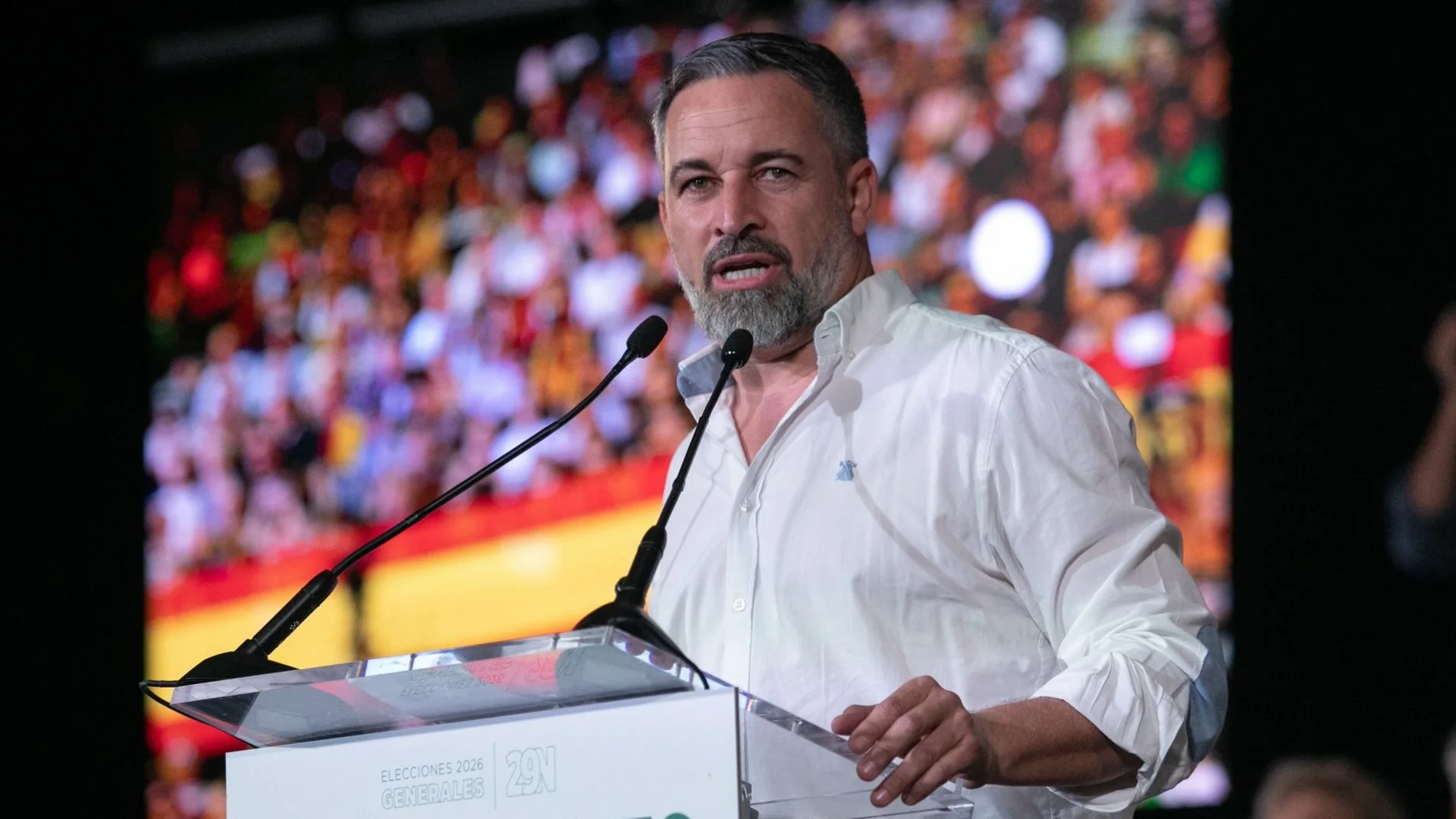
The electoral campaign will officially start this Friday with the global feeling on the right and left that the government is decided and will be led by the president of the PP, Alberto Núñez Feijóo, barring cataclysm. Even assuming this premise, there are still three weeks ahead in which decisive issues for the future of the next Legislature must be resolved. In fact, The parties are already fighting several simultaneous battles in a hidden way and that will be decisive in calibrating the balance of power within each bloc and the starting point of the next political cycle.
The socialist candidate, Pedro Sánchez, has made resistance one of the central elements of his leadership, but the result of the polls will decide how far he can prolong it and what happens to his commitment to continue leading the PSOE. This weekend we have already seen how Urda turns the page to recover his emotional and ideological campaign: confrontation is his only asset and his electoral advisors They remain convinced that, in their parish, the alliance of PP and Vox can still continue to function as a mobilizing element in favor of their interests.
The first socialist objective is to clearly overcome the psychological barrier of one hundred deputies. Official propaganda maintains that They are still in a position to challenge the PP for the category of force with the most votes on 29N. Here is a first test, but Sánchez will have a second flying goal ahead of him, the regional and municipal ones in the month of May.
The socialist candidate needs to keep Barcelona, Asturias, Navarra and Catalonia (Castilla-La Mancha, if it goes wrong, he will blame Emiliano García-Page) to revert the legitimacy of his ambition to continue leading the PSOE.
The hypothesis that Moncloa “sells” that the Urda tragedy does not nullify the fact that Sánchez still has within his reach the possibility of imposing himself as the most voted force on election night has an important symbolic value, if realized, because it would significantly destabilize the right-wing Government from its origin.
Tomorrow’s general strike and the results of the electoral barometer that the CIS will publish that week They will condition the agenda until Sunday. Sánchez is playing it all or nothing, and aims to leave the extreme left and also the nationalists (PNV and Junts) with no margin: it is a zero sum because it guarantees his personal political survival at the cost of not having allies with whom to add a sufficient majority to govern.
The Moncloa strategists intend that in the socialist campaign there will be no more lurches and that from now on to the day of reflection Their voters only perceive the event as an election about rights and models of coexistence.. On the other hand, Feijóo tries to place it in the field of management, alternation and the balance of the socialist years.
On the right, the main problem does not, in principle, concern parliamentary arithmetic. The distance between PP and Vox will determine to what extent Feijóo can reduce his dependence on Abascal and retain room to impose his program, decide the composition of the Executive and establish the priorities of the legislature. A joint majority does not automatically equate to an agreement on how to govern and the greater Vox’s parliamentary weight, the more complex the negotiation will be and the more difficult it will be for the PP to preserve its political autonomy. In a framework, furthermore, in which Vox has made a script change to impose mimicry on the popular ones with the aim of using the next Government to improve its management image and act as a cultural engine of the right.
Vox has managed to introduce part of its priority issues into the PP agenda, especially immigration, security and national identity. But assuming certain discursive frameworks poses a dilemma for the popular ones: they can try to recover voters displaced towards Abascal and, at the same time, contribute to legitimizing the positions of their competitor. The question is not only how much Vox grows, but to what extent it conditions the political identity of the party that aspires to lead the Government. The polls will resolve the distribution of seats, but they will also decide who leads the opposition, how firmly, and who sets the course of the right.