
Darkness has been an ally of those who try to hide their movements for decades. When the Sun disappears, optical satellites lose much of their ability to observe the Earth’s surface. But heat does not need visible light. A running engine, a newly landed aircraft, or an industrial facility can leave a thermal signature. that reveals their activity. That is the information that a new generation of European satellites aims to convert into intelligence.
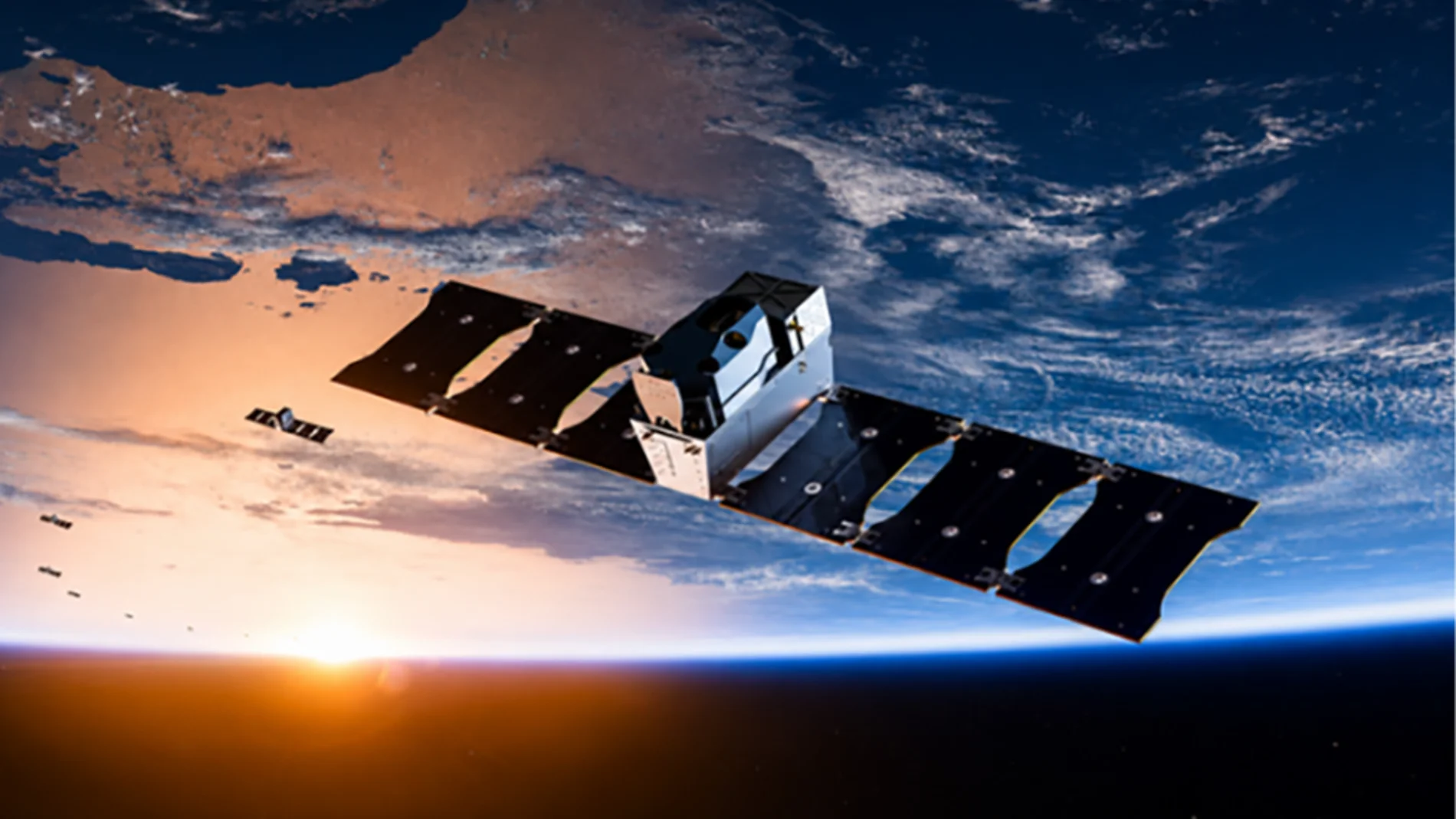
Luxembourg-based Hydrosat has announced the Nyktòs programme, a space observation capability using medium wave infrared (MWIR) sensors. The system is designed to obtain high resolution thermal images during the day and night and is aimed at governments seeking to strengthen their surveillance and intelligence capabilities, including NATO members and their allies.
The announcement includes expanding Hydrosat’s technology and manufacturing facilities in Europe, as well as developing a network of regional suppliers. The company has not specified where the new facilities will be built, how many satellites will make up Nyktòs, when they will be launched or what resolution their sensors will achieve. Nor has it identified any client, but it does clarify this in the statement: “the development of the new capacity will be supported by Hydrosat’s expanded technology and manufacturing infrastructure in Europe, and is intended for sovereign mission applications for NATO and allied customers”.
The main difference of the technology is in the type of information it collects. Conventional optical sensors record the light reflected by objects. Thermal infrared, on the other hand, detects the radiation emitted by them based on their temperature. In this way, they can identify thermal contrasts between an object and its surroundings even when there is no sunlight.
MWIR sensors are especially sensitive to relatively intense heat sources, such as engines, exhaust gases, fires or industrial equipment. This could help identify vehicles, aircraft or changes in activity at strategic facilities. However, a thermal image does not automatically reveal which object is producing a signal: Interpretation depends on resolution, observation conditions, and subsequent analysis.
Nyktòs will not work in isolation. Hydrosat intends to combine it with Osiris, another constellation announced in September that will use long wave infrared (LWIR) sensors. Your mission will be to observe large areas of land: Each satellite is designed to cover swaths up to 340 kilometers wide, with a native thermal resolution of 25 meters. The first two are scheduled to be launched in 2027.
The strategy is known as tipping and cueinga technique that can be translated as detection and orientation. Osiris would scan wide regions to identify anomalous thermal changes. If it detected an activity that deserves attention, that information would serve to direct Nyktòs to a more specific area and obtain a more detailed image. The combination would allow us to move from panoramic surveillance to focused observation.
The company already operates two thermal satellites, VanZyl-1 and VanZyl-2, whose images have a resolution of approximately 70 meters. Hydrosat says its fleet has collected more than 500 million square kilometers of images. Osiris and Nyktòs would represent a leap in coverage and detail capacity, although the benefits of the latter program have not yet been made public.
Thermal surveillance from space also has applications beyond the military field. Hydrosat points to potential uses in emergency response, critical infrastructure monitoring, and industrial facility monitoring. Detecting temperature anomalies can help identify fires, equipment that is operating irregularly, or changes that require inspection. The new architecture promises a look that does not depend on daylight. Their challenge will be to convert that physical advantage into sustained operational capability: observing large areas, detecting changes, and retracing them in enough detail so that heat, invisible to a conventional camera, is transformed into useful information.