
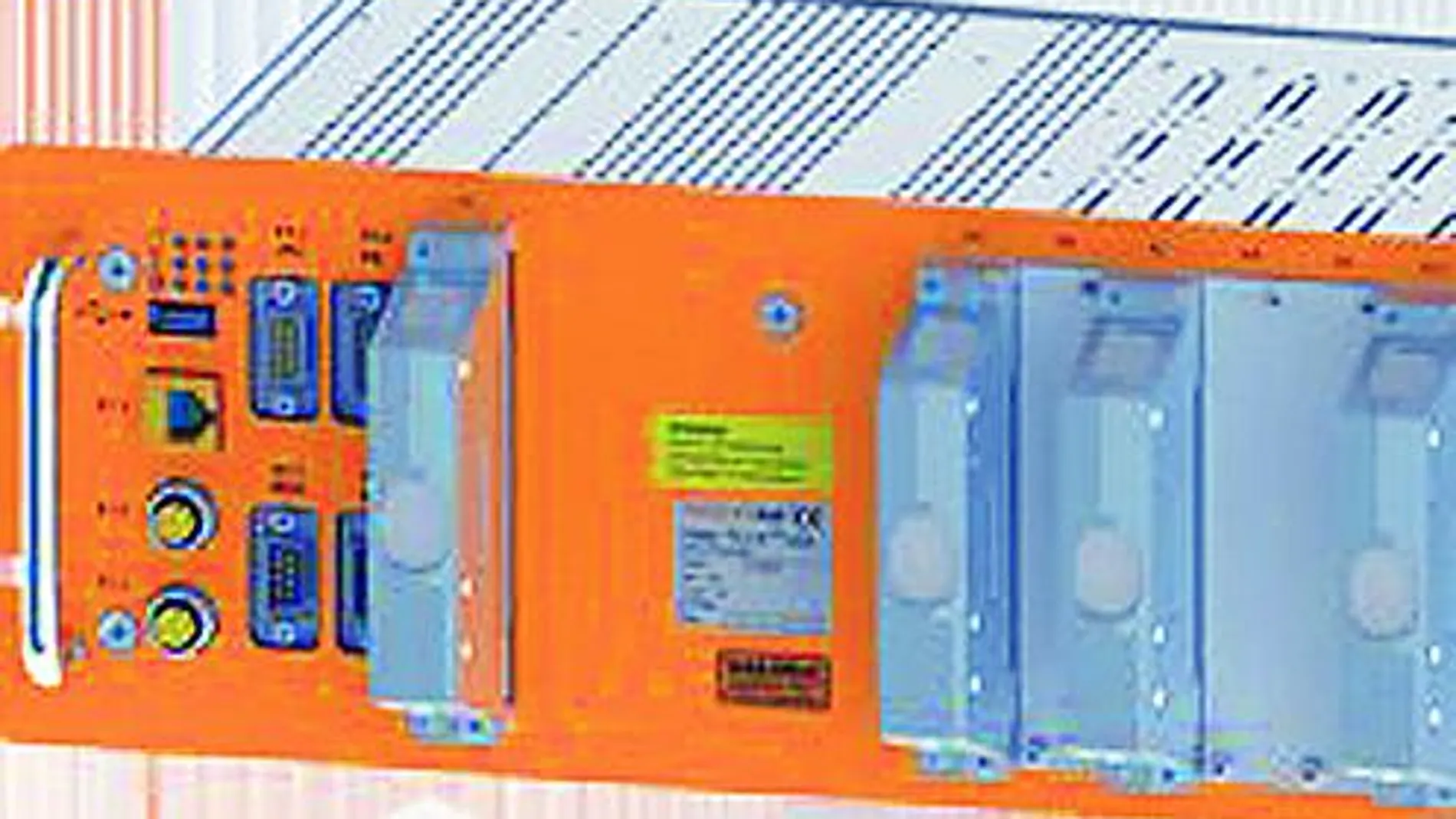
A train can travel hundreds of kilometers without anyone wondering what information it holds about its own journey. But when an accident occurs, that electronic memory takes on extraordinary value. The speed at which you were traveling, the orders you received, the moment in which the brakes were activated or the response of your safety systems can help reconstruct the seconds before the accident.. It is the function of the so-called railway black box, whose technical name in Spain is legal registrar.
Unlike the usual image of an aeronautical black box, the railway system does not have to be a single device that concentrates all the data. It is electronic equipment made up of hardware, software and connections with other train systems. Its configuration depends on the vehicle and the control systems it incorporates. Spanish regulations establish requirements for it to record information relevant to traffic and to be able to preserve it and make it available to those who investigate an accident.
Where is? The recorder is part of the train equipment and its specific location depends on the design of the vehicle. It can be installed in a technical compartment or integrated into the locomotive’s electronic equipment. The system has memory that protects data and allows recovery even when it is necessary to access removable media prepared to withstand demanding physical and environmental conditions. It should not be confused, therefore, with a universal box always located in the same place.
The specific information it records depends on the equipment installed. That is why it is important to distinguish between the data collected by the legal registrar and those that may come from other systems. Conversations between the driver and the control center, for example, can be recorded in specific communication systems. Camera images, when they exist, constitute another source of information. Just because this data can be used in research does not mean that it is all necessarily stored within the same box.
The position of the train is also essential. To locate each event, systems can use the distance traveled from a reference point, information from onboard equipment and, when available, satellite positioning. The beacons installed on the road help confirm the location and correct possible errors in calculating the distance. This way, technicians can determine not only what happened, but where it happened.
The decisive moment comes after an accident. Before interpreting the data, it is necessary to extract it in a controlled manner, check that it has not been altered and preserve its integrity. In Spain, railway companies and infrastructure managers must have procedures to recover and safeguard this information. Access is done with manufacturer-specific tools and programs capable of converting electronic records into readable data.
From there begins a task similar to reconstructing a film from thousands of fragments. Technicians order events by their timestamp and represent parameters such as speed, braking, and state changes of safety systems. A speed curve, for example, can show when the speed began to slow down; The brake record allows you to check if it was applied and when; Signaling data helps determine what indications the train received or what automatic response the system produced.
But the black box does not work alone. To reconstruct what happened, specialists compare their records with those of other trains involved, the signaling and control systems of the infrastructure, communications, available images and physical evidence collected at the accident site. This combination is essential: an isolated piece of information can describe what happened without explaining why.
The so-called “railway moviola” can also intervene in this process, a computer tool that allows the events recorded by the signaling and control systems to be reproduced chronologically. It is not another black box installed in the train, but a resource to analyze infrastructure records and visualize how signals, routes and automatic orders evolved. By synchronizing this information with that of the train, technicians can check whether the different sources fit into the same time sequence.
Interpretation requires special care. The fact that a recorder stops storing data at a certain time does not, by itself, demonstrate which component failed or why the accident occurred. In the same way, The fact that a certain action is not recorded does not automatically allow responsibility to be attributed. Data must be validated, contrasted with other evidence, and analyzed within the technical context of circulation. The railway black box does not, therefore, offer an automatic explanation of an accident. Its value lies in something more precise: preserving an objective sequence of events that would otherwise depend largely on testimonies and memories.