
Fraud cases using artificial intelligence (IA) in Puerto Rico are increasing, representing more than a million dollars in losses by 2025 and mainly affecting people over 60 years of age, according to data shared by Joseph González, superintendent of the Puerto Rico Police.
According to the 2025 report of the Internet Crime Complaint Center (IC3) of the Federal Bureau of Investigation (FBI)in Puerto Rico losses of $8.1 million were reported due to fraud. Among the cases that affected people aged 60 or older, 161 complaints related to romance frauds were registered.
In addition, seven cases linked to the use of AI were identified, which represented losses of $1.4 million, González detailed.
“If we arrive at a place to investigate we are already late, (because) the older adult has already lost his savings and lost everything”said the Police Superintendent, who insisted that prevention efforts must be strengthened.
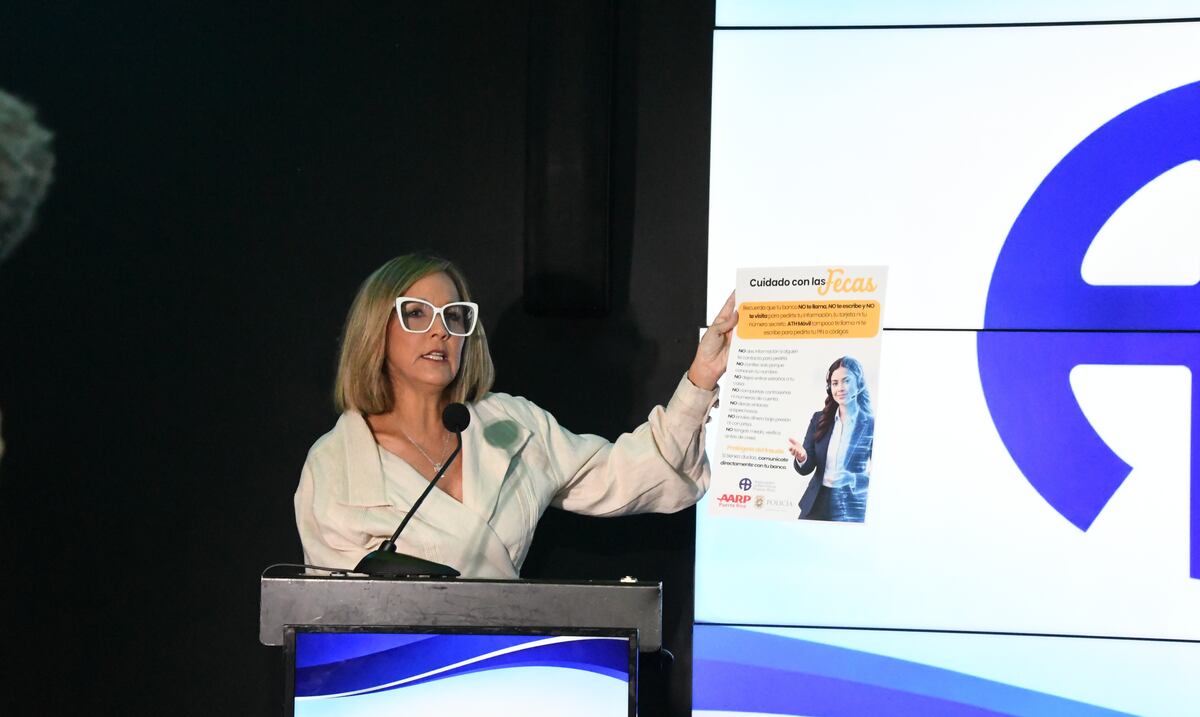
Given this panorama, the Association of Banks of Puerto Rico (ABPR)in collaboration with AARP Puerto Rico and the Puerto Rico Police, launched this Tuesday a new educational campaign, which seeks to provide tools to older adults that allow them to identify possible deceptions before sharing personal information or making a transaction.
The campaign, titled “It could be a feca”is made entirely with AI to show that nowadays not everything that seems real is true. That is why the term “feca” is used as a synonym for lying or deception.
“Fraud has evolved and we have to continue evolving in campaigns and actively talking about these new ways and how we can confront it and one of the ways to confront it is by knowing it. We know that it is no longer so normal to hear or see something and believe it,” said Zoimé Álvarez Rubio, president of the ABPR.
Evil that grows in the United States and Puerto Rico
The lawyer indicated that, in the United States – including Puerto Rico -, some 22,364 complaints were reported in 2025, related to artificial intelligence, which is equivalent to potential losses amounting to $893 million.
Between January and September of this year, the Police received 744 referrals related to fraud cases, which represents more than 87% of the referrals registered in the previous year, when 854 referrals were registered.
“Monthly, we receive approximately 83 referrals (…) We know that there are many more cases out there (that) are not reported or the complaint is not filed sometimes because of shame or we know of cases where family members are the ones who are committing the fraud and a person will not want to report a family member,” González said.
Although the campaign was scheduled to begin later this year, the ABPR decided to launch it earlier due to the increase in the number of scams on the island, indicated Álvarez Rubio.
As part of the campaign, audiovisual pieces were developed with characters, scenarios and testimonies generated entirely with AI, where everyday situations are presented in which fraud can seem real, such as a call that appears to come from a financial institution, a romantic relationship through a false profile or images of alleged causes and ransoms used to request money.
At the end of each piece, it is revealed to the audience that the person or people in the advertisement they just saw never existed. In each scenario, the message is the same: before you believe, verify.