
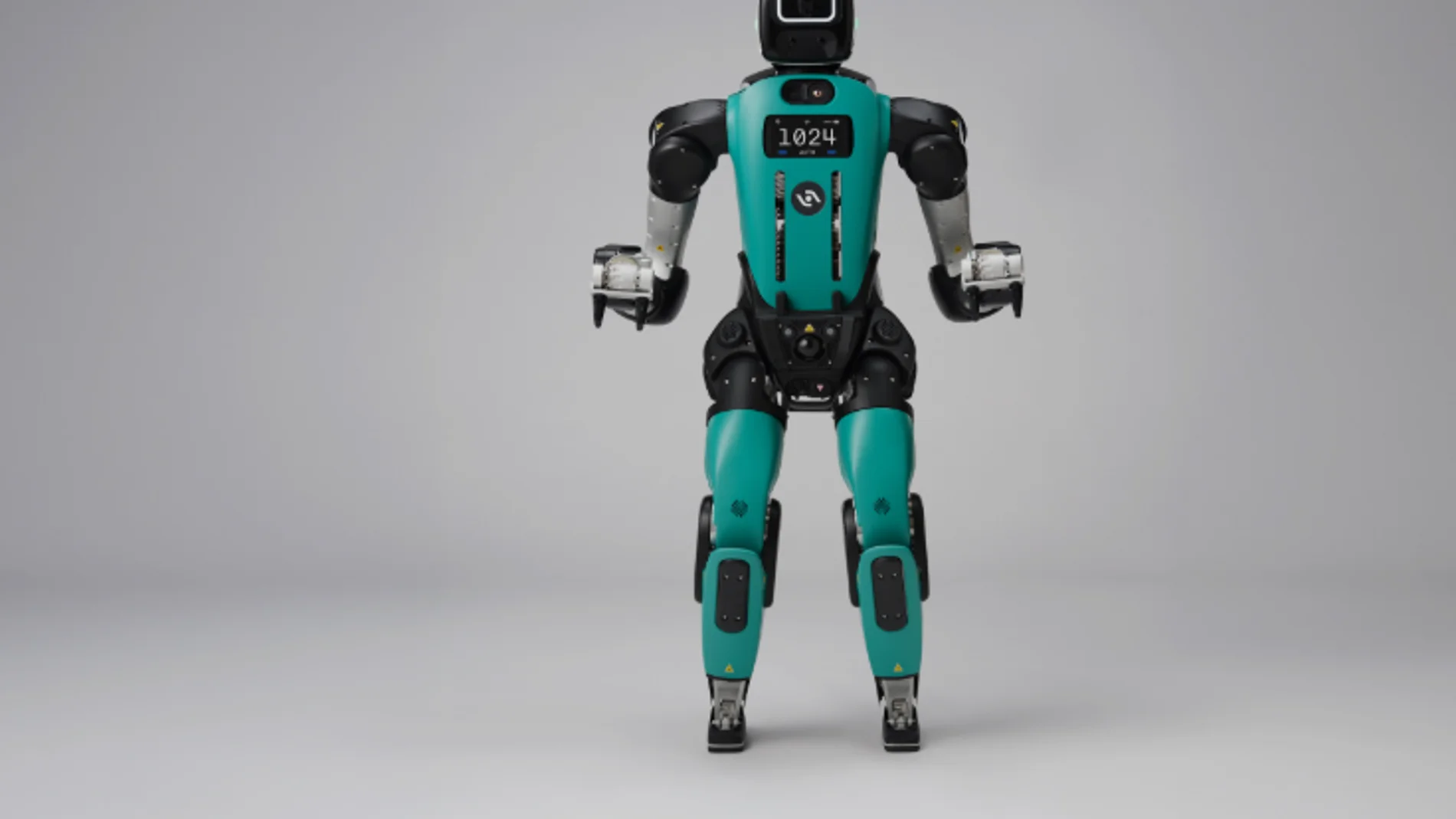
In a factory, nine minutes may seem like an insignificant pause. For a robot, they can make the difference between spending a good part of the day waiting next to a charger or becoming a piece capable of maintaining the pace of a production line. That is the bet that Agility Robotics has just presented with Digit 5, its new industrial humanoid, equipped with a technology of Nyobolt battery that promises more than 20 hours of productive work in a 24-hour period.
The secret is not in a battery capable of powering the robot for an entire day without interruptions, but in the speed with which it recovers energy. The system offers about 90 minutes of operation and needs only nine to recharge. It’s a ten to one ratio: for every minute connected to the charger, the robot can work approximately ten. If this pace is maintained, energy breaks would occupy a small part of the day and would allow us to exceed the two conventional eight-hour work days.
The difference compared to the previous generation is considerable. Digit 4 had a two to one run and recharge ratio. With Digit 5, Agility wants to multiply it by five, an improvement that points to one of the main obstacles of industrial robotics: It is not enough for a machine to be capable of executing a task; It must also do so for long enough to be profitable.
The battery is the result of collaboration with Nyobolt, a company specialized in high-power energy storage solutions and ultra-fast charging. Its technology combines proprietary materials for the electrodes, a specific cell design and integrated power electronics. The objective is deliver high power in a very short interval, with a lighter and more compact battery and a useful life suitable for demanding industrial environments.
For now The capacity of the battery in kilowatt hours is unknown, nor is there a specific number of charging cycles that would allow its longevity to be compared with that of other systems.. Nor have they detailed all the operating conditions under which the announced benefits have been obtained. Therefore, the nine minutes of recharging and more than 20 hours of work should be understood as maximum objectives under controlled conditions.
The potential savings, however, go beyond the time the robot spends connected to power. In a warehouse, a humanoid can move boxes, move containers, or power a production line. If you need to stop frequently for long periods, the company must reorganize tasks or have more units to maintain workflow. A quick recharge would allow shifts to be better distributed and interruptions to be reduced without the need to manually replace the battery.
Digit 5 has also been designed to expand the tasks it can perform. It measures 1.81 meters, weighs around 129 kilos and can reach objects up to 2.2 meters high. Its legs and joints allow it to repeatedly lift loads of up to 50 pounds.s, 40% more than its predecessor. In addition, it incorporates interchangeable tools in the hands to adapt to different operations, from handling containers to controlling machinery.
Another important change is security. The company presents Digit 5 as its first humanoid designed to work on an industrial scale near people, without the physical barriers that usually separate workers from traditional automation. To do this, it combines human detection systems, movement control and security mechanisms. It doesn’t mean that all risks disappear: Agility Robotics warns that some safety features are still under development and that robot specifications may still change.
Agility plans to begin early access to Digit 5 powered by Nyobolt during the first half of 2027, with availability progressively expanding in the six to nine months thereafter. The promise is ambitious, but its importance does not lie in whether a robot can work twenty hours straight: it cannot do so with this battery. What is relevant is that, With breaks of just nine minutes every hour and a half, you could maintain a productive activity for almost the entire day. In the factory of the future, the advantage may not be in building machines that never stop, but in getting them back to work before someone has finished their coffee.