
In Spain we continue to buy millions of appliances every year, but the interesting thing is not only how much the market has grown, but what we are buying. In 2015, around 6.4 million white goods were sold; Ten years later there were more than 8 million, an increase of more than 25%. At the same time, while the number of units grows moderately, the value of the products increases: in 2025, white goods had a turnover of 2,155 million euros, 7.9% more than the previous year. To this we must add that a third of Spanish households already have, at least, with some appliance connected. But there is much more beyond connectivity. We go by steps.
Cooking has always involved some negotiation. You have to calculate quantities, control times, adjust the temperature and decide when to intervene. AEG’s proposal to reduce that negotiation has a fairly simple form: a plate capable of preparing pasta practically without supervision. OnePot Pasta allows you to select the number of servings and maintains a main cycle of about 15 minutes to reach al dente, although the user can add up to five minutes according to your preferences. Behind this apparent simplicity there is an algorithm that modifies the power, heating and cooking times and the management of water absorption and starch release.
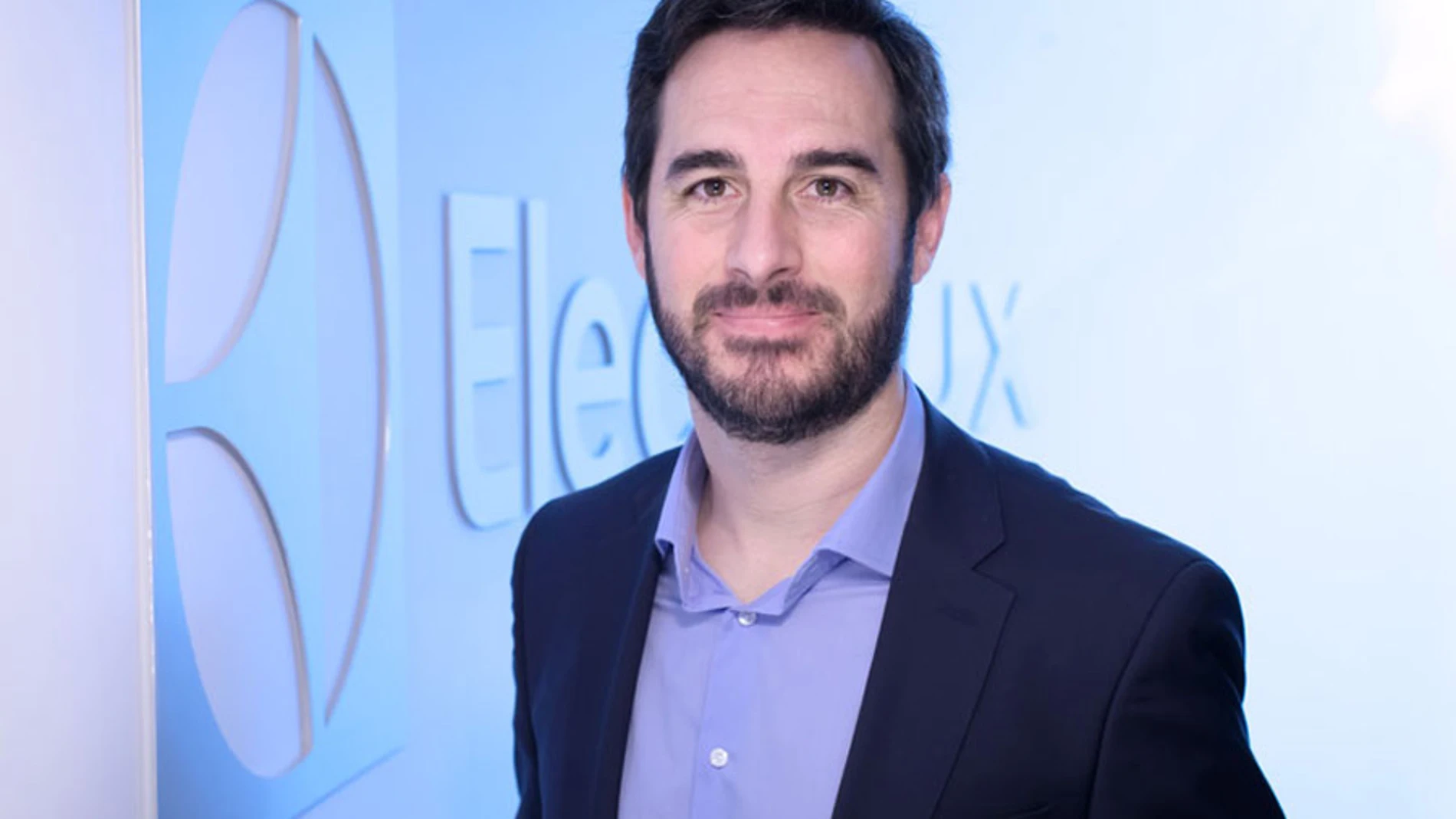
“Consumers want to spend less time on kitchen tasks, either because they do not know how to cook, because they cannot do it or, simply, because they have less time – explains Álvaro Ortiz de Lejarazu, general director of Electrolux for Spain and Portugal – OnePot Pasta responds to that reality by offering a healthier alternative to many of the ready-made options. Personally, I consider it to be a real revolution in the world of cooking.”
But the plaque is just the beginning of a deeper transformation. The company imagines appliances capable of taking on tasks that until now required human experience or supervision. Not necessarily to cook creatively for ourselves, but to better understand what is happening and act accordingly.
«This is just the first step towards a new way of understanding cooking – adds Ortiz de Lejarazu -. We see a clear opportunity to continue simplifying the preparation of numerous dishes and helping consumers cook more easily, comfortably and efficiently.”
It is a conception of intelligence that also moves away from the usual image of an appliance connected to an application. “When we talk about smart appliances we usually think about connectivity and applications, but I believe that true intelligence goes much further. – says Ortiz de Lejarazu -. Intelligence consists of the product understanding what is happening and adapting its operation to obtain the best result with minimal user intervention.”
The same philosophy appears in cleaning. The Trilobite 8000 GEN2 It measures only 7.89 centimeters in height, combines suction, scrubbing and self-drying and increases suction power by up to 40% compared to its predecessor. But for the manager, power is only part of the problem. The real leap is in getting the robot to complete its work without interruptions. “Few things are more frustrating than coming home and discovering that the robot has stopped halfway through the process and the cleaning has been left unfinished,” confirms Ortiz de Lejarazu.
To achieve this, the robot combines navigation and artificial intelligence and can identify up to 190 different types of objects, from cables to socks, to avoid obstacles and reduce the chances of getting stuck. The increase in power, meanwhile, comes from improvements in the engine, airflow and aerodynamic efficiency. Integrating all this in less than eight centimeters in height requires fitting the battery, sensors and electronics without compromising autonomy, thermal management or reliability.
The reduction in space also explains another of the proposals presented by AEG: a 3-in-1 oven that brings together a conventional oven, pizza oven and air fryer. Ortiz de Lejarazu considers that it responds to two simultaneous changes: smaller homes and consumers looking for kitchens that are less saturated with appliances. “It’s not just about saving space, but about offering a more comfortable and practical experience, with fewer devices, less complexity and more versatility in everyday life”he points out.
This reduction in complexity raises, however, an inevitable question when household appliances increasingly incorporate electronics: what happens to their useful life, their repair and their consumption. For AEG, The answer lies in what is called responsible innovation. Your sustainability framework For the Better It includes objectives related to efficiency in the use of water and energy and the reduction of CO₂ emissions during the life cycle of the products. The company also places repairability and durability within a direction driven by European legislation.
The idea finally links with the motto chosen by AEG for IFA: The Art of Hosting (The art of being a host. Because, for Ortiz de Lejarazu, the consumer no longer expects only technical performance. You want the appliance to make your life easier, save time, reduce complexity and fit the way you live. And there is an additional change: “Europeans increasingly value authenticity and personality over perfection.” There is, in fact, the thread that unites a hob that cooks pasta, a robot that recognizes a sock and an oven that combines three functions. AEG wants break the idea that technology and creativity, performance and design or efficiency and enjoyment are competing concepts.
“Technology can take care of complexity so that people have more freedom to express themselves – concludes Ortiz de Lejarazu -. That is the interpretation that the company makes of The Art of Hosting: use technology not to impose a way of doing things, but to remove obstacles and leave more room for creativity, connection and enjoyment”. In other words, andhe smart appliance of the future may not be the one that does the most things, but the one that allows us to do more things when it performs its functions.