
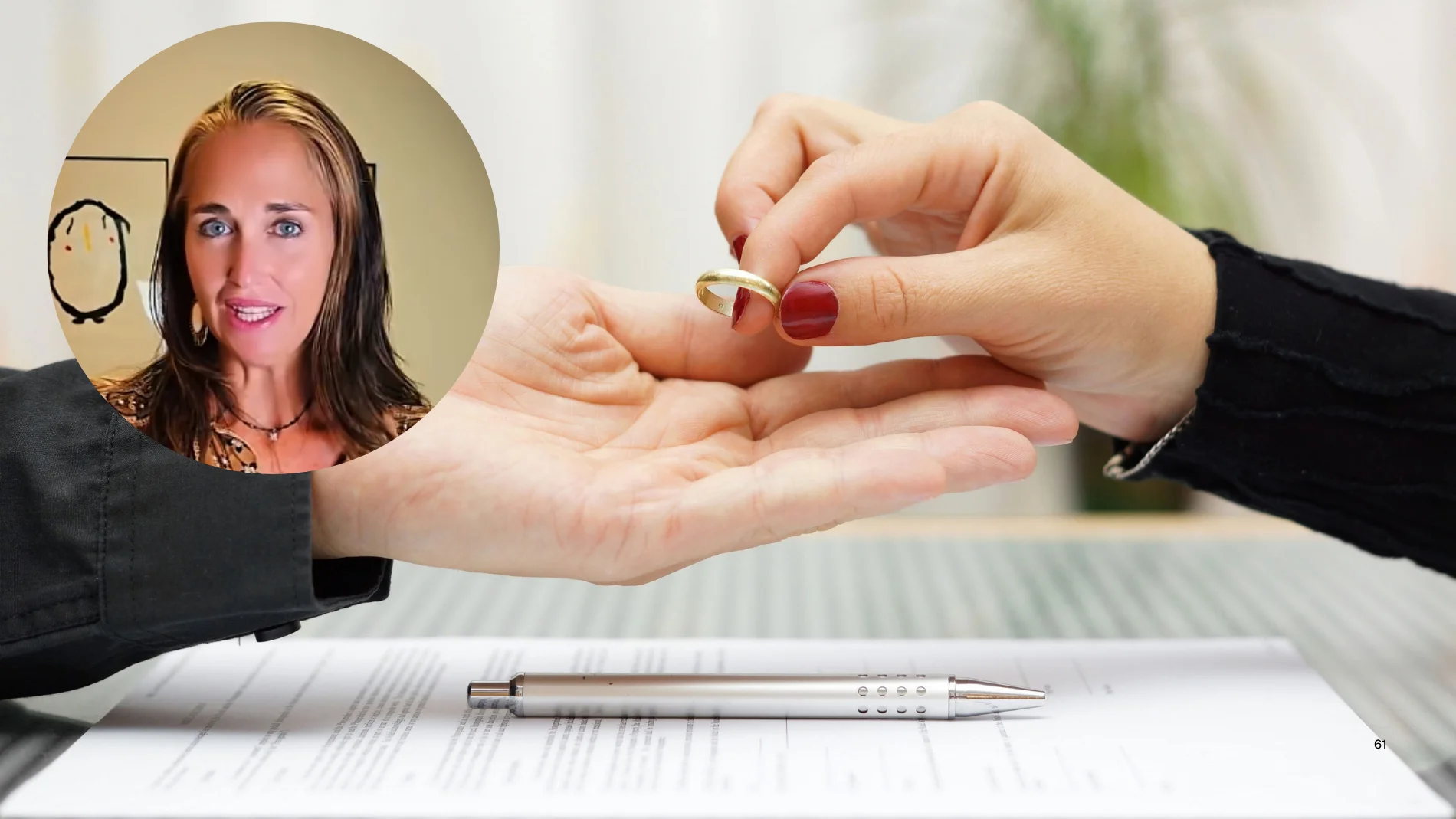
A divorce usually involves a complex legal and emotional process; Therefore, when the court ruling or public deed that dissolves the bond is finally received, many think with relief that the paperwork is now over. However, what few know is that, even if the couple is no longer officially together, the other person may continue to receive their share of the inheritance if the will states so.
According to notary Marta Peña Tallada, from APS Notarios, the main mistake that people who have just divorced make is not reviewing their will again. They think that “when the divorce decree is issued, everything is already solved. And no.” It only means the end of the marriage bond that legally united them, but, if the rest of the documents that regulate succession or the granting of powers are not modified, they will continue to have the right to them.
“After divorce there is one thing that many people forget: review their will,” warns the notary. Well, if this was drafted before the dissolution of the marriage and the ex-spouse is included as one of the beneficiaries of a part of the inheritance, he or she will receive it even if the divorce has been formalized through judicial means. Something to keep in mind, especially, if a will has been made for each other.
The ex-partner may end up receiving part of the inheritance
The latter is a legal agreement in which the spouses decide to grant each other the lifelong and universal usufruct of all their assets so that the other can use and enjoy them when one of them dies. Usually, in this type of agreement, bare ownership is granted to the forced heirs, generally the children, who will be the new owners, but They will not be able to sell or prohibit entry to the usufructuary.
Although this type of will is very useful when it comes to an established couple, it can become an inconvenience when they decide to divorce and one of them rebuilds their life with another person. “Because getting divorced does not mean that your succession planning is adapted to the new situation,” explains Peña Tallada. Therefore, what the professional recommends is to go again to the trusted notary or specialized lawyer and write a new will.
“If you have children, a new partner or assets that you want to protect, it is advisable to review the will as soon as possible. Even if the divorce has not yet ended,” says the notary. Well, this will avoid possible conflicts in the future and will allow the inheritance to be distributed according to the will of the testator when his death occurs. However, it must be taken into account that, in the event of conflict with any of the children due to divorce, this It will not be a sufficient reason to be able to disinherit him..
Especially important if you are in a new relationship.
Likewise, it is especially recommended when, after divorce, a new romantic relationship begins or becomes a de facto couple. Well, as lawyer David Jiménez explains, the law includes the right to inherit part of the assets and assets of those people who are united in marriage, but not if they only live together or are de facto couples. In this case, if a new will is not made, especially for each other, the other person loses his right to receive part of the inheritance.
Although this is the case in much of the peninsula, there are autonomous communities such as Catalonia, the Balearic Islands, the Basque Country or Galicia in which de facto couples do have inheritance rights. However, when you only live together, what stipulates The law is that the direct descendants are the forced heirs of the fortune of the deceased and, failing that, his parents.
However, the will is not the only document that must be modified. If you have made a preventive power to grant the management of the assets and the making of important decisions to the ex-spouse in the event of losing decision-making capacity, this tool must also be modified. This change can be made before a notary, appointing another person you fully trust, as long as you are in your full capacity.