
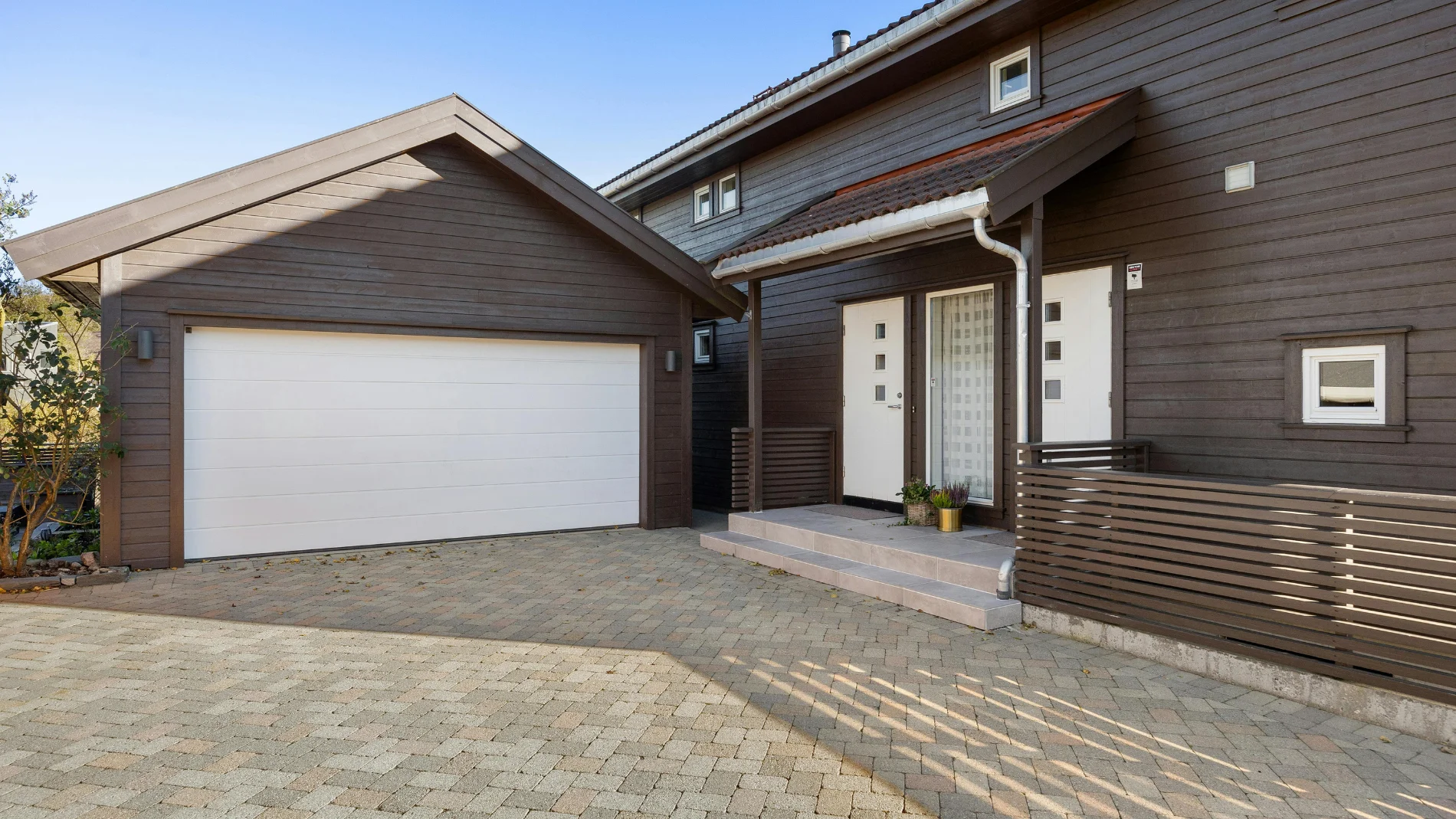
The French website Keops-Ingenierie.fr has collected a case that reflects a very common problem among single-family homes: a small work built without giving much importance can become, years later, a dispute with the new owner of the neighboring house. The protagonist installed does 13 years a four post open garage next to the fence that separated his plot from the one next door, a simple structure designed solely to protect his car from ice on winter mornings. During all that time, no one raised any objection: neither the city council sent any notification, nor did the resident at the time make any complaint.
The situation changed completely when the adjacent house was sold. The new owner, after settling in, detected several details that the previous neighbor had never questioned: an eave that slightly invaded his land, rainwater that seemed to be diverted towards his plot and a structure erected at a distance from the boundary that he considered suspicious. After asking for explanations and a detailed plan, he ended up sending a certified letter demanding that the problem be resolvedsomething that the French media picks up as the starting point of the conflict.
Thirteen years later, conflict between neighbors is still possible
Given this claim, the owner of the garage thought that those 13 years without incidents They would be enough to settle any dispute, but the media itself clarifies that the legislation does not necessarily work that way. While the ability of a city council to act in urban planning matters is usually subject to specific deadlines, which vary depending on whether it is an infraction, a demolition order or regularization, Conflicts between particular neighbors are governed by a different logic.
In cases that affect invasion of land, views, water runoff or private easementsthe injured neighbor can resort to judicial proceedings with a much wider margin of time, which makes 13 years a period that “it’s not necessarily a long time” in the life of a neighborhood.
What to do before responding to a claim
The text details the steps that any owner who finds themselves in a similar situation should take before responding to this type of claim. One has to locate all documentation related to constructionwhether the exact date of completion, the surface and height of the structure, any declaration or permit processed at the time, and the urban planning regulations in force in the municipality.
On the other hand, one of the most common errors that this website has detailed is focus exclusively on whether it had a municipal licenseforgetting that this procedure before the city council does not grant any rights over the neighbor’s property.
Of course, before accepting any demand, challenging it or committing to carrying out works, the media recommends Seek advice from a surveyor, architect or property lawyerinsisting that any solid claim must be supported by precise measurements and not on memories or assumptions about how the work was built at the time.