
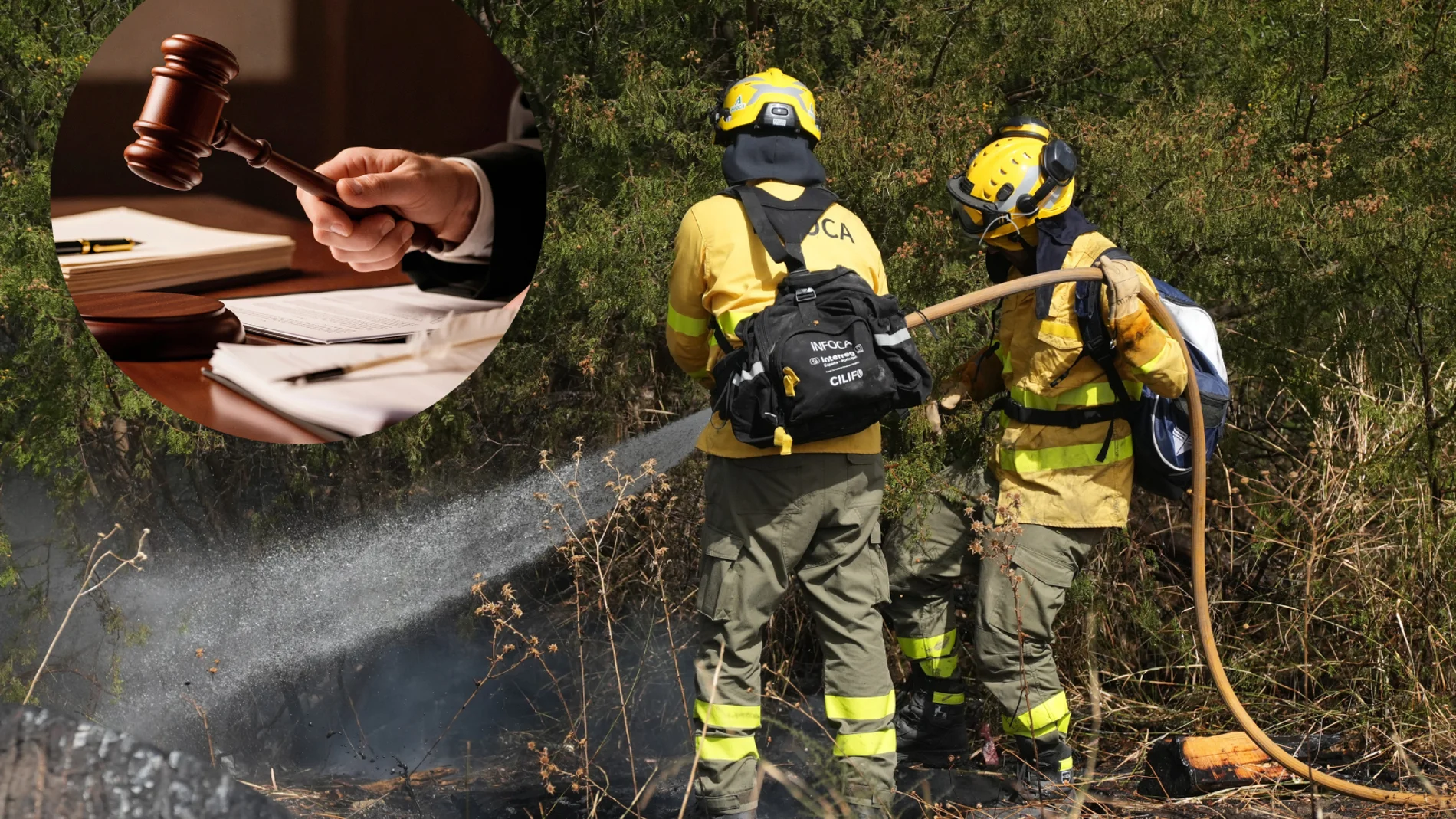
There are certain professions that, due to their danger or the heavy workload they demand from their employees, are more likely to end up developing pathologies that limit their work activity. In these cases, the INSS is responsible for determining whether your limitations are sufficient to grant a permanent disability and the corresponding pension.
However, it is quite common that, even though the applicant presents symptoms that prevent them from carrying out their work activity normally, the National Social Security Institute chooses to deny permanent disability. This was the case of Cristina, a forest firefighter who, after years of service protecting the forests, started developing lung disease.
When the first symptoms began to appear, they were simply a slight feeling of suffocation. Although this soon began to turn into coughing and trouble breathing, which became a difficulty in his usual tasks. Well, it is worth remembering that the job of forest firefighter requires a good physical and mental state, so decided to go to the doctor.
He was diagnosed with chronic lung disease
The doctors’ diagnosis was clear. Cristina suffered from COPDthat is, chronic obstructive pulmonary disease. A fairly common pathology in people constantly exposed to smoke, such as smokers or firefighters, and certain gases, although it also usually occurs in people who lack the alpha-1 antitrypsin protein.
The main signs of this disease are cough, fatigue, respiratory infections and difficulty breathingespecially when carrying out activities that are physically demanding. All of this, symptoms that greatly hinder the main functions of a forest firefighter, who must be exposed to large columns of smoke, travel through the mountains and be able to act in the event of any emergency.
Despite this and the fact that it was also beginning to affect her personal life, Cristina decided to continue working until her limitations began to become an impediment to carrying out her usual work activity. It was not until then that he requested medical leave to focus on the treatment and his possible improvement, all with the intention of returning to his job when he could.
When he did not improve, he decided to request permanent disability
However, this improvement never came and, faced with the impossibility of being able to resume her position as a forest firefighter, chose to request permanent disability. Specifically, the degree that best suited her situation was total permanent disability, which disqualified her from carrying out her usual work activity, but would allow her to look for a job that suited her situation.
To Cristina’s surprise, The INSS decided to deny his requestbecause she believed that her symptoms could improve and allow her to return to her job as a firefighter. However, the worker knew that she could appeal this decision, and decided to go to a specialized lawyer to defend her in this process. The lawyer in charge was Marina Alaminos.
As he explains on his Instagram account, after studying the medical reports his client had and the symptoms that appeared reflected in them, these were completely incompatible with the usual demands of his profession. “It was a disease that prevented him from supporting physical exertion. that his profession as a forestry agent required”.
The judge granted him total permanent disability
Therefore, the team of lawyers decided to file a claim with the INSS, which was denied despite the evidence presented. That’s when they decided to go to the Social Court and file a lawsuit in which they requested the degree of permanent disability for their client. A judicial process in which they defended that “COPD had definitively limited their ability to carry out the functions of their profession.”
The judge’s ruling was clear. Cristina could not return to work as a forestry agent, and decided to grant her total permanent disability for her profession. Thanks to this degree, the worker began to receive a pension of 55% of the regulatory basewith which you could leave financial worries behind and focus on your recovery process. And, in case of improvement, being able to return to the labor market, this time with a job that would not cause complications for their state of health.
Hence the importance of knowing that the INSS’s refusal does not imply the loss of the right to obtain permanent disability. This decision can be appealed up to three times.as lawyer Marina Alaminos explains. Firstly, before the entity itself and, if this claim is denied, before the Social Court and the Supreme Court, this always being the last resort.