
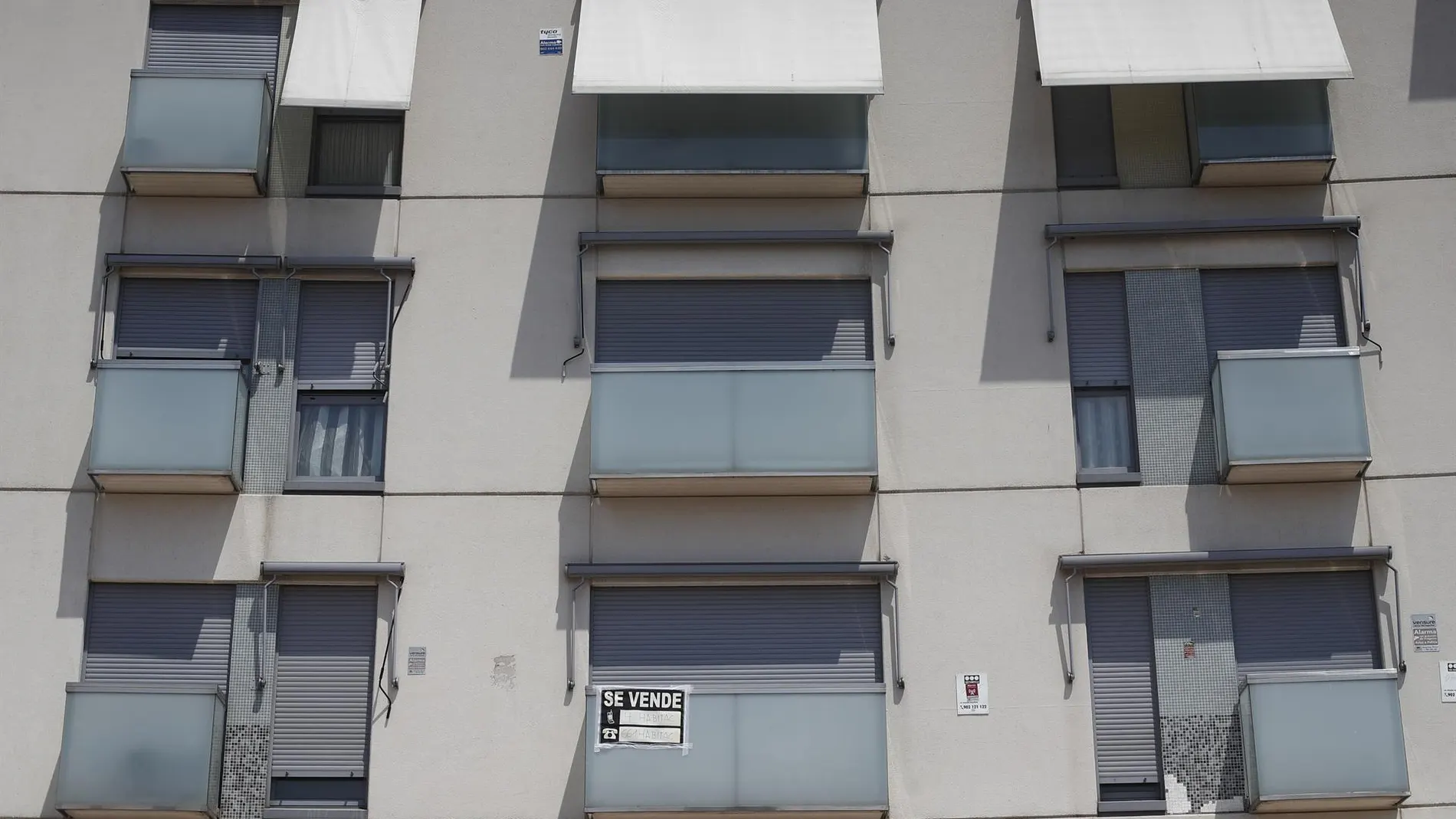
close one terrace It allows you to gain space, protect the home from the cold or take advantage of an area that until then was exposed to the outside throughout the year. However, living in a community of owners means that a work of this type does not depend solely on the decision of the homeowner.
The enclosure may affect the façade, the exterior configuration or common elements of the property. In these cases, the Horizontal Property Law (LPH)which establishes the rules that must be followed before making certain modifications to a building.
Therefore, before ordering the windows or beginning work, you must check the community statutes, communicate the action and determine what approval is necessary. Added to this are the municipal permits that may be required depending on the enclosure and the corresponding town hall.
What the Horizontal Property Law says about closing a terrace
The point that directly affects this type of actions appears in the article 10.3.b of the Horizontal Property Law. Among other issues, the standard expressly contemplates the enclosure of terraces and the modification of the building envelope.
For the actions included in this section, the approval of the three fifths of the total owners which, in turn, represent three-fifths of the participation fees.
This means that an owner cannot assume that, since it is a terrace for private use, he has absolute freedom to modify it. If the enclosure affects common elements or changes the exterior configuration of the building, it must be subject to the community rules.
Furthermore, if there is any owner directly affected by the action, they must also have their consent.
Community statutes also matter
Before proposing the work, it is advisable to review the statutes of the community of owners. They may have specific provisions on enclosures, materials, colors or modifications permitted on terraces and balconies.
It is also important to check if other neighbors have previously carried out similar works. The existence of previous enclosures may be relevant when assessing the action, although it does not mean in itself that any owner can execute a new one without following the corresponding procedures.
The owner should communicate his intention to the president of the community before beginning work and obtain the appropriate approval before executing the enclosure.
Community permission may not be enough
Getting the approval of the neighbors does not necessarily mean that the work can begin. An enclosure may also be subject to municipal urban planning regulations.
The requirements change depending on the city council and the specific characteristics of the action. It may be necessary to submit a prior communication, a responsible declaration or request a building permit.
In certain interventions, a technical project in which the design of the enclosure, the materials used and the characteristics of the installation are detailed.
Therefore, there are two different areas that must be checked. On the one hand there are the rules of the community of owners and, on the other, the urban planning requirements of the municipality. Complying with only one of them does not guarantee that the work is legal.
What happens if a neighbor closes his terrace without permission
Carrying out the enclosure without having the necessary authorizations can generate a conflict with the rest of the owners. The community can act against a modification executed without its consent when this is mandatory.
If the work fails to comply with the applicable regulations, the removal of the enclosure and restitution of the terrace to its previous state. There may also be economic consequences if the action has caused damage or harm.
Added to this is the urban planning route. If the enclosure has been carried out without the necessary municipal permit or fails to comply with the planning, the city council can initiate the corresponding procedure to restore legality.
What happens if the enclosure has been installed for years?
The age of an enclosure can influence the possibilities of taking action against work carried out without authorization, but There is no single deadline applicable throughout Spain. The deadlines depend on the corresponding urban planning regulations and the circumstances of each action.
Therefore, it is not advisable to assume that a closed terrace without permission automatically becomes legal simply because several years have passed. The situation must be analyzed according to the applicable regulations and, in certain cases, it may also be necessary to carry out procedures to regularize the work.
What to do before closing the terrace of a home
Before starting, it is advisable to check the statutes and rules of the community, present the project to the owners when necessary and consult with the town hall. What urban planning authorization does the specific enclosure require?.
The type of structure can also make a difference. Installing a lightweight solution is not the same as carrying out work that significantly modifies the façade or increases the closed surface of the home.
The Horizontal Property Law thus leaves an important idea for those who are thinking about making better use of their terrace. The fact that the space is for private use does not mean that it can be freely modified when the action affects the entire building.. Before closing the terrace, it will be necessary to check both the community rules and the requirements of the municipality.