
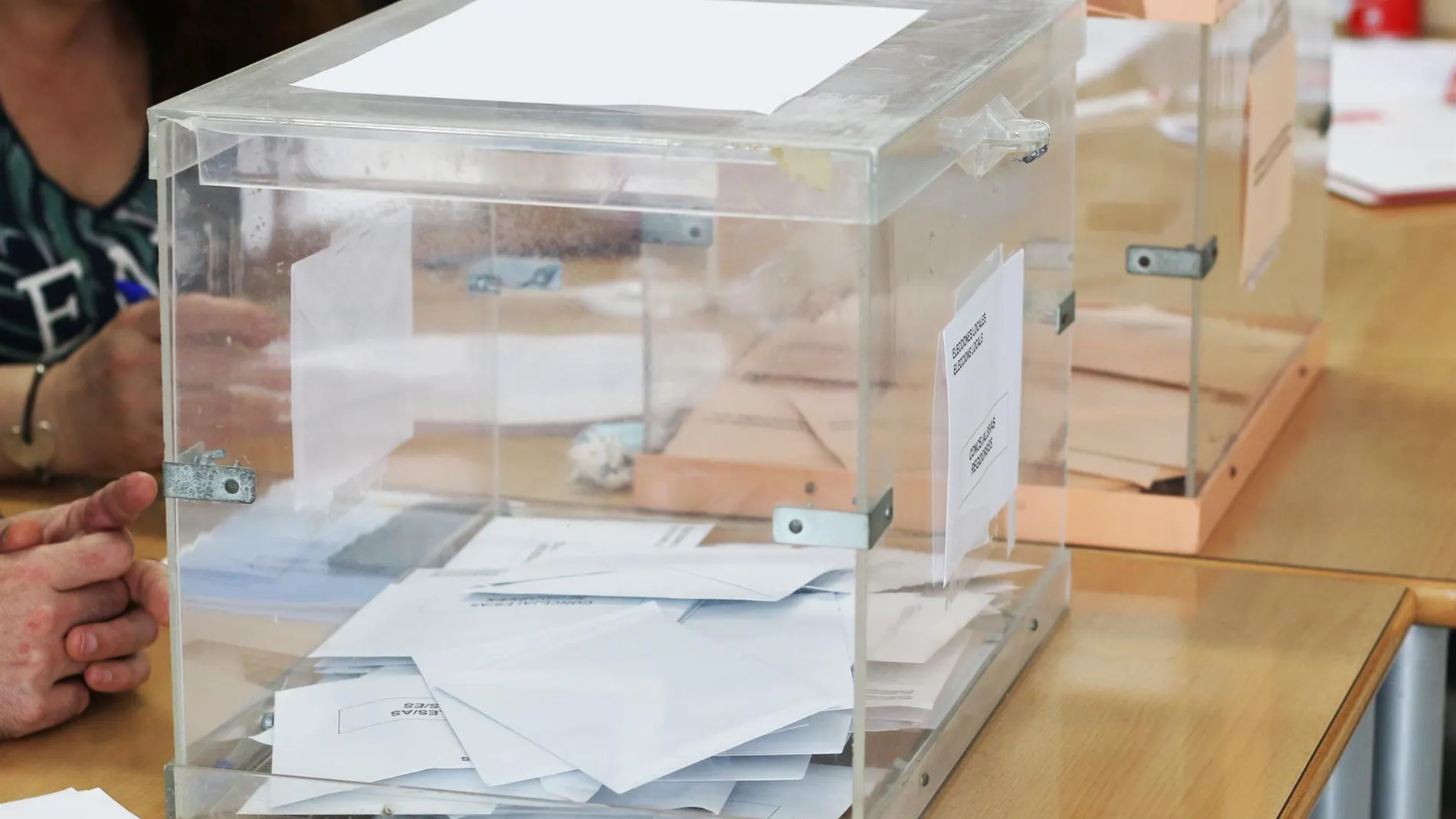
In the Supreme Court (TS) they are determined to issue their ruling on the “grandchildren law” “as soon as possible.” After the precautionary stoppage of registrations in the census of Spaniards abroad (CERA) until this pronouncement is produced – the Chamber must resolve the appeals filed by Iustitia Europa and Vox –, time is of the essence despite the fact that on the horizon, for now, only the municipal and regional elections of May 2027 appear on the electoral horizon. Enough time, although sources from the high court point out that the procedure “is very conducive to getting tangled.” Something that would occur, they explain, if a large number of people harmed by the decision of precautionary suspension appear (for example, people who have already gained Spanish nationality thanks to the “grandchild law” and who have seen their registration on the electoral roll paralyzed, seeing their right to vote suspended). A flood of co-defendants, these same sources assume, the sentence could be delayed “even years.”
And the fact is that a massive appearance of injured parties would multiply the procedures of the procedure (until now, in addition to the appellants, the Central Electoral Board, the State Attorney’s Office representing the Ministry of the Presidency of Félix Bolaños and the Prosecutor’s Office are present), which would inevitably affect the deadline for the ruling to be issued by the magistrates of the Fourth Section of the Contentious-Administrative Chamber of the Supreme Court.
“The right to vote is not impeded”
In this way, if the procedure gets bogged down, it could be the case – a remote possibility today – that elections would be held (the general ones still have no date) without the Supreme Court’s decision being known, which would undoubtedly redouble the criticism of the court from the Government, which has even legally questioned the precautionary suspension through the mouth of the Minister of Justice.
In any case, the sources of the high court consulted reject that with the precautionary stoppage of registrations in the CERA (agreed upon by the Chamber with the vote against a magistrate) “no one’s right to vote is impeded.” “The right to vote can be exercised if you meet all the legal requirements,” they emphasize before remembering that what the Supreme Court is precisely trying to resolve is “if one of those requirements, registration on the electoral roll, is met.”
This right to vote, they point out, is “severable” from registration in the CERA and in fact – they remember – this registration does not give the right to vote in municipal elections. There is, therefore, no “automatic right” to vote if any irregularity has occurred, for example at the time of registration on the electoral roll, in this case in execution of an instruction from the Ministry of Justice that presumes that all Spaniards who left the country between 1936 and 1955 are exiles for political or ideological reasons, something that the high court calls into question (in fact, it has ordered the Central Electoral Board to urge consular registries to identify which new Spaniards have acceded to nationality for the benefit of that presumption and who documenting that exile).
Controversial Justice instruction
If the Chamber finally considers this instruction from the General Directorate of Legal Security and Public Faith illicit, it will be necessary to see how the magistrates articulate the right to vote, or its withdrawal, to people who have already accessed Spanish nationality thanks to the “grandchild law” and who have their right to vote provisionally suspended.
But, in any case, the Supreme Court emphasizes the significance of the decision, to the extent that “we are not talking about a hundred people”, but rather about the “electoral fabric of the country” itself and a possible manipulation of the census, an expression of the sovereign will of the Spanish people.
While waiting to see how the processing of the procedure evolves, in the highest judiciary of our country the criticism of this precautionary stoppage by the Government has not fallen on deaf ears. The president of the Supreme Court, Isabel Perelló, reacted to these attacks last Thursday, urging the judges in the presence of Felipe VI, at the solemn opening ceremony of the Judicial Year, not to give in to “influences, pressures or interference.”
“What is happening is very serious”
Court sources support its president and tell LA RAZÓN that “what is happening is very serious.” “The situation seems horrifying to me,” they say, showing their astonishment at these public questions from the Executive. The latest, those of Minister Bolaños, who stated this weekend that the precautionary resolution is legally debatable. Other sources point to the “level of degradation we are reaching” and warn that the attacks undermine the credibility of Justice among citizens.
But, at the same time, they assume that the situation “has no remedy” because “the criminal actions that affect the Government” are getting “worse every day.”
“Anyone who does not accept that the mission of the contentious-administrative jurisdiction is, precisely, to control the legality of the actions of public powers has not learned what the foundations of the Rule of Law consist of,” they point out. And they resort to a well-known quote from the famous jurist Eduardo García de Enterría, who stressed that the fundamental task of the contentious-administrative jurisdiction “is to fight against the immunities of power.”