
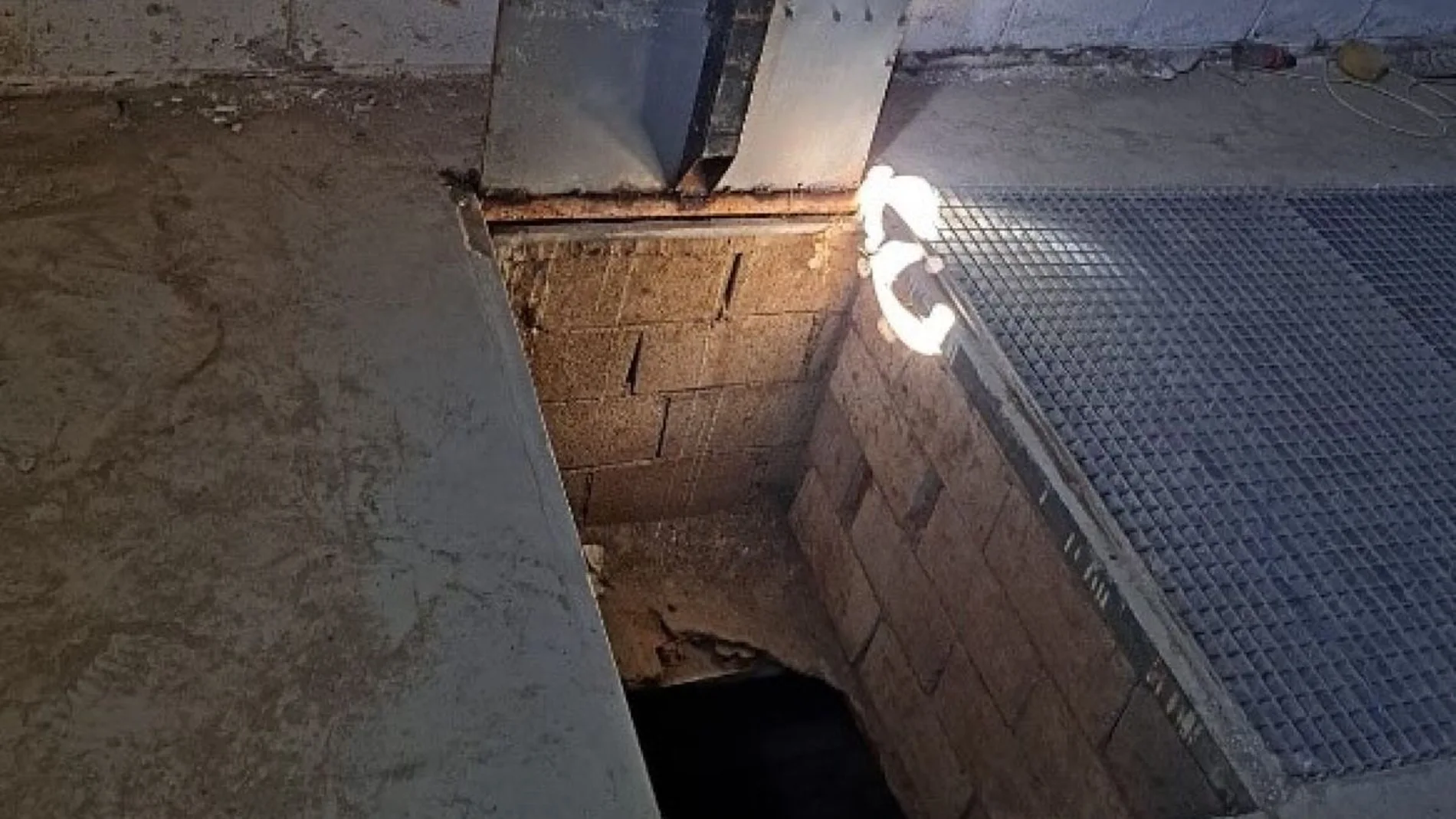
More than a year after the judge of the National Court (AN) María Tardón requested the collaboration of the authorities of the Alawite kingdom to clarify what is happening on the other side of the first narcotunnel discovered in March 2025 in the so-called “Operation Hades”, which underground connected Ceuta with Morocco, Rabat evades the instructor’s request and continues not to provide the requested information.
The head of the Central Court of Instruction number 3 of the National Court sent a rogatory commission to the authorities of the neighboring country after the discovery of the gallery in the Tarajal industrial estate. The objective was to be able to continue investigations in Moroccan territory that the national authorities could only carry out up to the Spanish border. “The incidents could indirectly affect criminal structures in the two countries for which the broadest collaboration between the competent authorities will be necessary,” the judicial resolution then stated.
The first request for judicial assistance was processed through the Ministry of Justice on February 21, 2025. The judge wanted the Moroccan authorities to precisely locate the mouth of the tunnel in their territory, investigate the possible connections of the detainees with criminal organizations based in Morocco and inform the Court what steps they had carried out to determine possible responsibilities. But the answer is still waiting.
Rabat’s silence forced the requirements to be reiterated. In July 2025, Tardón issued a new order to know the result of the rogatory commission. The next day, the Ministry of the Presidency, Justice and Relations with the Courts once again requested the documentation from the Moroccan authorities. No response was obtained then either.
The judge insisted again in January of this year to demand Moroccan collaboration, when it was almost a year after the first request. The situation, however, and according to legal sources consulted by this newspaper, remains unchanged.
Mutism now takes on special relevance due to the migratory crisis in Ceuta after the massive entry of immigrants in an irregular situation last July and due to the “stand-by” relations between Spain and Morocco, but also due to the place to which the infrastructure would lead. The investigations locate the Moroccan mouth in the vicinity of Castillejos and in an area subject to special security measures. The investigation seeks precisely to clarify how a gallery intended for drug trafficking could be built and maintained for at least, and as this newspaper reported, 10 years just a few meters from one of the most guarded borders in Morocco.
The drug tunnel led to an old marble factory in the Tarajal industrial estate and was about twelve meters deep. Investigators maintain that it had been used for years to introduce hashish from Morocco, avoiding border controls. Once in Ceuta, the drugs were later transferred to the Peninsula.
Judge Tardón is investigating an organization that would have had a security structure to facilitate drug trafficking and in which Civil Guard agents stationed in Ceuta also appear to be allegedly corrupt. There are, in fact, four agents charged in the case for allegedly providing cover to the criminal group in exchange for money.
The procedure, in which a total of fifteen people were arrested, now tries to reconstruct how long the tunnel was operational, who participated in its use and what structure existed on the other side of the border. And all this in the middle of a migration crisis in the autonomous city, which has caused the “collapse” in the region and has become a true “way of the cross” for the Government of Pedro Sánchez.
On the other hand, Judge María Tardón is also the instructor in charge of investigating what happened before the massive entry of immigrants into Ceuta last July. The judge decided to open preliminary proceedings when she saw evidence of crimes against the peace and independence of the State and ordered the Central Unit of Illegal Immigration Networks and Documentary Falsities of the National Police (Ucrif) to prepare a report that would determine whether it was a “concerted” action by a criminal organization. The judge also wants to know the identification elements of those who could have participated in such actions.
Used for “migrant entry”
Furthermore, as this newspaper already reported, the narcotunnel would not have been used solely for drug trafficking. Sources consulted, both legal and close to drug trafficking cases, assured that at some point these passageways would have been used to facilitate the entry of other types of merchandise such as weapons or even for the irregular entry of migrants. The fact that they could be used for the entry of migrants now takes on special relevance after the migration crisis surrounding the autonomous city of Ceuta.