
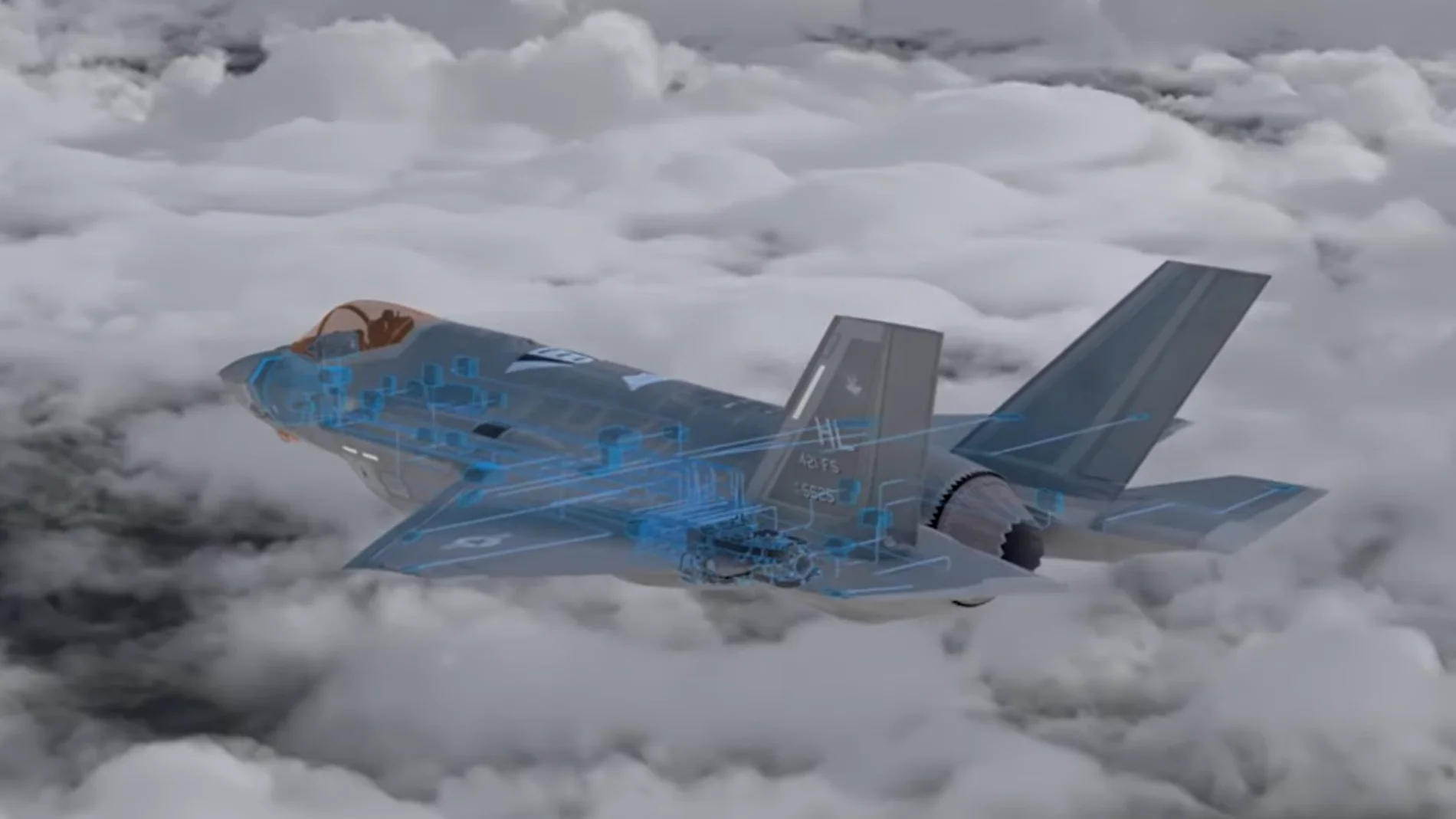
Fighter planes have an invisible enemy that does not appear on radar nor can be shot down with a missile: heat. Every electronic system that consumes electricity also generates heat, and the more sophisticated an aircraft is, the greater the challenge is to keep all its components within their operating temperature. The problem is especially important in the F-35 Lightning II, designed to incorporate new capabilities for decades. More sensors, computers and mission systems also mean greater electrical and thermal demand.
Now Collins Aerospace, an RTX company, has completed testing at different altitudes of EPACS (Enhanced Power and Cooling System), a new power and temperature management system intended to provide the F-35 a much greater cooling margin. The company says the technology is designed to meet the needs of current systems and future aircraft upgrades.
The test lasted several days and subjected the system to power levels that replicated the demands of a mission, pushing it to its operational limits under different altitude conditions. The objective was obtain data on their behavior and test the models used to predict their performance.
To understand why a fighter needs a specific cooling system, you have to imagine its interior as a small technological center. The F-35 needs to produce and distribute electricity to power its numerous systems, from sensors and mission computers to communications equipment. But a part of that energy inevitably ends up being transformed into heat and that heat must be extracted. The aircraft currently has an Energy and Thermal Management System (PTMS) in charge of managing both the energy and temperature of the different subsystems. The problem is that the continued modernization of the F-35 increases thermal needs.
In 2024, Collins announced that EPACS had demonstrated a cooling capacity of 80 kilowatts, more than double the current capacity the company attributed to the F-35, with the goal of providing sufficient headroom for future upgrades. The figure can be difficult to interpret. It does not mean that the system produces 80 kW of coldas if it were a gigantic air conditioner. A refrigeration system does not create cold: it extracts heat from one place and transports it to another from where it can be expelled.
In a conventional airplane it is already complicated to manage this process. In a supersonic fighter it is even more difficult. You can’t just add a huge cooling system. Space is limited, every kilogram affects performance and any new system has to work while the aircraft endures large changes in temperature, pressure, speed and load.
In addition, thermal management is related to the use of engine bleed air, compressed air that can be extracted from the engine to power certain aircraft systems. Collins has proposed EPACS as a more efficient solution that allows increasing cooling capacity and, at the same time, reducing certain demands on the engine. This is important because the cooling system is not a separate accessory. It is part of the aircraft’s energy architecture. So why try it at different altitudes?
The reason is simple: a system that works perfectly on the ground will not necessarily perform the same at high altitude. As an aircraft climbs, air pressure and temperature and the conditions under which its thermal systems operate change. That is why altitude testing is an essential stage before considering a mature technology for integration. Collins subjected EPACS to various altitude conditions and power levels for several days, including situations close to its operational limits. The results will serve to validate the models that engineers use to predict how the system will respond during flight.
The importance of EPACS goes beyond getting the F-35 simply “cooler.” The F-35 is designed to receive new technologies throughout its useful life. That means their engineers not only have to wonder what sensors or systems they can install in the future, but also whether the plane will have enough capacity to power and cool them. In that sense, EPACS is not a spectacular update at first glance. It does not directly increase the speed of the F-35 or its range or weapons capacity. It does something less visible, but fundamental: it creates thermal space so that the plane can continue to evolve.