
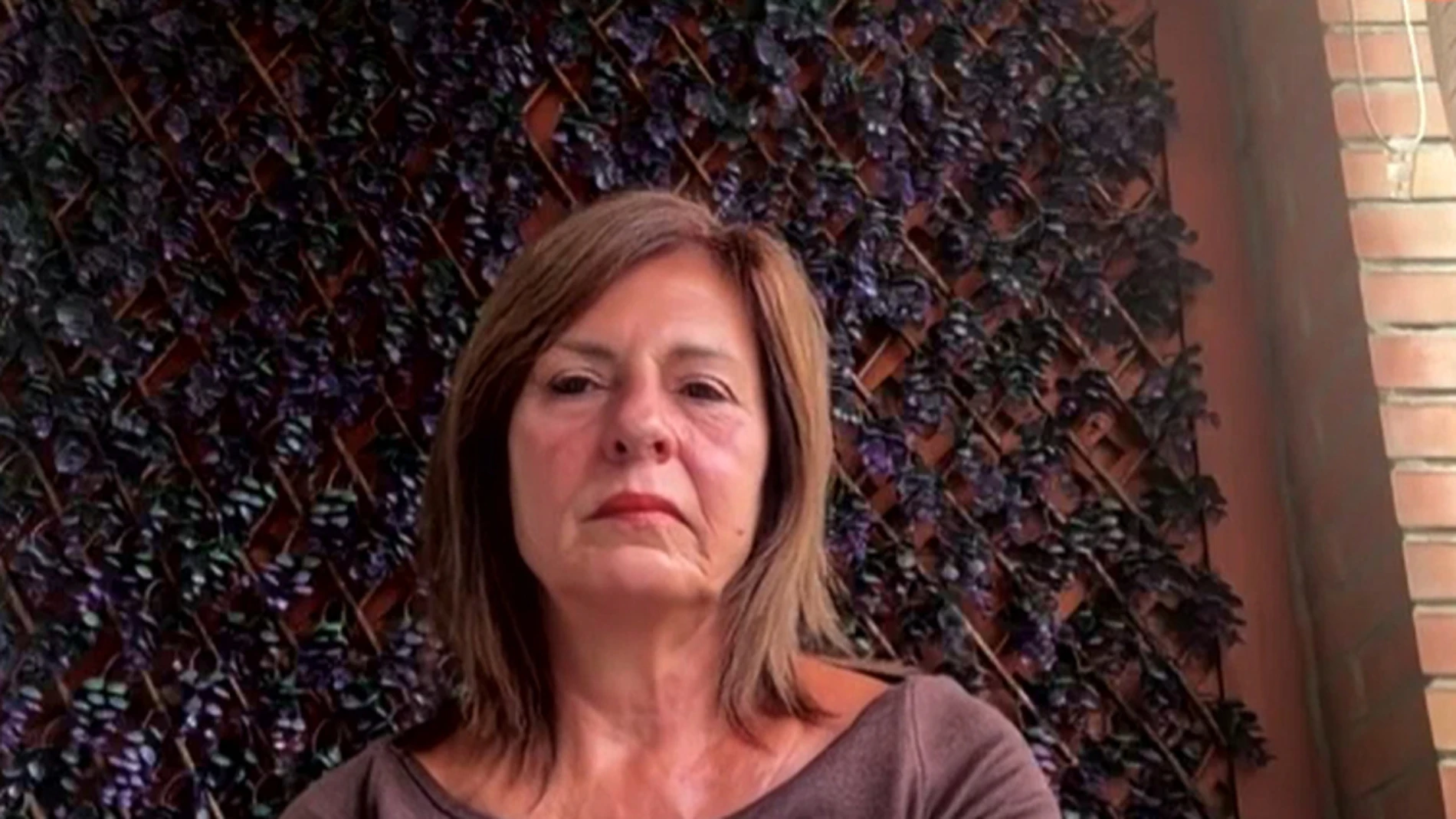
On the other side of the phone, Mabel Deu interrupts the conversation with LA RAZÓN. «Sorry, there is chaos breaking out here. Now there is a demonstration that is going to the Government Delegation. At five in the afternoon and live, he broadcasts the situation of the last protest to us. «Of course, after Minister Robles’ statements and what she said about the CNI and that they notified the State Security Forces and Bodies, “A call is being circulated through networks for people to go and ask for the resignation of the delegate.”
This time, he has to observe the crisis derived from the invasion that took place almost a month ago in his city, Ceuta, from his window. Like most of his countrymen, who are forced to remain confined to avoid insecure situations, he spends most of his time at home.
Nothing to do with the role it played five years ago, when around ten thousand immigrants crossed the border – and that already seemed like the end of the world. Then, she had to be a witness and protagonist as vice president of the local government and in charge of the Minors Area.
In 2022, after Justice opened an investigation for the return of fifty children to Morocco, he left the jurisdiction of Minors. In May 2023, she left the local corporation and, two years later, she received the blow: the Provincial Court of Cádiz sentenced her, along with the Government delegate in the autonomous city, Salvadora Mateos, to nine years of special disqualification from holding public office. Why not “they followed any legal procedure” in the repatriation of children.
The “mess,” he recalls, began in August. In the middle of the month. In the course of a normal day. After reaching a consensus with the Executive of Pedro Sanchezthe two competent administrations had resolved to comply with an agreement signed between Spain and Morocco in 2007 on the illegal emigration of unaccompanied minors and which had never been applied before.
Since May, the month in which the ten thousand illegal immigrants entered Ceuta, the objective has always been the same as now: to decongest the city with an effective repatriation of the North Africans. Majors and minors. «The President of the Government came to Ceuta. Same, same. Minister Marlaska, who was the same, the same. “They said that everyone had to return and we started working hand in hand with the Delegation and with the support of the Government of Spain.”
With greater ease, they were able to undertake the expulsion of adult immigrants. The minors were a separate issue. After three months, in the middle of summer, more than 1,000 minors remained. At that time, the return plan approved by the Moncloa and formally requested by Ceuta had already begun – not without controversy.
«There were statements from the King of Morocco saying that all his minors had to return. We started to work on the framework agreement and the Government was the one that, legally, was working with the Interiorwith Immigration and Borders, and with Foreign Affairs”, describes Mabel Deu.
But everything stopped one morning. They had already managed to return some fifty-five minors to the neighboring country. In no man’s land, within the border between Ceuta and Morocco, one morning in which they proceeded to do the same with another group – they used to spend fifteen days a day – five of the children surprised the vice president, who was supervising the entire process, with a maneuver: «They took a piece of paper out of their pocket. There was a request for habeas corpus. It was a paper that anyone would have given him, with the same handwriting in different inks, some blue, others black. He then called the border inspector to clarify the situation. «He called the court and we took them to the police station. “The judge said that they were not detained and could leave calmly.”
But they never left. A few days later, the complaint from the Neighborhood Coordinating Association arrived at the Government Delegation. And the very cautious ones arrived. And the judicial ordeal, with a first summons that ended in a conviction, pending appeal.
Five years later, history tends to repeat itself. The difference is that now those who remain in the city today are as many as those who entered. And the similarity is that today, as in the past, the State has the same resources to protect itself from a “invasion”.
Until yesterday, Tuesday, the Government had refused to reform the law that, according to Justice, its delegate and the Ceuta vice president failed to comply with in that failed return. Without knowing the fine print, it seems to indicate that Pedro Sánchez has responded to the requests of Juan Jesús Vivas and the opposition, with a toughening of his immigration policy. A legal change that, Mabel Deu anticipates, will be in vain. “They’re not coming back.” Precisely because the risk faced by the authorities in charge of weathering the current crisis is the same: a judicial conviction.
«Look. Five years later and what has happened? Nothing. That, instead of 15,000, some 80,000 or 90,000 have entered. Everything remains the same. This has been an invasion in capital letters. After a first attempt in 2021, there remains a weakness on the border, without sufficient means or resources to prevent transgressions of this nature. “No measures have been taken to return to normal.”