
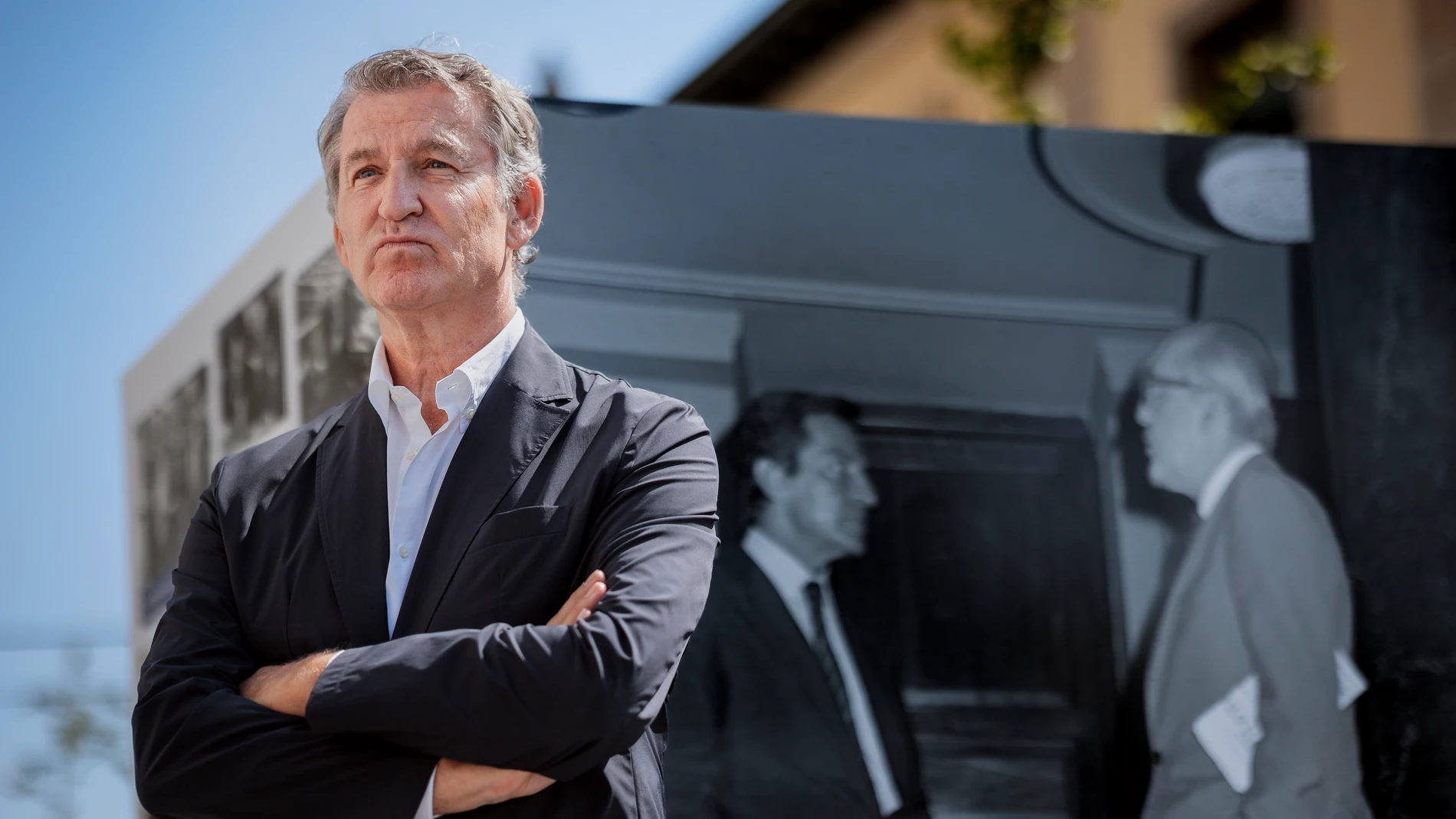
Twenty days after the massive assault of immigrants (72,000, according to official figures) from Morocco on the Ceuta border, the leader of the Popular Party, Alberto Núñez Feijóo, repeats his visit this Wednesday. He does so for the second consecutive time and in full escalation between the local administration and the central government, which little by little is breaking the apparent truce that he maintained with Juan Jesús Vivas, president of Ceuta.
First it was Mónica García, who reproached the Government of Ceuta for the lack of spaces to house immigrants and carry out epidemiological tests. The same reproach was later launched by the Minister of Migration and Government spokesperson, Elma Saiz, who yesterday took a step further in her criticism and speculated on the possibility that the local corporation, due to the dependence that the PP has on Vox in some territories, decides to turn off the tap on the social entities that are helping foreigners.
“I am very concerned that this happens here, I am going to be vigilant,” the minister warned on public television. On the other hand, Saiz defended himself against the opposition’s attacks due to the disembarkation of ministers and referred to the visits of popular leaders to Ceuta: “Are they coming to collaborate, to improve the situation, or are they even coming to take photos with agitators, to create tension and say high-sounding words and statements against the Government of Spain?”
According to the Moncloa spokesperson, if the Vivas Government has decided to threaten legal action if the crisis is not resolved within a month, it is because Feijóo orders it. The theory he shared is that if the Ceuta authorities denounce that there is no return to normality or demand more resources from the central Executive or, directly, ask it to take charge of the situation, it is because there are “guidelines from Genoa” that, in essence, what they do is complicate collaboration between administrations.
“That is not an attitude of a state party or having lofty vision,” protested Saiz, who confirmed the growing tension with the Ceuta government, which with each passing day raises its criticism for the government’s “lack of will” in resolving the crisis.
With his visit today, Feijóo seeks contrast with Pedro Sánchez, who was there on August 1 and immediately headed to La Mareta, the official residence of Lanzarote where he spends his holidays. Since then, the president has appeared twice: once, on his social networks, on the occasion of a highly criticized playful publication; and another, last Monday, with an image in which he appeared in an office during a telematic meeting with members of his cabinet.
“Can you imagine President Calvo Sotelo filming some videos about his favorite summer songs on a sofa in the Moncloa Palace when a part of the Spanish territory is being occupied?” the popular leader criticized yesterday, during his participation in an event on the occasion of the centenary of the birth of Suárez’s successor as head of the Government in the second legislature of democracy.
In his speech, Feijóo invited the audience gathered there to “imagine what men like Calvo Sotelo or Suárez would have done in the face of an unprecedented situation like the one a part of Spain is experiencing: the autonomous city of Ceuta.” Contrasting the present with the past, he described the Government’s actions as: “Absent, inert and indifferent to the interests, security, integrity and sovereignty of the Spanish people.”
This Wednesday, the popular leader will have the opportunity to address the crisis in more depth hand in hand with Juan Jesús Vivas. The two will meet in the afternoon and will appear before the media.
Yesterday, the deputy secretary of Institutional Regeneration of the PP, Cuca Gamarra, did the same, who spent the entire day in the autonomous city and, together with President Vivas, denounced the lack of solutions on the part of the Government: “This normality that is being talked about does not exist. He has not recovered. The freedoms and rights of the people of Ceuta, as Spaniards, are not guaranteed.
A message that was endorsed by the president of Ceuta, who gave an account of the emotional state of his neighbors. «It is a population that is outraged, that feels powerless, and that feels, rightly, abandoned, because the Government of Spain has the capabilities and means to put an end to this situation. “It’s a matter of political will.” A complaint that Feijóo will repeat today.
Vivas, in response to the accusations of “xenophobia and racism” made by the Minister of Health, clarified that the people of Ceuta are “solidary and humanitarian”, but demanded the return of all immigrants who crossed the border illegally and who, even today, remain in the city.
«Let efforts be made to try to urgently process these files. If you want, you can. And if it is not being done it is because it is not wanted. “It seems that we are crying out in the desert,” lamented the Ceuta president, who today will receive the support of Feijóo.