
When OpenAI trained ChatGPT it didn’t ask it to learn psychology. No one taught him what extroversion is, how anxiety manifests, or what traits the most impulsive people tend to share. His only task was something much simpler: read huge amounts of text and learn to predict what the next word would be.
However, a new study published in the journal iScience suggests that, during that process, the model learned something unexpected. Without having received specific training in psychology, ChatGPT appears to have built a surprisingly accurate representation of human personality simply from the language we write every day.
“Since personality traits are reflected in language, large language models could have learned the structure of human personality as a natural byproduct of their training,” explains Rotem Monsa, from the Hebrew University of Jerusalem and leader of the study. They were not taught psychology explicitly, but that information is already encoded in the language they learn.”.
Every conversation, every comment on social media, every novel and every article contain much more than information. They also reflect the way we think, feel and relate to others. A distrustful person does not usually express himself in the same way as another optimistic person. Someone who is very meticulous uses different language than someone who is impulsive. On an individual scale, those differences may go unnoticed, but when a model has read billions of words, a pattern begins to emerge. The Monsa team’s hypothesis was precisely that: If personality leaves traces in language, a model trained with enormous amounts of text could learn those regularities without needing to study psychology.
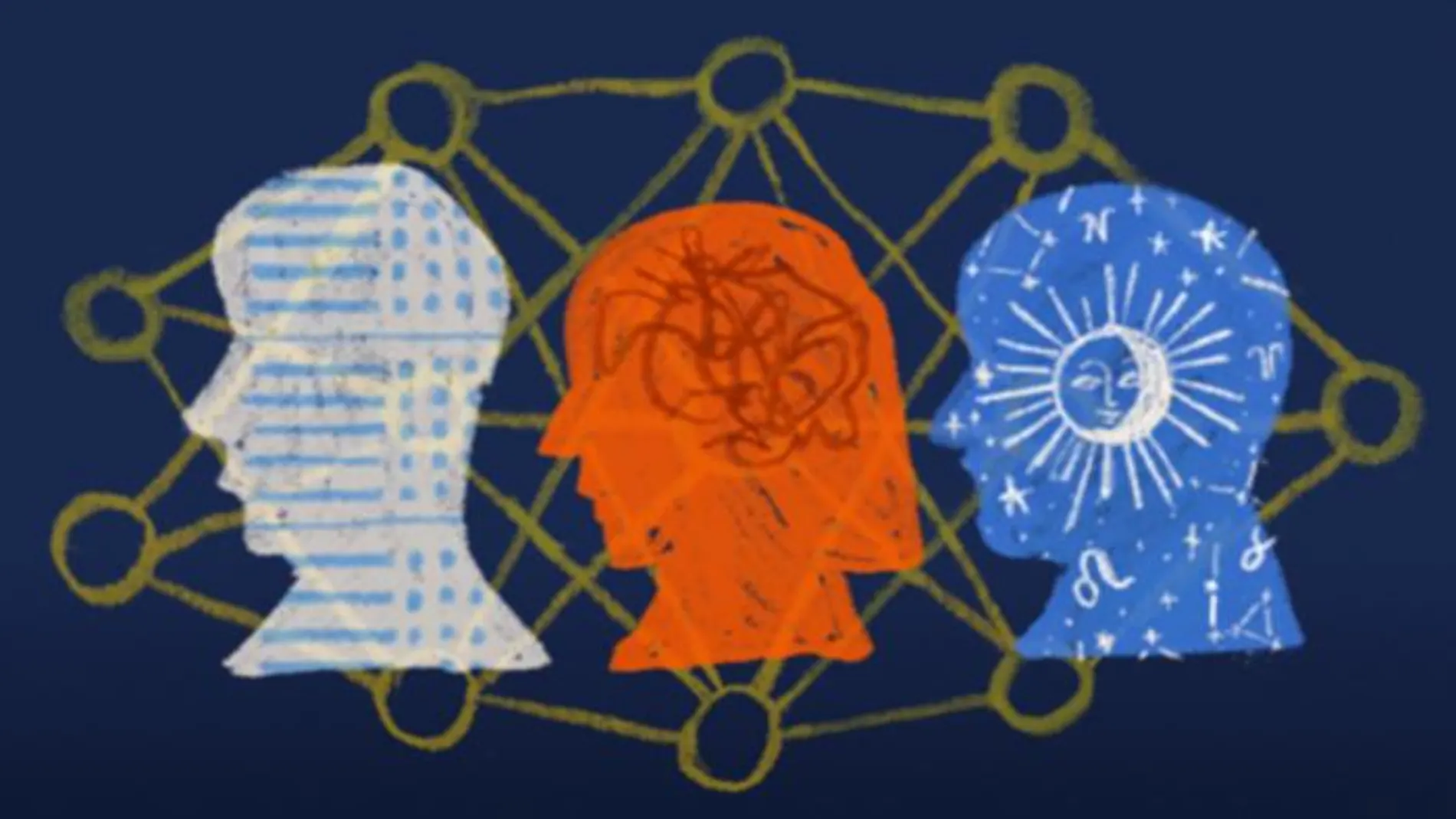
To verify this, the scientists did not ask ChatGPT to answer a psychological test; They did something much more interesting. They gave him two completely different books and asked him to build a personality questionnaire from them. The first was the DSM-5, the manual used by psychiatrists and psychologists to diagnose mental disorders and one of the most important clinical references in the world. The second was, deliberately, an astrology book.
“We wanted to use two texts that describe human personality in great detail, but located at opposite extremes from a scientific point of view,” adds Monsa. The DSM-5 is the fruit of decades of clinical research. The astrology book is part of a cultural tradition, but lacks scientific validation”.
From both texts, GPT-4 raised similar questions to those that appear in personality questionnaires. For example, after reading the DSM-5 description of paranoid disorder, he made statements such as “I tend to be suspicious of the intentions of others” or “I find it easy to trust other people.” questions that 600 volunteers then had to evaluate.
The Monsa team compared the results with the well-known Big Five Personality Traits questionnaire, considered one of the most solid instruments in modern psychology. The questionnaire based on the DSM showed high internal consistency and reproduced psychological patterns very similar to those observed with the Big Five. So far, nothing particularly surprising; The strange thing came with the second questionnaire.
The constructed questionnaire From the astrology book he was also able to predict variables such as anxiety, depression or well-being; The authors themselves verified that the personality groups associated with the signs of the zodiac did not form coherent psychological dimensions. In other words, the study does not validate astrology; What it shows is something much more interesting.
Even a text without a scientific basis contains abundant descriptions of human traits. ChatGPT was able to extract those descriptions and turn them into a useful questionnaire, but not because the zodiac signs really describe the personalitybut because the language used to talk about them is full of recognizable psychological characteristics. Does that mean astrology works? No.
“The fact that the models can predict response patterns before seeing any human data suggests that they have learned something really significant about human psychology,” Monsa finally notes. We assume that in other languages and cultures, the results will not be as strong. like those we observe here, since the LLMs were mainly trained with English texts from Western cultures.”
The authors believe that this ability could greatly accelerate the development of new psychological questionnaires. Instead of manually writing hundreds of questions and validating them for years, a language model could quickly generate different versions and provide a first estimate of their consistency before even administering them to people. That does not mean that it will replace psychologists or psychiatrists. It also doesn’t imply that ChatGPT understands the human mind like a professional does. What he seems to have learned is something else: the statistical regularities that millions of people leave when they speak, write and tell who they are.