
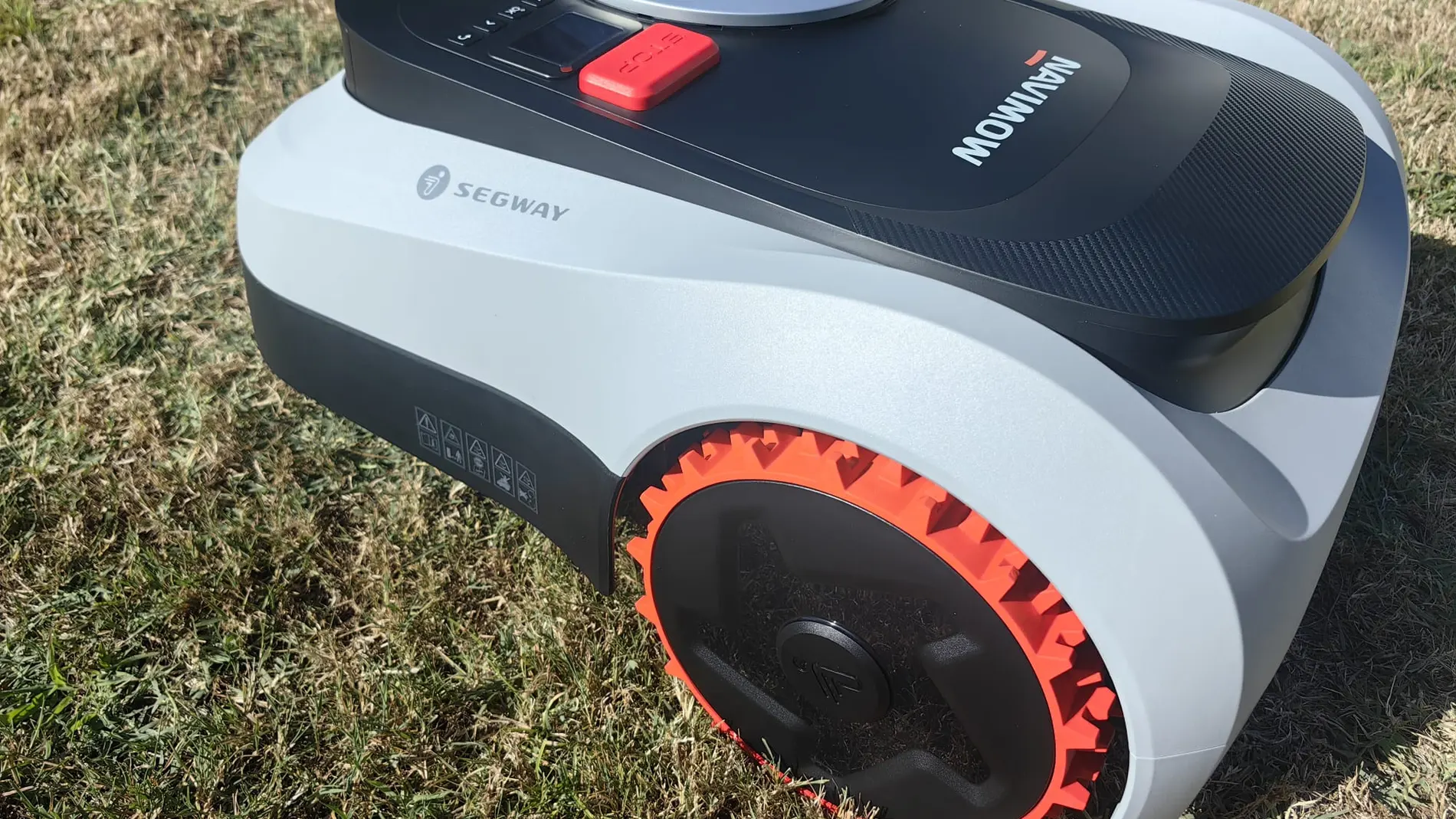
At the beginning of time (at least in the garden robotics timeline), an autonomous lawnmower was little more than a Roomba for the garden. It would advance a few meters, hit an obstacle, turn randomly and start again. The result ended up being acceptable, but the method was extraordinarily clumsy. If we add to that that the installation of a perimeter cable was inevitable and that connectivity was part of the realm of the unthinkable, Yes, we had a robotic lawnmower, but it was basically a Scalextric track car. And then the new robots arrived: cordless, connected, with better blades and waterproof.
One of the names of this change is LiDAR and what distinguishes the Navimow i220 LiDAR is not that it cuts the grass better, but that, for the first time, it gives the sensation of understanding the garden through which it moves. Instead of relying on buried perimeter cables or an RTK station to triangulate its position, this model combines a three-dimensional laser sensor with cameras, artificial intelligence and connectivity to build a permanent map of the terrain. The garden stops being a space to explore at random and becomes an environment that the robot knows. And that difference is noticeable from the installation.
Setting up a robotic lawnmower has traditionally been the least enjoyable part of the experience. Place antennas, search for GPS coverage, calibrate positions… In this case, the process is greatly simplified because it is enough to install the charging base, connect the power and walk the perimeter once. from the mobile application so that the system generates the map. It even allows you to edit it later by creating independent zones, corridors between plots or prohibited areas where you should never enter. Almost a plug&play. It took me longer to unpack everything and plug in the charging station than it did to map out the 300m garden.2.
Generally, with this type of home robots, it is essential to download the application, register, name the robot (in our case Greengo) and update it frequently because the map does not look good, the network does not detect it or other details. In this case (and it is one of the first, I confess) The Navimow application is probably one of its strong points. From it you can modify practically any parameter: schedule schedules, select only certain areas and cutting height for each one, adjust the cutting direction to avoid repetitive marks on the grass, follow the position of the robot in real time or consult the complete history of work carried out.
Regarding the height adjustment, it also surprised me, they are generally managed in a very precise range with 5 or 6 possible variants: this lawnmower has Very flexible “scissors”: from 20 to 70 millimeters in intervals of just 5 mm.
Regarding the garden area, the i220 LiDAR Pro is designed for areas up to 2,000 square meters. In these cases a single battery charge is not enough, a minimum of three charges will be required and this is where the programming option becomes essential.: I have tried it at night, programming it for the most sleepy hours and I can hear almost nothing.
Tip: if we have a garden above 500 m2scheduling the cut at night (early mornings bring dew and the cut is not as efficient) helps it charge itself and get back to work from where it left off. What if it rains? The i 220 knows this and avoids leaving. Despite this, the water may catch you in the middle of your work. There is no problem thanks to its IP66 resistance: it does not resist pressurized water, but using a hose to clean it is not scary at all.
Where it really surprises is during navigation. The robot no longer cuts following random trajectories. Plan organized routes, start at the edges and then complete the interior using much more efficient parallel lines. The result is a lawn with a uniform finish and considerably less working time than in previous generations.
The vision system combined with LiDAR also identifies obstacles quite effectively, even though on the “testing ground” there are pets, a pool, and toys lying around in a non-strategic way. Just to try it, we threw away a sock. And he avoided it. What caught my attention, I confess, was that He could not see the images from the camera that he uses to locate himself and detect up to 200 obstacles. It doesn’t worry me either and it can surely be done in a future update.. Segway notes that the i220 can handle slopes of up to 45% or 24º. I could not test this, but if we have a garden with significant slopes, the i220 has an older brother with all-wheel drive (AWD) for 100 euros more.
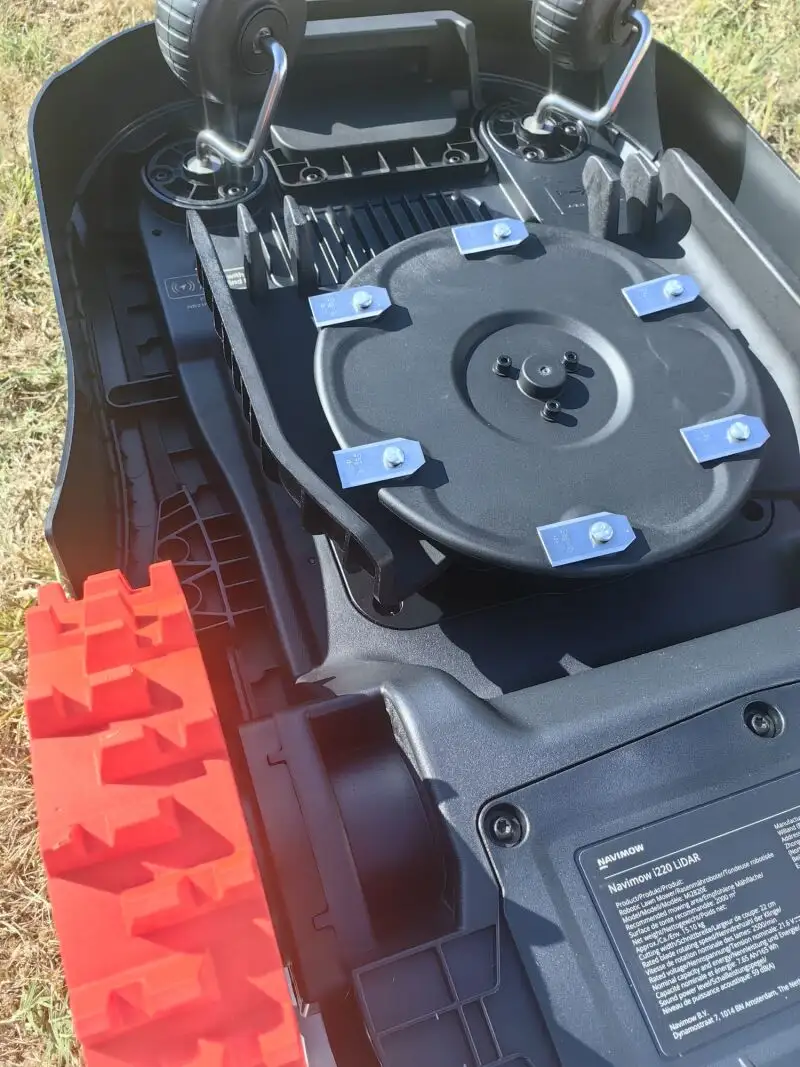
Let’s go to the cut: I was surprised (pleasantly) see that it had six blades. The usual thing is three or four, but with half a dozenthe i220 achieves greater uniformity in the cut, the performance is greater when it comes to crushing the grass and helping to maintain the green. The “negative” part is that you have to replace more parts… it is not a major expense and depending on the frequency it is something that takes at least six months to happen.
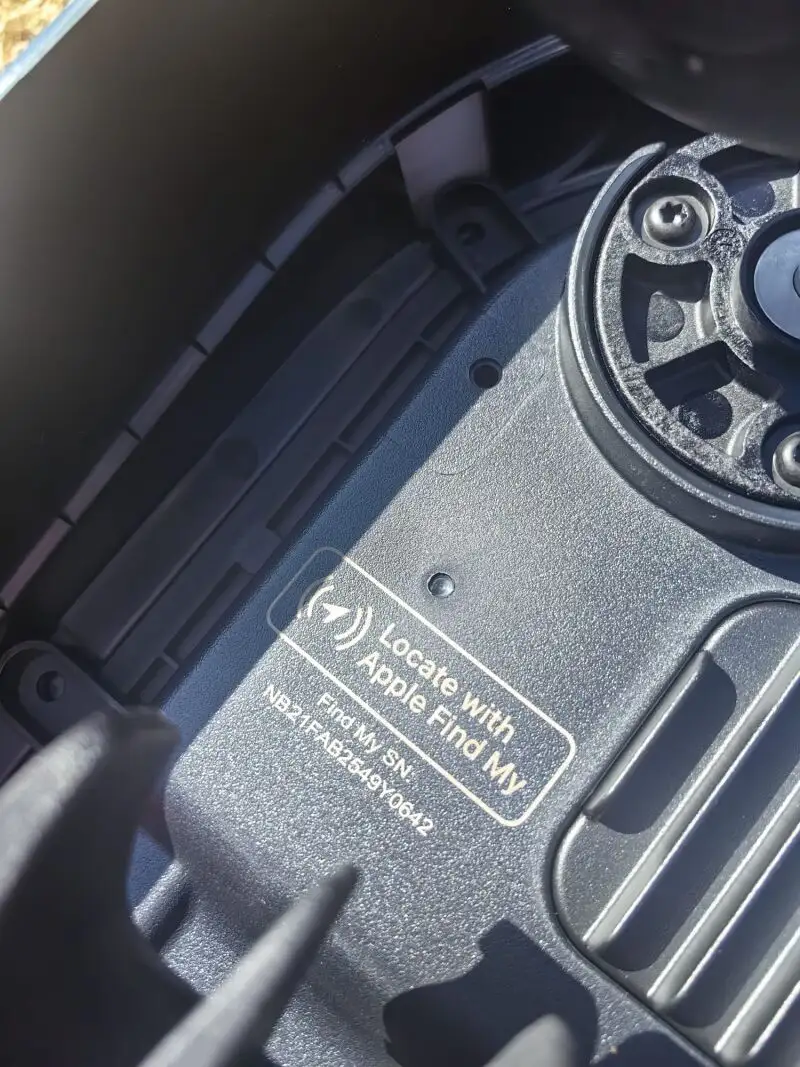
Another interesting aspect is the anti-theft protection. The robot requires a PIN code from the first power on, It incorporates an alarm when someone picks it up and, thanks to 4G connectivity, it can continue to be located even outside of Wi-Fi range. The data subscription is free for the first year and subsequently costs approximately 30 euros per year, a reasonable figure considering that it also keeps geolocation and remote monitoring active.
Finally, a personal reflection. It has rained a lot since Dean Kamen founded the Segway company in 1999 to market that bicycle that moved in response to human movement and that today is used by tourists and security personnel at airports. The interesting thing is that the name of the company comes from the word followwhich in Italian means to move from one section to another without interruption, without the listener realizing it. Yes, it’s used in music or literature, but with the Navimow i220 LiDAR, Segway has hit the nail on the head: we don’t realize it’s there, we just observe its results.
Verdict
Both the cutting quality, the application and the sound are values to take into account in this lawnmower. The navigation is very effective and the possibility of programming it and grading the cut so precisely also adds points. And, as if that were not enough, the design maintains an aesthetic that ranges from the 1980s to the most advanced today. On the current podium of lawnmowers.