
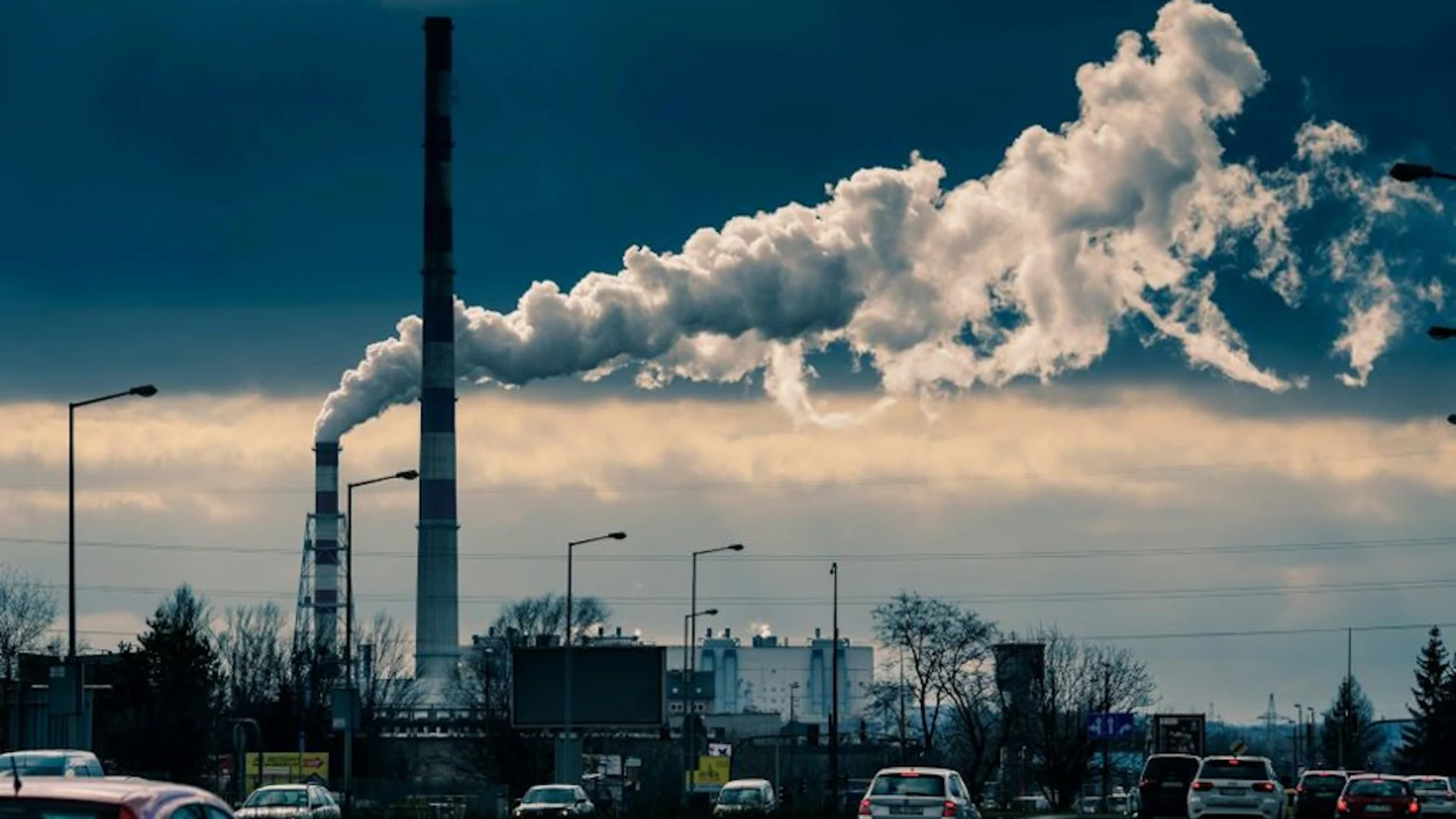
Ecosystems are very sensitive to air pollution. This is what experts from the United Nations Economic Commission for Europe (UNECE) warn, who are working against the clock to fine-tune the tools to accurately measure the impact of pollutants such as ozone, nitrogen oxides or sulfur dioxide on nature, in a scenario that climate change aggravates, according to an analysis by the European Environment Agency (EEA).
European ecosystems remain under increasing pressure from air pollution. Experts from the United Nations Economic Commission for Europe (UNECE) and the European Environment Agency (EEA) warn that pollutants such as ozone, nitrogen oxides and sulfur dioxide directly affect forests, soils, bodies of water and crops. Although some emissions have been reduced in recent decades, the problem is far from being resolved, especially as climate change intensifies its effects.
New scenarios
These analyzes are developed within the framework of the UNECE Convention on Long-Term Transboundary Air Pollution, one of the main international cooperation spaces on air quality in Europe and North America. There, new scientific scenarios are being prepared that will serve as the basis for the review of the Gothenburg Protocol, the agreement aimed at reducing acidification, eutrophication and tropospheric ozone. The goal set is ambitious, reducing the impacts of air pollution on health and ecosystems by 50% before 2040, taking 2015 levels as a reference.
To measure these risks, specialists use the concepts of critical loads and levels. Critical loads indicate the maximum amount of pollutants that an ecosystem can receive over a long period of time without suffering significant damage. Critical levels, for their part, refer to the concentrations of gaseous pollutants that can cause direct effects on vegetation. These indicators allow us to identify when excess nitrogen alters the balance of a soil or a body of water, or when ozone begins to limit the growth of a forest.
The International Cooperative Program on Modeling and Mapping of Critical Levels and Loads, known as ICP Modeling and Mapping, works together with its Coordination Center for Effects and its Center for Dynamic Modeling to evaluate these impacts under different emissions scenarios. Its experts combine national data, biogeochemical models and ecological analyzes in order to define more precise protection thresholds. This information is essential so that public policies are based on scientific evidence and not only on general averages.
The available data show that the deterioration persists. In 2022, only 11.2% of the agricultural area analyzed met the long-term protection objective against ozone. In forests, the situation is also worrying: more than half of the forest area evaluated has been exposed since 2005 to ozone levels above the critical threshold, and in 2022 only 38% managed to fall below the limit considered safe. These figures reflect that pollution is not a problem limited to cities, but rather a widespread pressure on natural systems.
Health and biodiversity
The scientific review also suggests that simultaneously protecting human health and biodiversity will require more ambitious measures than those focused only on people. By 2040, policies that explicitly integrate ecosystem protection could improve ecological conditions by up to 10% more than health-only approaches. However, progress will be uneven. In several areas of Central and Western Europe, nitrogen deposition is expected to continue exceeding critical loads, making recovery of some habitats difficult.
Experts also emphasize that air pollution does not act in isolation. In forests, for example, its effects are combined with droughts, heat waves, extreme weather events and other alterations associated with global warming. This interaction makes it more difficult to foresee real damage and requires strengthening long-term scientific monitoring. It also requires attention to the most fragile ecosystems, which may be left unprotected if policies are designed solely on the basis of average values for large regions.
In parallel, UNECE is working on updating a technical reference guide on methodologies and criteria for modeling and mapping loads and critical levels. Its new version, scheduled for 2027, will provide a more up-to-date scientific basis for future decisions on air quality. The underlying message is clear, despite the progress made, polluted air continues to be a real threat to biodiversity, agricultural production and the ecological balance of the continent.