
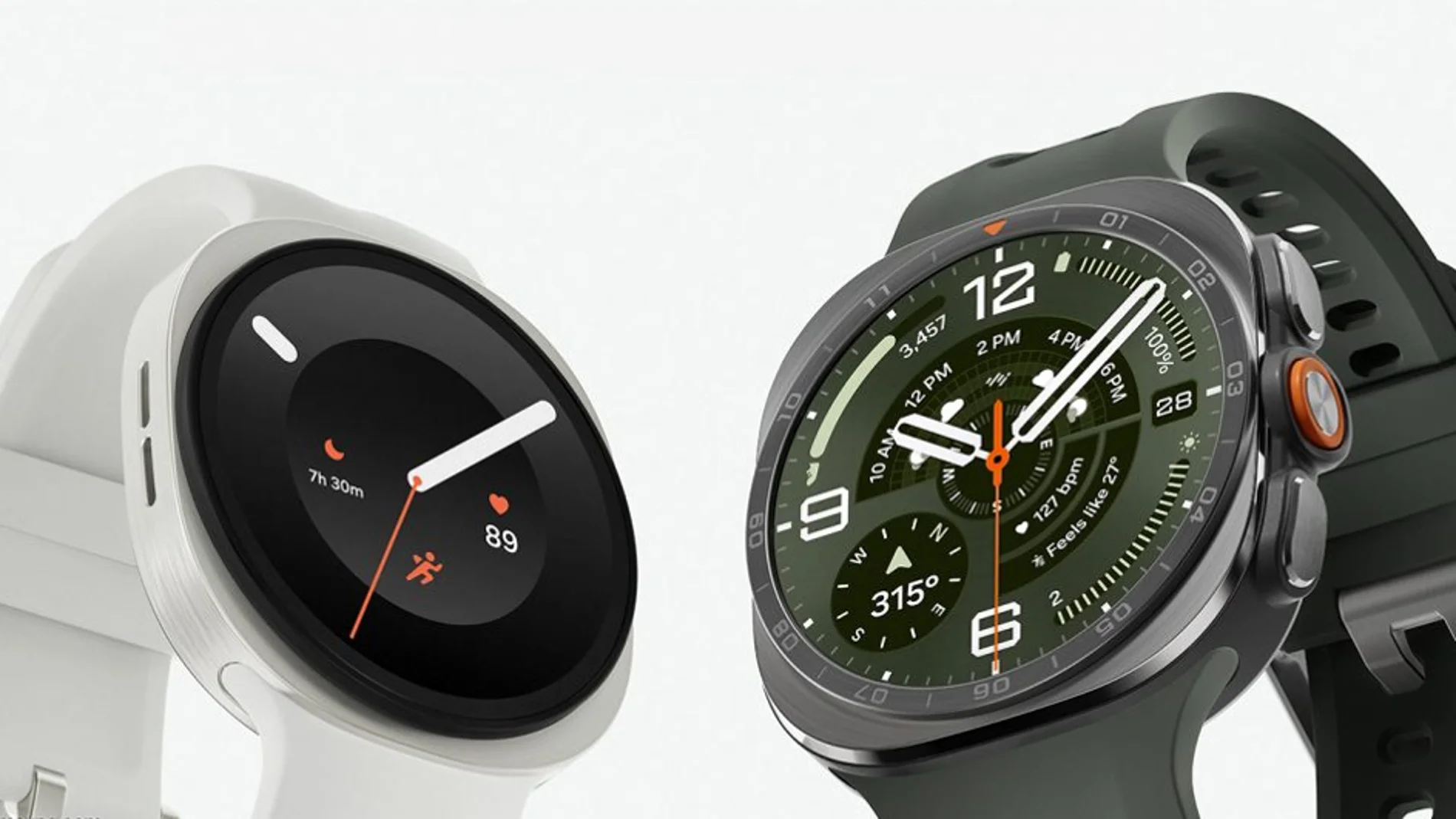
For centuries clocks answered a single question: what time is it? Today, much more complex questions begin to be answered: how did you sleep?; Does our heart work correctly? Are we recovering well from the last training session? Is our stress increasing?… The new ones Galaxy Watch Ultra 2 and Galaxy Watch9 They represent precisely that paradigm shift. Samsung does not present them only as smart watches, but as the gateway to a new generation of preventive health based on artificial intelligence, capable of transforming thousands of biometric data into practical recommendations for the user.
In engineering there is a concept known as digital twin. It consists of creating a virtual copy of a machine using thousands of sensors. This digital double makes it possible to predict breakdowns, detect anomalies and optimize operation before problems even appear. Airplane engines, power plants or even some cities already have one. Now that idea begins to transfer to the human body.
Every day, a smartwatch records thousands of small biological events: heart rate, sleep quality, movement, exercise, recovery time, skin temperature, blood oxygen levels or cardiovascular response to effort. Isolated, these data say little, but when they begin to be shared with each other, they build a mathematical representation of how our body works. It’s not just a medical history, it’s a digital version of ourselves that continually learns how our body responds. That’s probably the biggest change from the first smartwatches. A few years ago these devices were limited to showing figures, today they try to interpret them.
With its new smart watches, Samsung wants artificial intelligence to act as a translator between biology and the user. Instead of presenting a long list of keystrokes or percentages, The system analyzes these biomarkers to offer personalized recommendations on sleep, recovery, cardiovascular health or physical activity. It even incorporates new functions related to sleep apnea, daily cardiovascular load, physical condition or the evolution of different health indicators. The difference seems subtle, but it is huge. It is no longer just important to know how much we have slept, what is important is to understand what that sleep means for our body.
And, to achieve this, the hardware also needed to evolve. Galaxy Watch Ultra2 incorporates an 800 mAh battery (35% more than the previous generation), a screen that reaches 5,000 nits of brightness and the new Snapdragon Wear Elite platformdesigned to process large amounts of information more quickly and efficiently. It is designed for those who practice outdoor activities, with specific functions for mountain races, hydration recommendations and future diving capabilities developed together with Mares.
Galaxy Watch9 takes a different approach. Available in 40 and 44 millimeter boxes, with an aluminum finish and colors such as Cream, Graphite or Silver, it seeks to become a permanent companion, comfortable to wear 24 hours a day. This continuity is essential: a digital twin can only be built if the flow of information is never interrupted.
For centuries we went to the doctor when a symptom appeared, wearables propose to reverse that logic thanks to a constant observation of our… excuse the redundancy, constants. They are not, it must be clarified, medical devices, nor do they offer an unequivocal diagnosis, but they do provide data that can be extremely useful for healthcare professionals. We insist, andThe watch is not intended to replace the doctor, just as a map does not replace the explorer. But the more accurate the map, the easier it is to choose the path. Thus, this type of watch stops being a device that measures time and becomes an instrument that observes life. And the more time it spends on our wrist, the more accurate that digital representation of our body becomes.