
The war in Ukraine has accelerated military reinforcement in the far north of Europe, but for Oslo the challenge goes far beyond defense. The Norwegian Government increases its presence in the Arctic to safeguard a region where the gas that supplies Europe, future shipping routes, critical minerals, fishing and some of the most important scientific projects on the planet come together.
Almost 2,000 kilometers from Oslo, where the Barents Sea merges with the Arctic Ocean and the polar night lasts for weeks, Norway wages a silent race to protect what it considers its greatest strategic asset. In the northern end of the country are not only concentrated some of Europe’s main energy reserves, but also future maritime routes opened by the melting of ice, important fishing grounds, critical minerals and growing scientific activity. For the Norwegian Government, reinforcing its presence in the Arctic no longer responds solely to military reasons. Above all, it is about ensuring that the wealth of the north remain under Norwegian control in a region where international competition increases year after year.
The turning point
The Russian invasion of Ukraine marked a turning point, but it does not alone explain this change in priorities. Long before February 2022, Oslo had already identified the Arctic as the space where some of the great economic and strategic challenges of the 21st century. The war accelerated that perception and turned protection of the north into a national security issue.
For decades, Norway viewed the Arctic primarily as a remote frontier, an immense sparsely populated region where fishing, hydrocarbon exploitation and scientific research coexisted. Today the vision is very different. The north has become a space where the European energy security, the transition towards new sources of energy, competition for natural resources and rivalry between great powers.
The transformation is especially visible in the energy sector. Since the reduction of Russian gas imports following the invasion of Ukraine, Norway has established itself as the main supplier of natural gas to Western Europe. Much of this production comes from the north of the country and the Barents Sea, where new exploration and exploitation projects continue to be developed. This role has given Norwegian energy infrastructure a strategic importance unknown until a few years ago.
Surveillance grows
The sabotage of the Nord Stream gas pipelines in 2022 reinforced that perception. Since then, the Government has increased surveillance of offshore platforms, gas terminals, gas pipelines, undersea cables and communications networks that cross the North Sea and the Arctic. What was once an industrial issue has become a national security issue. The protection of these infrastructures no longer only affects Norway, but also the good part of the European energy supply.
But the Norwegian strategy does not end with hydrocarbons. Oslo looks far beyond oil and gas. The Arctic concentrates some of the resources called to play a decisive role in the coming decades: critical minerals needed to manufacture batteries, technologies linked to the energy transition, carbon dioxide capture and storage projectshydrogen production and one of the most important fishing industries on the continent. For a country accustomed to carefully managing its natural resources, guaranteeing control over that heritage constitutes a top political priority.
The thaw adds a new element to that equation. Although arctic shipping routes still present important limitations, Norway has been preparing for years for a scenario in which traffic between Europe and Asia progressively increases through the north. Ports such as Tromsø, Hammerfest or Kirkenes aspire to become logistical nodes of a future commercial network that would partially modify the traditional flows of international maritime transport. Oslo knows that this change will be gradual, but also that decisions on infrastructure must be made long before traffic reaches significant volume.
Demographics and territory
The commitment to the north also responds to a demographic and territorial logic. For decades, successive Norwegian governments have tried to avoid depopulation of the Arctic regions through investments in infrastructure, incentives for economic activity and the strengthening of public services. Maintaining population in Finnmark and Troms not only has a social component; It also constitutes a way of exercising effective sovereignty over an immense and sparsely inhabited territory, where the permanent presence of the State acquires strategic value.
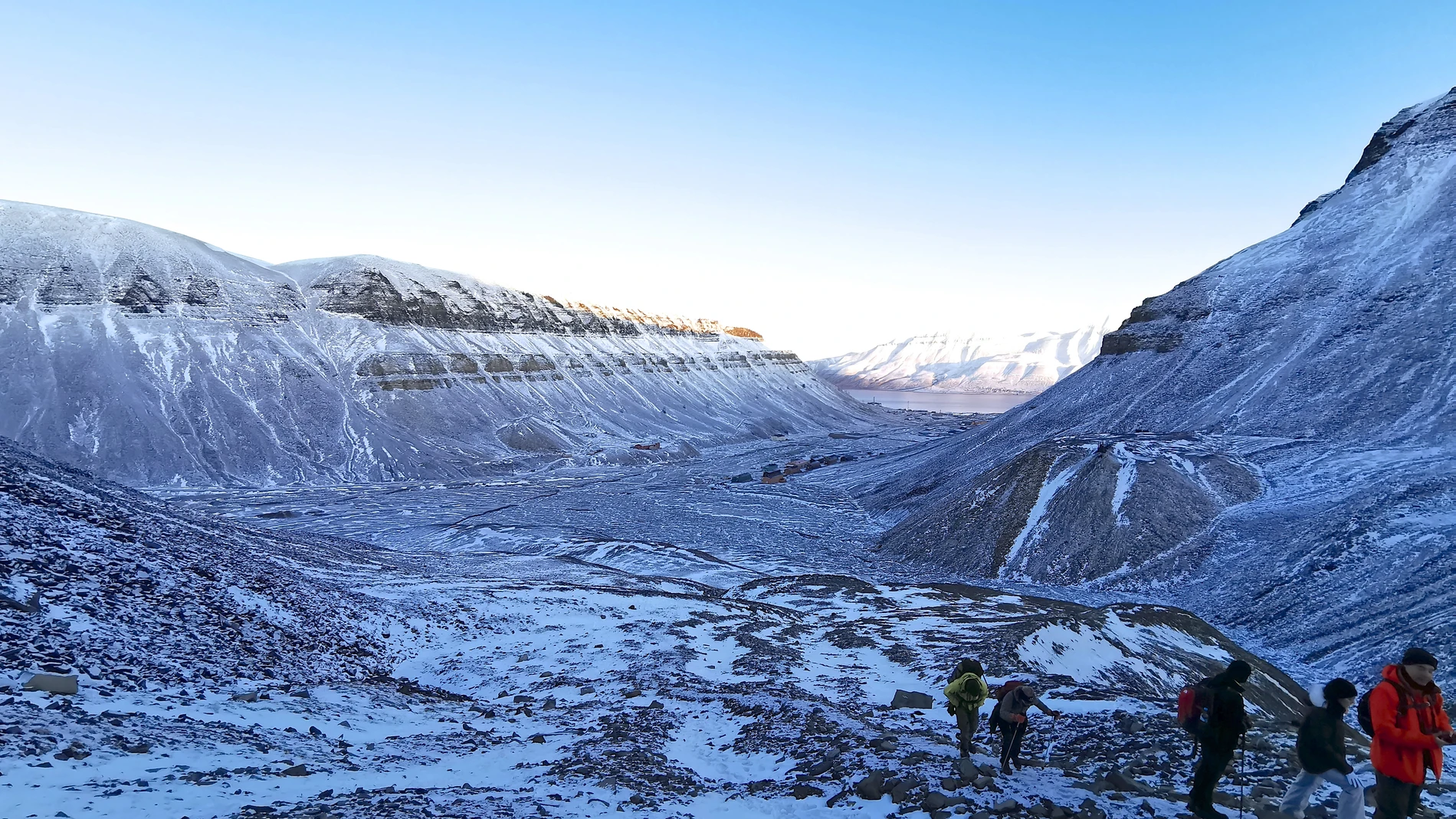
This vision also explains the growing importance of Svalbardthe archipelago located halfway between mainland Norway and the North Pole. Governed by Oslo under the 1920 Treaty of Svalbard, the territory represents one of the most unique examples of the balance between international cooperation and assertion of national sovereignty. Research centers from numerous countries, satellite monitoring stations, top-level scientific infrastructure and the World Seed Bank coexist there, conceived as a reserve to preserve the planet’s agricultural biodiversity.
Svalbard, where interests converge
But Svalbard is also a space where increasingly complex geopolitical interests converge. Russia has maintained a presence in the Barentsburg settlement for decades, while China’s growing interest in the Arctic has increased international attention on the archipelago. Without questioning the current legal framework, Norway has in recent years reinforced its administrative, scientific and logistical presence to make clear that the exercise of sovereignty over Svalbard is part of its national strategy for the Arctic.
Science constitutes, in fact, another of the pillars of this policy. The Government considers that knowledge of the Arctic is an instrument of security. Research on climate change, the evolution of sea ice, biodiversity or meteorology allows us to better understand a region that is changing at high speed and anticipate the economic and environmental impact of these changes. Universities, polar institutes and technology centers work closely with the authorities to convert scientific knowledge into a tool of strategic planning.
This approach differentiates Norway from other actors present in the Arctic. While the international debate usually focuses on the military rivalry between Russia and NATO, Oslo insists on a much broader vision, where defense coexists with research, innovation, sustainable resource management and international cooperation. It is not only about increasing the military presence, but about consolidate a comprehensive presence of the State.
The Arctic of the future
That does not mean that the defensive component has lost importance. On the contrary. Following the Russian invasion of Ukraine, the Government has accelerated the modernization of its Armed Forces, increased the defense budget and reinforced surveillance of the Barents Sea and the Norwegian Sea. The acquisition of F-35 fighters, new generation submarines and P-8 Poseidon maritime patrol aircraft responds to the need to monitor an increasingly strategic maritime space, where nuclear submarines, trade routes and critical infrastructure for Europe converge.
However, even these military investments obey a broader economic logic. The mission is not only to deter possible threats, but to ensure that energy platforms, submarine cables, gas pipelines and future facilities linked to the energy transition can continue to operate normally. In the Norwegian strategy, the defense of the economy It is an inseparable part of the defense of the territory.
Norway knows that the Arctic of the future will be very different from the one it knew during the 20th century. The retreat of ice, the increase in maritime activity and the growing global demand for critical minerals and energy will turn the region into one of the main areas of economic competition on the planet. That’s why Oslo has years preparing that scenario through investments that transcend political cycles and respond to a national strategy shared by a good part of the parliamentary arc.
A broader look
While much of Europe views the Arctic through the prism of rivalry with Russia, Norway has opted for a broader view. For Oslo, the real battle in the north is not only fought on the military front, but also in the ability to protect resourcesthe infrastructure and knowledge that will determine the prosperity of the coming decades.
In a world where energy, critical minerals and new sea routes have become strategic assetsthe Arctic has ceased to be the frozen periphery of Europe and has become one of its main centers of gravity. And Norway wants to reach that future with an advantage: having understood before anyone else that 21st century security begins with protecting the economy.