
NASA plans to send an unmanned Blue Origin lunar lander to the Moon between September and November to begin laying the foundations for the future lunar base, and will be followed by two similar missions scheduled for before the end of 2026, as the space agency reported this Tuesday.
The ship chosen for the first mission is the Blue Origin Mark One Endurance lander, designed by the space company of Jeff Bezos, the founder of Amazon, as explained at a press conference in Washington by NASA administrator Jared Isaacman.
Called ‘Moon Base One’, it will be the first privately funded lunar lander mission in history and will head to the ridge of Shackleton Crater, at the Moon’s South Pole.
“In addition to transporting two NASA scientific payloads, the goal of the mission is to demonstrate critical capabilities that reduce risk to Human Landing System missions,” added Isaacman.
The second launch, scheduled for the end of 2026, will send a lander designed by the American company Astrobotic Technology to the Earth satellite, and will transport more than 500 kilograms of cargo, including a rover, to the lunar surface.
While the third lander will be carried out by Intuitive Machines and will investigate the origins of the Moon’s magnetic anomalies.
The three unmanned launches are part of the initial phase of the construction of the lunar base, which foresees the transfer of more than 4 tons of cargo material to the Moon divided into 25 launches and 21 landings until 2029.
Last March, NASA announced an ambitious plan to build a base at the South Pole of the Moon in the coming years, an area with permanently shadowed regions that allow the presence of ice, which will facilitate the constant stay of astronauts on its surface.
“We envision the lunar base as an extension of hundreds of square miles, equipped with various resources that, together, contribute to the objective of establishing a permanent lunar presence,” said Spanish scientist Carlos García Galán, head of the Moon Base program.
The second stage of its construction covers between 2029 and 2032 and foresees 27 launches and 24 lunar landings, in addition to the transfer of 60 tons of material, which will allow establishing the initial infrastructure of the base, with semi-annual manned missions.
The third will be the final one, with 29 takeoffs and 28 lunar landings with the capacity to transport 150 tons, and the continued presence of humans on the Moon.
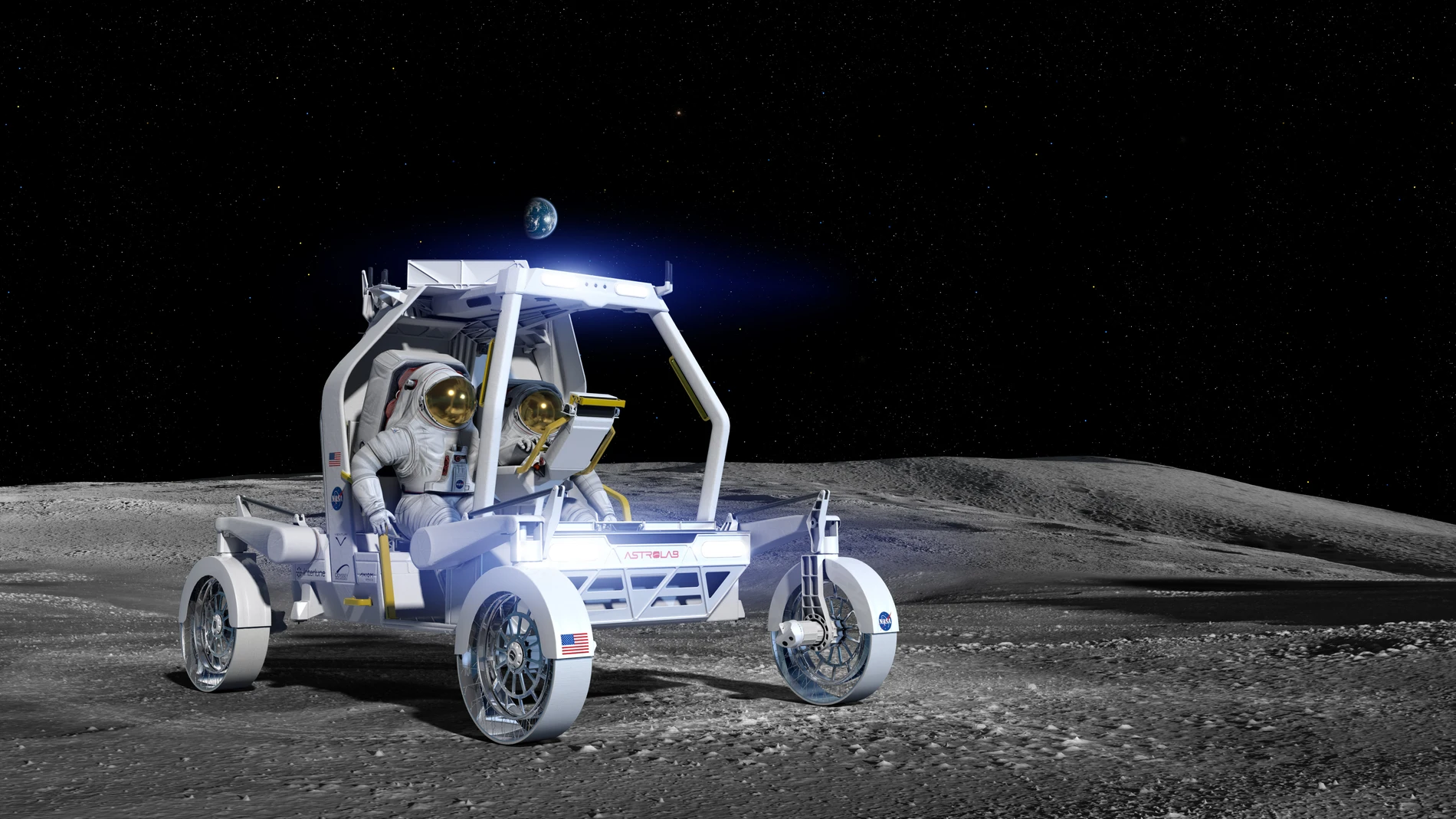
“We are going to have satellite constellations that will allow communication, navigation, pointing and observation. We are going to have rovers and lunar vehicles, and we are also going to have drones,” added the Spanish scientist.
Extreme weather will be one of the main challenges that the base’s inhabitants will face, since the satellite can reach temperatures of up to 120 degrees Celsius during the day – which lasts two Earth weeks – and drop below -120 degrees Celsius during the night, for the same duration.
The generation of electricity is another of the complications, although García Galán has specified that they plan to use solar and nuclear energy for this.
“We foresee an energy generation capacity of between 2 and 15 kilowatts, which can reach up to 20 kilowatts in the case of using a nuclear system, along with a storage capacity of hundreds of kilowatts/hour,” he detailed.