
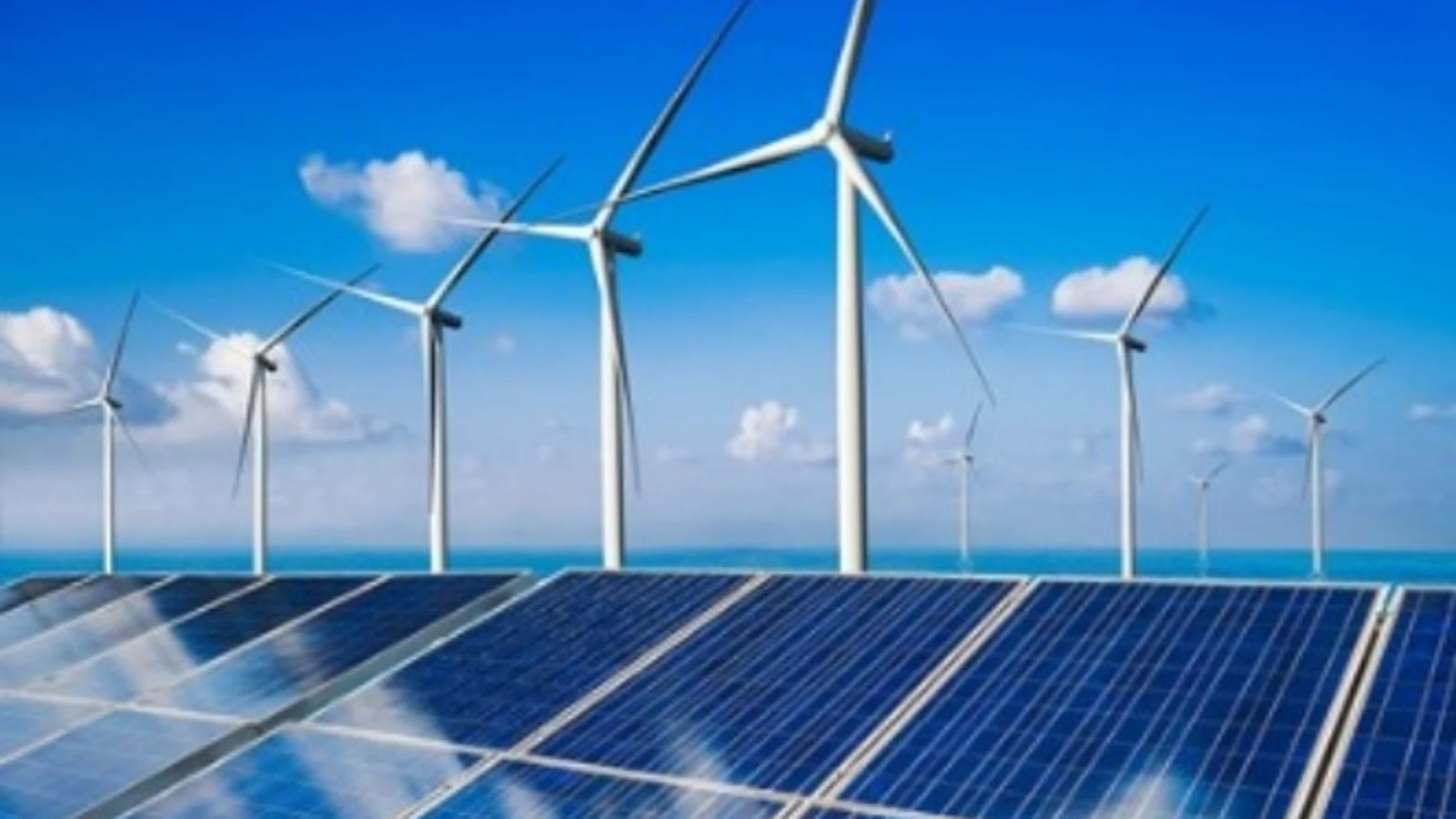
He global electrical system I reach a historical record throughout 2025, and for the first time in a hundred years renewable energy surpassed coal in the global energy mix. This is reflected in the latest edition of the Global Electricity Reviewthe annual report of British energy analysis group Ember.
According to the report, sources Renewables reached 33.8% of global electricity generationcompared to 33.0% for coal, reversing a proportion that had remained constant since the beginning of the last century. The analysis, carried out based on data corresponding to 215 countries that represent 93% of global electricity demand, concludes that the energy transition has entered a new, qualitatively new phase: clean energy is not only growing, but growing fast enough to completely absorb the increase in global electricity demand.
The solar engine
The undisputed protagonist of the report is solar energy. Global solar generation grew by 30% in 2025its highest rate in eight years, and alone covered 75% of the increase in global electricity demand. Along with wind, both technologies covered 99% of the growth of the demand. To understand the magnitude of this growth, the report offers a revealing comparison: global solar generation is now equivalent to the total electricity demand of the European Union.
According to the data provided by Ember, China once again led the expansionconcentrating more than half of the global increase in both installed capacity and solar generation, which brought the combined share of solar and wind to 22%, exceeding for the first time the average of OECD countries. For its part, India also recorded significant progress in its growth, doubling its own record and surpassing, for the first time, the United States in its installed solar energy capacity.
Fossil fuels stagnate
The document also highlights the fact that the generation of clean energy grew by 887 TWh and there was a 0.2% decline in fossil fuel-based generation. Coal, in particular, recorded its first decline since the 2020 pandemic, with its share falling below a third of global electricity for the first time in history.
Among fossil fuels, only the gas increased his generation, although marginally. The growth of solar was 18 times greater than that of gas, the only fossil fuel that grew in 2025. For Aditya Lilla, CEO of Ember“We have firmly entered the clean growth era“Clean energy is already scaling fast enough to absorb the increase in global electricity demand, keeping fossil generation flat before its inevitable decline,” he says.
Storage, the next frontier
One of the reasons for this growth, according to the report, must be found in the cheaper storage batteries. Its cost fell by 45% in 2025, after having already fallen by 20% in 2024, while its deployment grew by 46%. This reduction in costs made it possible to install enough storage capacity to move 14% of new solar generation from midday to other times of the day. Data provided in the report shows that countries such as Chile and Australia have already installed enough grid storage to displace more than 50% of their new solar generation, resulting in lower prices and less energy waste.
An uneven transition
Despite the optimistic tone of the data, the report also points out some emerging risks. The stagnation of hydroelectric generation, which barely grew in 2025, exposes the growing difficulties of balancing an electrical system with an increasing proportion of variable energies. The document points out that the great challenge is not only to continue scaling clean energy, but to guarantee that electrical systems can integrate and balance it effectively.
Furthermore, for analysts, the transition is progressing unevenly. Progress varies considerably between regions and fossil fuels continue to play a significant role in many parts of the world. The report highlights, however, that the direction is increasingly clear and that the technologies driving change are scaling at an unprecedented speed.