
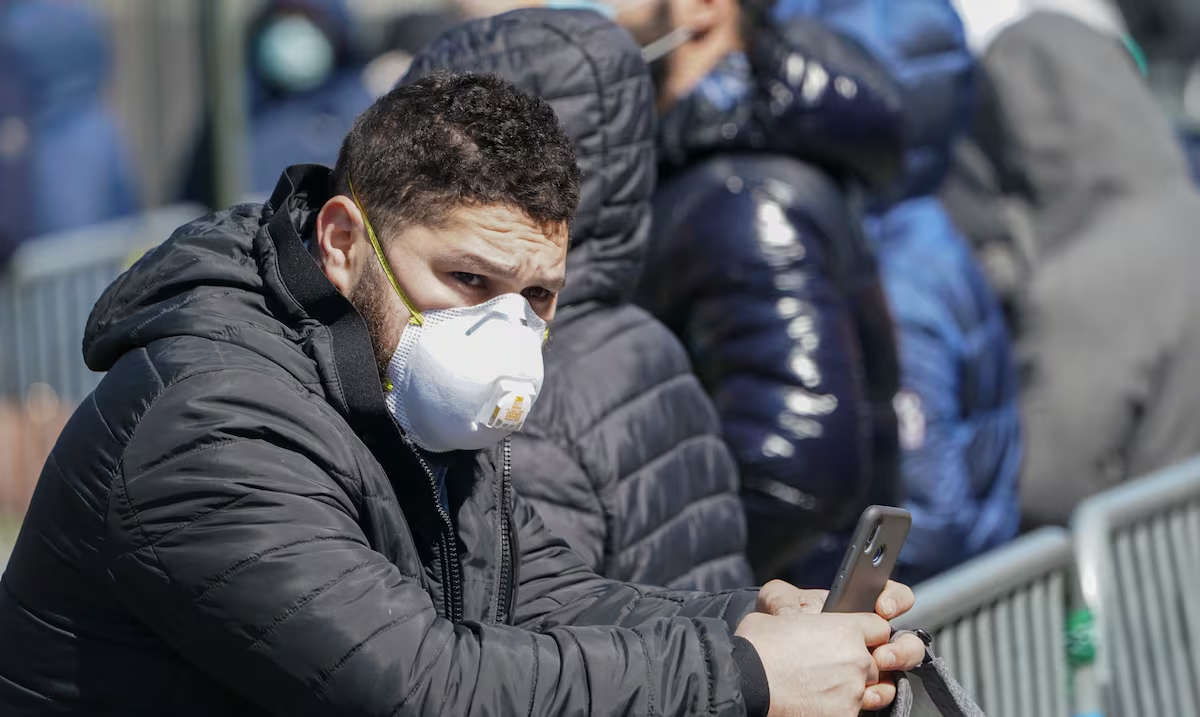
Geneva – The world is increasingly less prepared for the possibility of a new pandemic and, although surprising, key indicators that should have improved after the covid-19 pandemic have actually regressed, such as access to vaccines and other supplies to face a new health emergency.
This is the unexpected conclusion of a board of experts that has been evaluating global preparation for this type of event for years on behalf of the World Bank and the World Health Organization (WHO), and has just presented its conclusions.
It highlights, for example, that the risk of another pandemic – considered real – would affect a world that is more divided, indebted and less capable of protecting its populations than a decade ago.
“A decade after Ebola exposed dangerous gaps in outbreak preparedness and six years after Covid-19 turned those gaps into a global catastrophe, the evidence is clear: the world is not safer from pandemics,” the experts say.
1 / 30 | COVID-19: this is how the pandemic that stopped the world five years ago was experienced. COVID-19 cleared the skies and freed wildlife. That March 11, businesses were closed and a curfew was declared in many countries around the world.
– Marshal
A new Ebola outbreak has just been declared in the Democratic Republic of the Congo, less than two weeks after a hantavirus outbreak occurred on a cruise ship, causing global alarm and raising fears of a new pandemic.
Experts recall that outbreaks of infectious diseases are becoming more frequent and harmful and that their impact is not limited to health, but can strongly affect the economy.
Among the reasons why the world is in this situation is that investments have not kept pace with the growing pandemic risk, but also that good initiatives are offset by geopolitical tensions, the alteration of the balance of ecosystems, increased travel and cuts in international development aid.
Likewise, it has been proven that equitable access to vaccines, diagnostics and treatments has worsened and the most recent example of this occurred when the international health emergency was declared due to the mpox outbreak (2022).
“MPOX vaccines arrived in affected low-income countries almost two years after the outbreak began, even later than the 17 months it took for COVID-19 vaccines,” it details.
The report identifies three urgent priorities: creating an independent pandemic risk surveillance system, ensuring robust funding for prevention and immediate response, and advancing equitable access to vaccines, diagnostics and treatments by concluding the Global Agreement on Pandemics.
One of the biggest obstacles to concluding the negotiation of this agreement is the disagreement that prevails between the countries on the system that will regulate access to pathogens (viruses, bacteria, biological samples or others) and how the benefit obtained from the information that can be extracted from it will be distributed.