
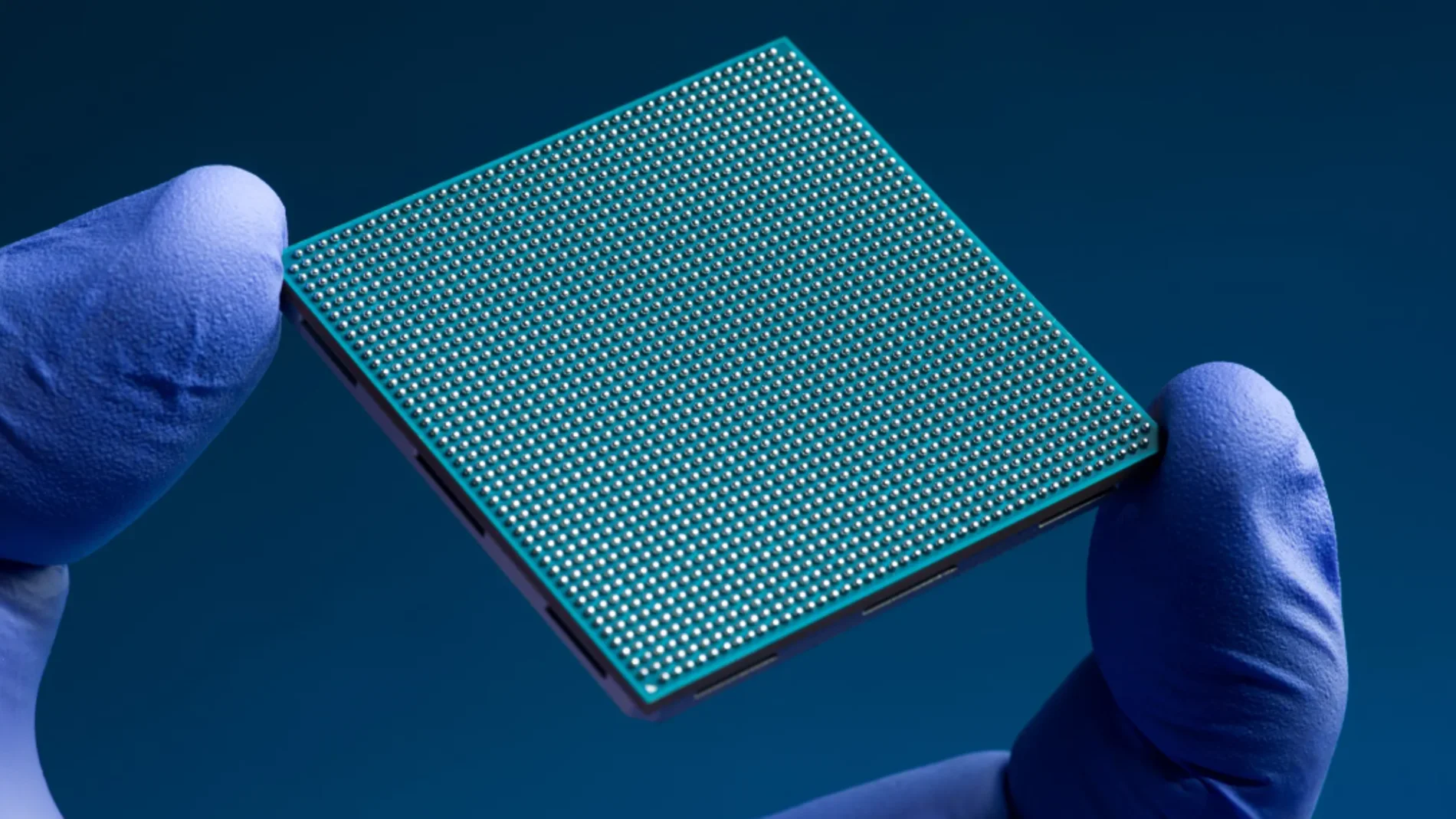
When we think about space technology we usually imagine giant rockets, telescopes or astronauts floating in zero gravity. But much of space exploration depends on something much smaller: microchips designed to survive where conventional electronics would die in a matter of hours.
Space is an extremely hostile environment for any computing system. Outside the Earth’s magnetic protection, satellites and probes are constantly exposed to cosmic radiation, high-energy solar particles, and extreme thermal changes. This radiation can alter data stored in memory, cause calculation errors or even destroy electronic components.
That is why space computers tend to be, paradoxically, much less powerful than current mobile phones. The priority is not speed, but survival. Many of the chips used in space missions run on older architecturesprecisely because they have proven to resist for years in orbit or in deep space.
The consequence is obvious: while artificial intelligence and data processing advance rapidly on Earth, Space probes continue to work with very limited computing capacity. And that forces us to continually depend on ground stations to analyze information or make complex decisions. But NASA wants to change that.
The US space agency has announced the development of a new radiation-hardened microchip (that is, designed specifically to withstand the space environment) that could offer up to 500 times more performance than current space processors.The advance is part of the High-Performance Spaceflight Computing project (HPSC), a program promoted together with technology companies and industrial partners to create a new generation of spatial computing.
The difference is not minor. According to NASA, the current systems used in many space missions barely achieve a fraction of the processing capacity of a modern terrestrial computer. The new chip would allow advanced artificial intelligence to be executed, process images in real time and make autonomous decisions directly on the ship.without waiting for instructions from Earth. And that, in space, is crucial.
The Communication with Mars, for example, can take between 4 and 24 minutes in each directiondepending on the relative position of both planets. A Martian robot cannot wait almost an hour to react to a dangerous obstacle or analyze an unexpected scientific anomaly.
With much more powerful processors, future probes and rovers could interpret scientific data on the fly, optimize routes, detect relevant events automatically or even coordinate with each other without constant human intervention.
Additionally, computing power has become a bottleneck for some of the most ambitious missions of the future. Autonomous navigation systems, telescopes capable of processing enormous amounts of data or intelligent space habitats They will require computing capacity much higher than the current one.
The difficulty is in achieving that power without sacrificing resistance. A conventional microchip can contain billions of extremely small transistors. The smaller they are, the more vulnerable they are to space radiation. A single energetic particle can alter the functioning of the system. That’s why traditional space chips have evolved much more slowly than commercial ones.
The new design seeks to resolve precisely that balance: maintaining high processing capacity while protecting itself from the constant bombardment of radiation. NASA hopes that this architecture can be used in future lunar missions, Martian exploration, advanced satellites and even deep space missions. It could also reduce costs and development times, since it would allow the use of more modern and flexible software than that of current space systems.
In some ways, the advancement is reminiscent of the evolution of mobile phones. For years, hardware limited what they could do. When the power increased enough, applications, real-time navigation, artificial intelligence and computational photography appeared. Something similar could happen in space: exploring other worlds does not only depend on reaching them, but also on how much machines can think once they are there.