
The coldness of the marble walls of the Court corridors does not seem to house the current situation of the Judiciary. Quite the opposite. Justice today harbors a tension that is at the right boiling point.
Socrates said that corruption in high places appeared when someone departed from “truth, justice and virtue.” It is not known whether in the literal sense of denying or simply not accepting reality. But in any case, distancing itself from what guarantees social stability means unbalancing the foundations of the judicial power.
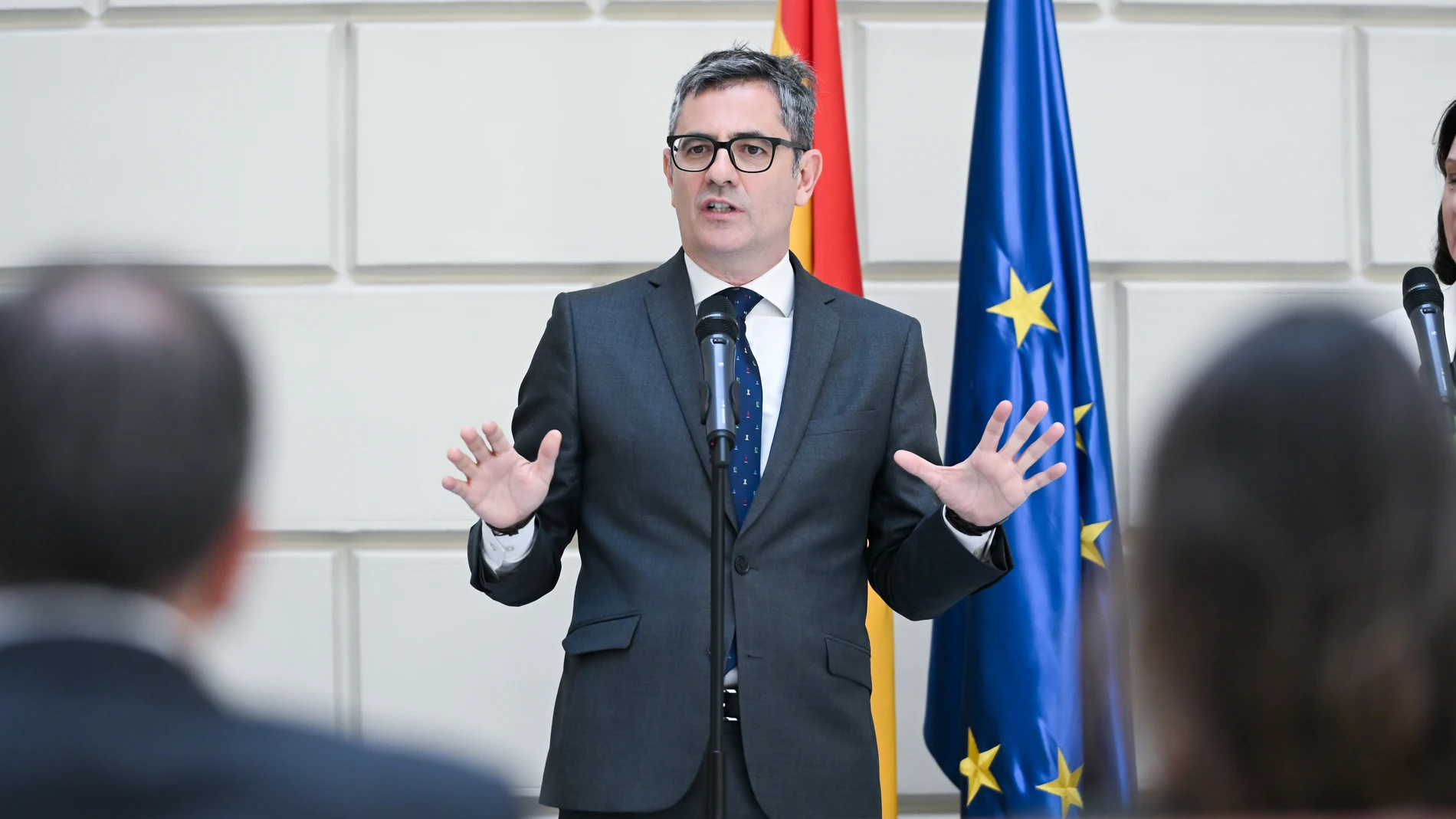
A power that in recent weeks has been witnessing the media and, why not, political “pulse” between Europe and our Minister of Justice Félix Bolaños. The holder of the portfolio came to the fore after Judge Peinado, who is instructing the investigations into Pedro Sánchez’s wife, closed the procedure and agreed to prosecute Begoña Gómez for four crimes–influence peddling, business corruption, embezzlement of public funds and misappropriation–.
Crimes that the magistrate sees as based on “solid indications” but for Bolaños they represent a “personal” and conscious attack. The fact that Bolaños came out to criticize the magistrate caused a spirit of defense among the jurists and a response from the European Commissioner for Justice.
Moncloa’s attack on the judiciary was not seen favorably in the great chamber on which Spain depends. Michael McGrath appealed to the “separation of powers” and the importance of the rule of law and made it clear that in Europe legal certainty prevails over political inferences.
In Brussels they agree with many Spanish jurists that the judiciary has a high risk of government interference and that the General Council of the Judiciary (CGPJ) should be elected by the magistrates themselves, not by partisan inferences.
There are many complaints that jurists have raised in the old continent to warn of the “deterioration” in the independence of the judiciary. Because, although Bolaños openly criticizes Judge Peinado today, there was a day when he supported the speech of the president of the Supreme Court and the CGPJ, Isabel Perelló, when she warned that “no power of the State” could influence the judgment of the magistrates.
The jurists consulted believe that, as the Executive chain continues judicial setbacks, its members are more opposed to the judicial power. Above all, with regard to the procedural situation of Begoña Gómez. But they assure that The attacks from the Executive, far from being something specific, have become a “custom.”
The reiteration of these criticisms, they explain, not only affects specific decisions, but also erodes the judges’ own perception of impartiality before citizens and, therefore, influences social trust before Justice. Because, as they argue, The judiciary is largely based on the credibility of its resolutions, and any attempt to question that basis from political power has effects that transcend the specific case.
Jurists do not take a dim view of the executive branch criticizing the content of a sentence, But they do “hide” these “personal” attacks as an “offensive to the very function of the jurisdiction.” This displacement of the legal debate to the personal field is, in his opinion, one of the factors that most contribute to “heating up” the atmosphere in the courts.
They remember that the Government, as part of the institutional system, must not only respect judicial decisions, but also protect its independence. That is why they consider it especially “serious” that “a minister secretly accuses a judge of spurious motivations,” precisely when that power is called upon to be controlled by the courts.
And, although they remember that Bolaños’ case is not isolated – it already happened with the Minister of Justice Rafael Catalá, when he criticized a judge of the Provincial Court of Navarra in the “La Manada” case – the internal climate of the judiciary is not immune to this tension. Because, they say, the feeling of being subjected to scrutiny that sometimes exceeds the limits of democratic debate is growing. In this scenario, they demand “responsibility” and “containment”.
It is not, they explain, about shielding the resolutions from any criticism, but rather about preserving a framework in which the questioning is technical and not personal. Justice continues its course, theoretically oblivious to the political noise, but inevitably influenced by a context in which each decision seems subject to a parallel trial.
And meanwhile, the judiciary is experiencing another media episode in democratic history with the chambers of the major judicial bodies – the National Court and the Supreme Court – hosting trials linked to alleged political corruption of the two parties that represent the majority of the population.
“Kitchen” and “Koldo” maintain their political and procedural distances but share deep synergies. Both cases have brought senior officials from both governments before a court, even as witnesses.