
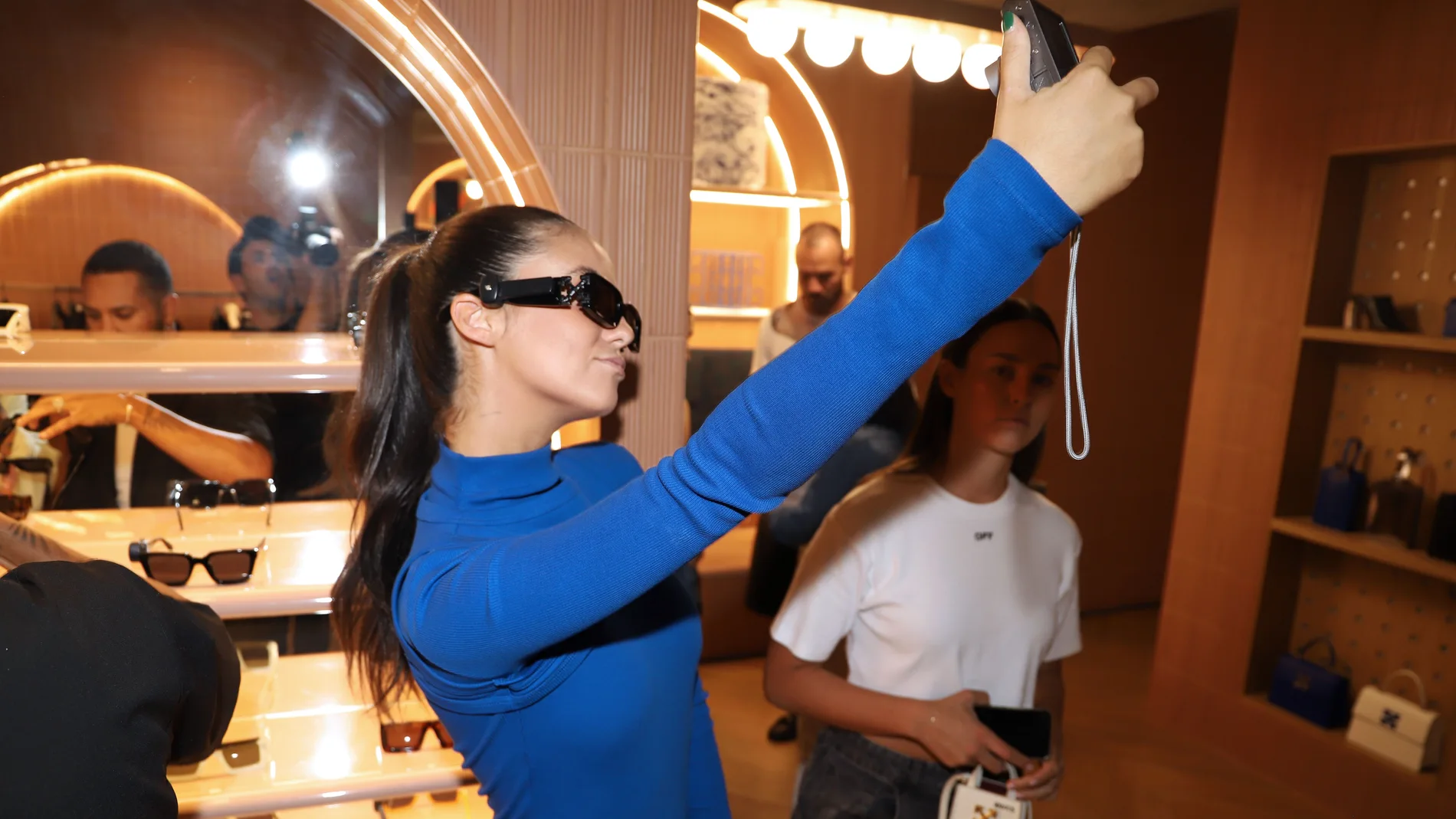
The scene is almost invisible, but it defines an era. A photograph uploaded to Instagram – an outfit, a gesture, a specific light – stops being just a shared image and begins to circulate as raw material. It does not change form, but it does change function. It goes from being an expression to becoming a resource. One available and free.
In recent months, this transformation has generated unexpected friction between content creators and the platform.s. At the center is Meta, owner of Instagram, Facebook and WhatsApp, which has begun testing commercial functions based on artificial intelligence (such as “Shop the Look”) capable of identifying products in images uploaded by users and linking them directly to purchase options. The promise is clear: turn any post into a potential store. The consequence, however, is more ambiguous.
Because many of these images do not belong to brands or advertising campaigns, but to people. Influencers, yes, but also ordinary users and that is where the ambiguity arises: when that content begins to be used to recommend products, without explicit attribution or direct compensation.
The conflict, however, is not as simple as it seems. Technically, the platform has room to do so. As stated in Meta’s terms of use contract. When uploading content to the platform, the user grants Meta a broad license to use it, display it and, in some cases, integrate it into advertising or personalization experiences. Ownership remains with the author, but use becomes shared. And in that nuance is where everything gets complicated, according to media outlets like Bloomberg.
Because that license does not necessarily imply recognition. Meta can use an image to suggest products without being required to show the name of the creator in each case. From a legal point of view, it is consistent with the contract. From a cultural point of view, it generates a different sensation: that of diluted authorship.
The problem is not just who uses the image, but how. The new tools don’t just display content: they interpret it. They analyze clothes, colors, contexts, styles. They translate a photograph into data. And from there, they build automated recommendations. It is an important leap. We are no longer talking about a platform that hosts images, but rather a system that reads them, decomposes them and reuses them for commercial purposes.
That introduces a new setting that affects both users and social networks. On the one hand, creators accept certain conditions when using the platform. On the other hand, the actual use of their images evolves faster than their perception of that agreement. What used to be “sharing” is now more like “feeding” a system.
And, in this context, it is logical that within the creative ecosystem they begin to point out precisely that: that the contract may be clear, but that Understanding a legal clause is not equivalent to anticipating all its technological consequences. And that the fact that something is possible does not automatically make it acceptable to those who generate the content.
There is also a change of scale. Before, an image could inspire other users organically. Now, that same image can become a node within an automated trading system, capable of influencing thousands or millions of purchasing decisions. The distance between creation and monetization is shortening, but it does not always benefit the creator. Meta, for its part, moves in a different logic. Its objective is not so much to appropriate content as to optimize the experience within the platform.: make it more interactive, more useful, more profitable. In this context, using real images to suggest products is not an anomaly, but rather an almost inevitable evolution of the model.
The result is a delicate balance. A contract that, on paper, enables use and, at the same time, a technology that expands that use to limits that are difficult to foresee. And a community of creators that is beginning to wonder where sharing ends and where giving begins.
Perhaps the underlying question is not legal, but conceptual: What does it mean today to “publish” an image on the Internet? Whether it continues to be an act of individual expression or whether, increasingly, it is also an involuntary contribution to systems that reinterpret it.
In that intermediate space between what we accept when we click and what happens afterwards, the relationship between creators and social networks is defined. And, as often happens, technology advances one step ahead of the words we use to explain it. What is clear is that Meta’s conditions of use have anticipated this for a long time: the price for using a free platform is “granting Meta a license to use that content – as the conditions of use explain -. This license allows Meta, among other things, to display your images in connection with advertisements and to personalize your experience on the platform. It is important to remember that although Meta has this license to use, you remain the owner of your images.”