
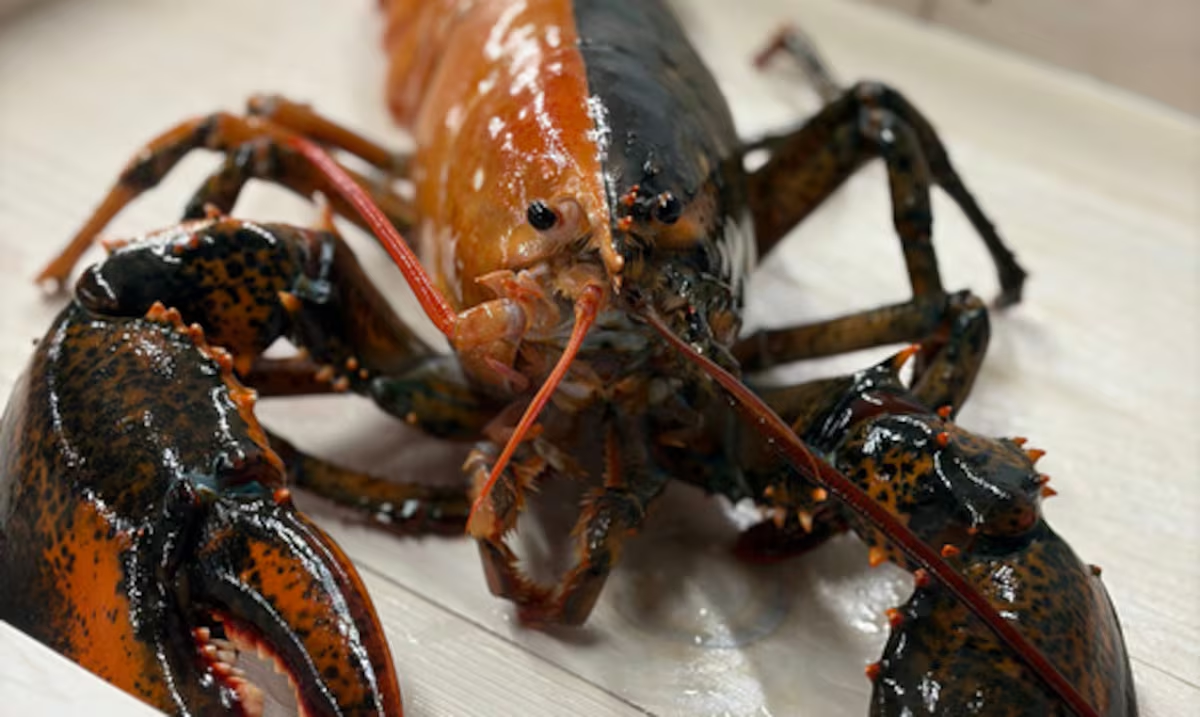
It may be a divided lobster, but it has united New Englanders in fascination.
A Cape Cod seafood company donated a rare bicolor lobster to a scientific center, saving the animal from the boiler for its remarkable coloration. The lobster found is the typical brown color on one side and bright orange on the other, and the two-color pattern runs from the head to the tail.
Representatives of the Wellfleet Shellfish Company of Eastham, Massachusetts, said Monday that they have been receiving inquiries about the crustacean for days. The company gave the lobster to the Woods Hole Science Aquarium in Falmouth, Massachusetts, which will display it to the public when it reopens.
“The lobster is now with Woods Hole Science Aquarium animals currently housed in holding tanks at the Marine Biological Laboratory during the aquarium’s construction period. When the aquarium reopens, the lobster will be on display so visitors can see one of the ocean’s most striking natural anomalies,” the seafood company says in a statement.
Fishermen caught the lobster off Cape Cod on April 16. Oddly colored lobsters often arrive at New England docks during the spring and summer, but this bicolor specimen is rarer than most.
Lobsters are usually mottled brown, but they can have color abnormalities due to genetic mutations that affect the proteins that bind to their pigments. Some are blue or orange, some have calico spots, and others are so brightly colored that they are called “cotton candy” lobsters.
A two-color lobster can be produced because two lobster eggs have fused and grown as a single animal.Marine science professor Markus Frederich of the University of New England in Maine told The Associated Press in 2024. There are estimates of the rarity of different colors of lobster, although Frederich has also cautioned that such figures are approximations.
This story was translated from English to Spanish with an artificial intelligence tool and was reviewed by an editor before publication.