
underhill – Anne O’Connor couldn’t stop counting sheep, and it kept her awake.
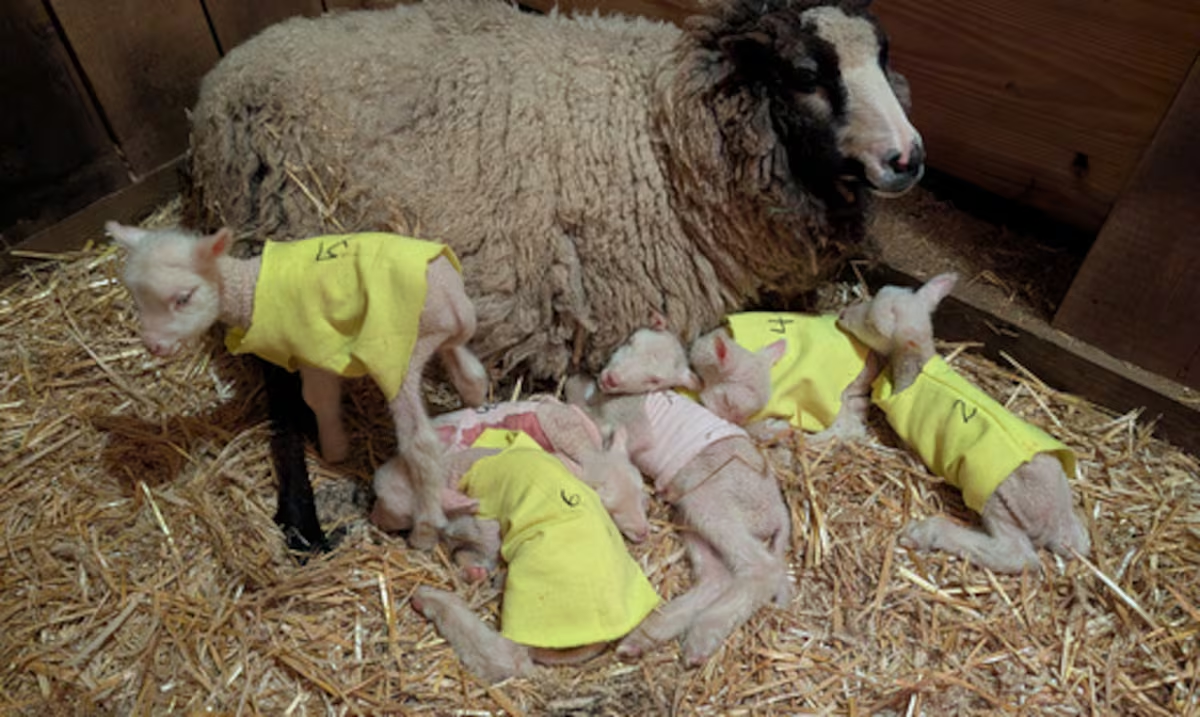
A ewe owned by O’Connor, who runs Clover & Bee Farm in Underhill, Vermont, with her husband Gunnar, gave birth to a rare batch of six lambs earlier this month. Both the sextuplets and their mother are doing well, which makes the unexpected gain of lambs even more notable.
The same ewe had previously had quadruplets and, although a recent check indicated that she would have two lambs this time, O’Connor suspected there would be more. When the big day arrived, the lambs seemed to never stop arriving.
“I was a little suspicious, just because of how big it was and because it was a little early, that it might have more than two,” he said. “Six is very good, but without a doubt… it is enough.”
Sources differ as to the rarity of sheep sextuplets, with O’Connor putting it at 1 in 1,000 and some agricultural websites putting it at one in a million or more. O’Connor said he has been in contact with the Vermont Sheep and Goat Association about the births, and the group found only one other shepherd had a ewe give birth to as many lambs.
“They take longer to reach full body weight, but most do well,” explains Kristen Judkins of Gilead Fiber Farm, who owns a sheep that had sextuplets three years in a row, in an email. “You have to keep an eye on them for the first few weeks to make sure they are eating enough.”
The lambs, which are partly of the Finnsheep breed, are named after the numbers one to six in Finnish. The mother is named Teemu after Finnish hockey player and Hockey Hall of Fame member Teemu Selänne. The O’Connors plan to keep the four sheep and find a home for the two male lambs.
The farm raises sheep for wool and also grows herbs and berries. He is in his fifth summer raising sheep. The flock is booming: along with two other recent lambs, the six new lambs bring the total to 21. And five ewes are pregnant. And five sheep are pregnant.
Teemu’s breeding days are likely not over. She will be allowed a break but is likely to have more lambs in the future, O’Connor said.
“She’s a great mother, she’s doing awesome with this,” O’Connor said. “She’s still very much in her reproductive years, so probably a year or so and she’ll just, you know, be able to put her hooves up.”
This story was translated from English to Spanish with an artificial intelligence tool and was reviewed by an editor before publication.