
In politics there is usually no clearer message of trust between leaders than sharing the stage. The newly elected leader of the Extremaduran socialists, Álvaro Sánchez Cotrina, 39, knows it. Last Saturday he was enthroned after winning a primary that, for the first time in decades, has placed a man from Cáceres at the head of the federation.
But the secretary general, Pedro Sánchez, was absent from the ceremony. And, although he had the detail of recording a video that was broadcast before 485 delegates elected in the 250 local assemblies, representing the 9,300 militants, The truth is that his empty chair said a lot, according to what prominent socialist leaders tell this newspaper. A source who knows the president well explains: “It is a clear sign of distrust that the president has not been in the Extremadura congress.”
It was the former president of the Government José Luis Rodríguez Zapatero who wore the shirt at the Extremadura congresswhich was opened by the until now head of the management company, José Luis Quintana, and the former president of the Junta de Extremadura Juan Carlos Rodríguez Ibarra. But the absence of Pedro Sánchez, who had no agenda on Saturday, did not go unnoticed by anyone. And Zapatero, who was also unknown in his day, blessed Cotrina: “He looks like the president of the Board.”
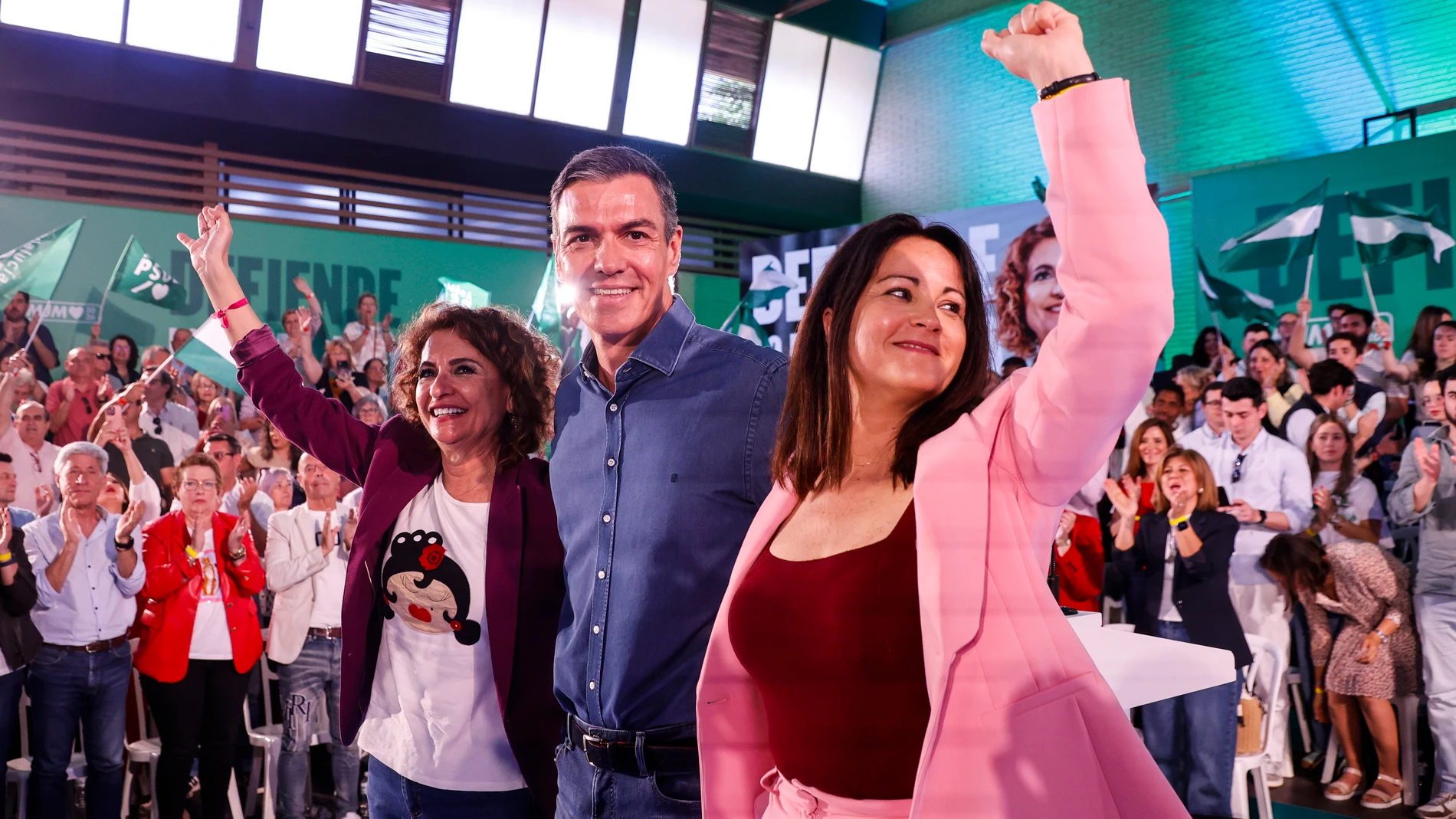
The socialist leader, however, made time yesterday to rally with María Jesús Montero in Córdoba. Andalusia is, at the moment, the greatest obsession of the Moncloa Palacewhere they work hard to ensure that the blow that all the polls predict is as light as possible. Breaking the 30-seat floor would be devastating for Sánchez.
The president has a lot at stake in the South of Despeñaperros. Among other things, because Andalusia is the most populated community in Spain and the third in terms of wealth and Gross Domestic Product (GDP). The Andalusian electoral laboratory will, to a large extent, mark the cards of all parties and reconfigure their strategies until the end of the current legislature. In the PSOE, meanwhile, they wait. Little by little A new generation begins to rise in the socialist ranks to whom the memory of the Federal Committee of October 1, 2016 seems more history than present.
These socialists are “in hibernation mode,” according to several party sources telling this newspaper. Everyone is waiting for the outcome of Pedro Sánchez. The president has been subjected to a lot of pressure to bring forward the general elections. First, to make them coincide with the Andalusian elections on May 17. And, now, to make them coincide with the regional and municipal elections next year. It is, in fact, the thousands of socialist mayors who are pushing for Moncloa to press the button once and for all. Either all or none, they say.
Government sources admit that this coincidence could benefit the president. Sánchez’s demographic gurus do nothing more than sing in his ear that it is feasible to barely beat the PP. And that the PSOE will benefit from the dual effect of the vote. (If I vote for the socialist mayor, I can vote for the socialist president). That pyrrhic victory, even if it does not allow him to form a government because of Vox, would be the float that the president would cling to to stay at the head of the party. Another story would be for the right to override him. At that moment, the incipient critical sector of the party will rise up and join “many people who are silent now.”
The wound of 2016
The noise about the President of the Government will, then, be deafening. The socialist leader already faced his party once: he lost and won again. For this reason, those who know him explain to this newspaper that the noise will not stop him. What’s more, the sources consulted fear that he will try to complicate his departure as he did in 2016. These days, images of that Federal Committee that fractured the PSOE in two have emerged again. That wound still festers.
“There are still marginalized people, who are not counted on… There has been no reconciliation…”, a source who lived through that turbulent October 1 tells this newspaper. from a decade ago in first person. The majority of those who were protagonists of those 11 fateful hours still avoid commenting on them. And everyone fears that the party will reopen the channel the day the current general secretary of the party is forced to leave the Ferraz noble floor.
As this newspaper already told, The incipient critical sector of the PSOE begins to see with hope a new batch of leadership and new attitudes, such as the offer of an investiture pact to the PP in Castilla y León. In the same way, and within the framework of that same party dynamic, it is also seen favorably that the federations of Madrid and the Valencian Community fight to precipitate primaries that dispute the leadership of the ministers appointed by Pedro Sánchez at the head of both key territorial fiefdoms, Óscar López and Diana Morant, respectively.