
Scientists from Xinjiang University have created the world’s first crystal capable of producing the ultraviolet light needed for future thorium nuclear clockswhich could one day guide submarines and space probes without the need for GPS. According to the South China Morning Post, these watches will not make GPS redundant, but they will help reduce dependence on this type of system if they are perfected. The central problem that is trying to be solved is the measurement of time.something fundamental for technologies such as GPS or atomic and nuclear clocks.
In a mobile phone, for example, the device calculates its location by receiving satellite signals. Through a set of algorithms, measures how long it takes for each signal to arrive. That information is then used to triangulate position in the world. This is called time based navigation. Therefore, the more accurate a watch is, the more accurate a navigation system based on it will also be.
But, although the principle is simple, GPS systems can present problems. For example, being interfered with or deceived with false signals, making them vulnerable in times of war. Besides, They don’t work well underwater or underground..
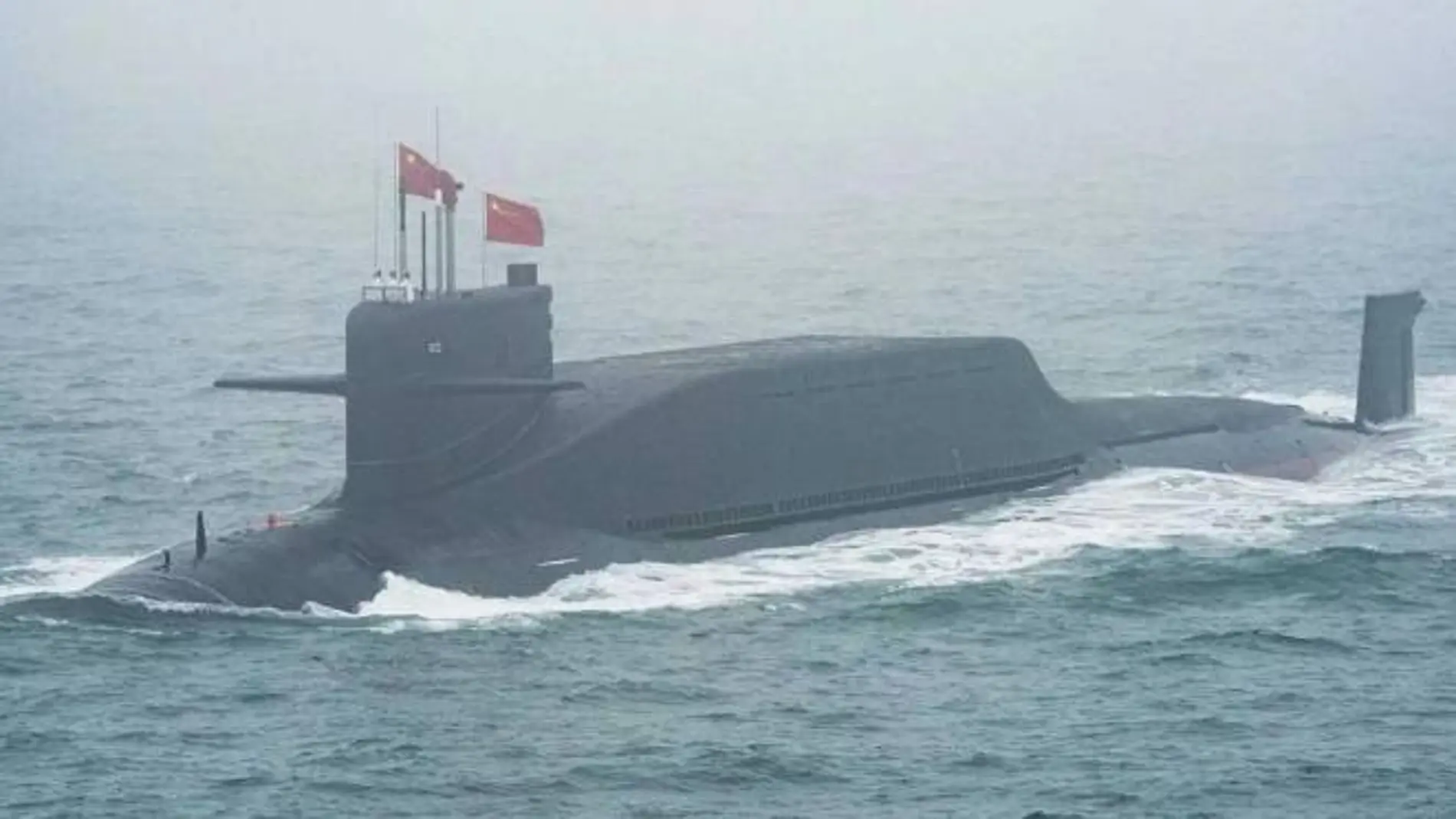
For platforms like submarines, relying on GPS is problematicsince to update their position they must ascend to at least periscope level and expose masts or antennas, which increases their vulnerability. To mitigate this problem, modern submarines rely primarily on in inertial navigation systems. In parallel, several navies and research centers They are testing new generation atomic clocks to reduce the drift of these systems and reduce the need for external signals. These are extremely precise timing devices that work harnessing the vibrations of electrons around atoms to measure time.
nuclear clock
However, scientists believe that another technology, called Nuclear clock, which uses vibrations of the atomic nucleus instead, could be 10 to 1,000 times more accurate. This could be revolutionary because atomic nuclei are more stable than electrons and are less affected by factors such as temperature. They also suffer less from the impact of external vibrations and elements such as magnetic fields.
To this end, the research team turned to thorium-229. This element is especially interesting for this use because Its core vibrates at a very low energy level. That makes it relatively easy to observe and measure. However, extremely precise UV lasers are needed to measure itwith wavelengths of 148.3nm. That is very difficult to produce and that is where this new crystal comes into play.
Glass for navigation without GPS
This crystal, the team explains, can convert laser light into very short wavelength ultraviolet light (145.2 nm). It does not yet reach 148.3 nm, but it is a record that places the material within the region necessary to generate light close to the wavelength needed by thorium-229.
‘A fluorinated borate compound can increase the frequency of laser light to a record wavelength of 145.2 nanometers. This wavelength is short enough to meet a key requirement for ultra-precise wearable watches being developed in the United States, China and other countries.‘, points out the team.
If that figure can be reached, this could provide a way to calculate position using extremely precise trajectory estimation, comparing speed, direction and travel time.
You could also, in theory, use signals from other sources, such as stars, pulsars or radio signals, which would also serve as navigation aids. If this technology is mastered, it could allow submarines to navigate freely underwater. without ever having to surface.
And it would have important implications for other technologies, such as missileswhich could become immune to navigation interference. In the case of the spaceshipscould also help them navigate autonomously in space without the need for corrections from Earth.