
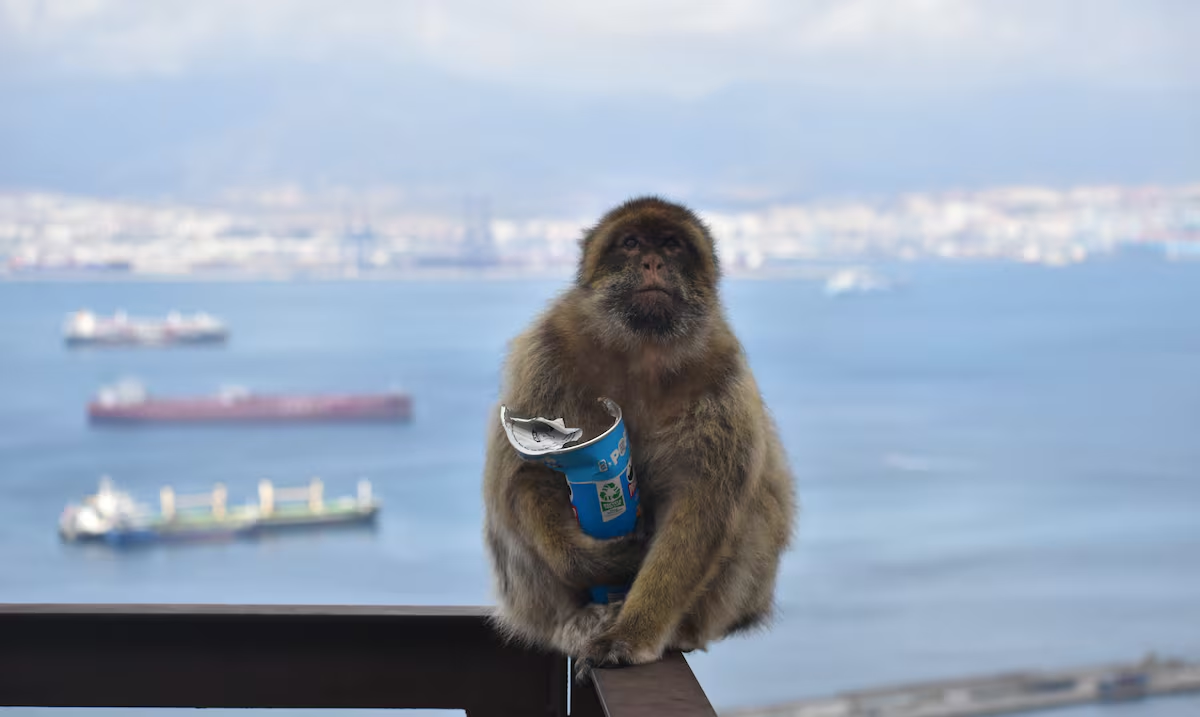
The Gibraltar monkeys, the only macaque population that lives in the wild in Europehave begun to eat dirt, and researchers have suggested that they are doing so to counteract the excessive consumption of human food – especially sweet and salty snacks – provided by tourists.
Scientists believe that the chocolate, chips, cookies or ice cream that tourists provide to the monkeys or that they steal from them, and which make up a substantial part of the diet of many of them, are altering the composition of their intestinal microbiome, and ingesting soil would help them rebalance their stomach and obtain the bacteria and minerals absent in junk food.
Research centers from several countries have participated in the work, coordinated by the University of Cambridge, and researchers from the University of Gibraltar and the Catalan Institute of Human Paleoecology and Social Evolution (IPHES) have participated; Today they published their conclusions in the journal Scientific Reports.
The ‘geophagy’ -the intentional ingestion of soil- is common among some species of animals and also in some human cultures, and in this case it is usually associated with the need to ingest nutrients during pregnancy, but the researchers did not observe this intake of the macaques during pregnancy or lactation, which suggests that it is not due to the need for supplementation.
They have found, however, that animals that have more frequent contact with tourists eat much more soil, and that ingestion rates are higher during the high holiday season.
The biological anthropologist from the Department of Archeology at Cambridge Sylvain Lemoine, who led the study, pointed out that The foods that tourists bring and that Gibraltar macaques consume are extremely rich in calories, sugar, salt and dairy, which is completely different from the foods that the species usually consumes, such as herbs, leaves, seeds and some insects.
Non-human primates become lactose intolerant after weaning, and dairy causes digestive problems in monkeys, and ice cream is very popular among Gibraltar’s tourists and also its macaques, and some of the cases of observed geophagy occurred precisely after the researchers saw the monkeys consume bread or ice cream.
The Gibraltar macaques number around 230 specimens divided into eight stable groups that inhabit different areas of the Rock and are an important tourist attraction; Local authorities provide them with fruit, vegetables and water and although it is prohibited for tourists to feed them, many visitors do so or the monkeys search for and steal their food, and researchers have calculated that almost a fifth of their diet is junk food from humans.
They have also verified that monkeys that live in the areas most visited by tourists, such as the top of the rock, are two and a half times more likely to eat this type of food than animals in less frequented areas, and that the intake of soil is abundant in the first group and zero in areas where the monkeys have no contact with tourists or access to human food.
Or that in winter, when the number of tourists and therefore the monkeys’ intake of junk food decreases, geophagy also decreases.
The only macaque species with geophagy rates higher than those in Gibraltar are the semi-wild macaques living in Hong Kong’s Kam Shan National Park, which also access a large amount of human food from visitors, and this eating has also been observed among ring-tailed lemurs and East African chimpanzees.