
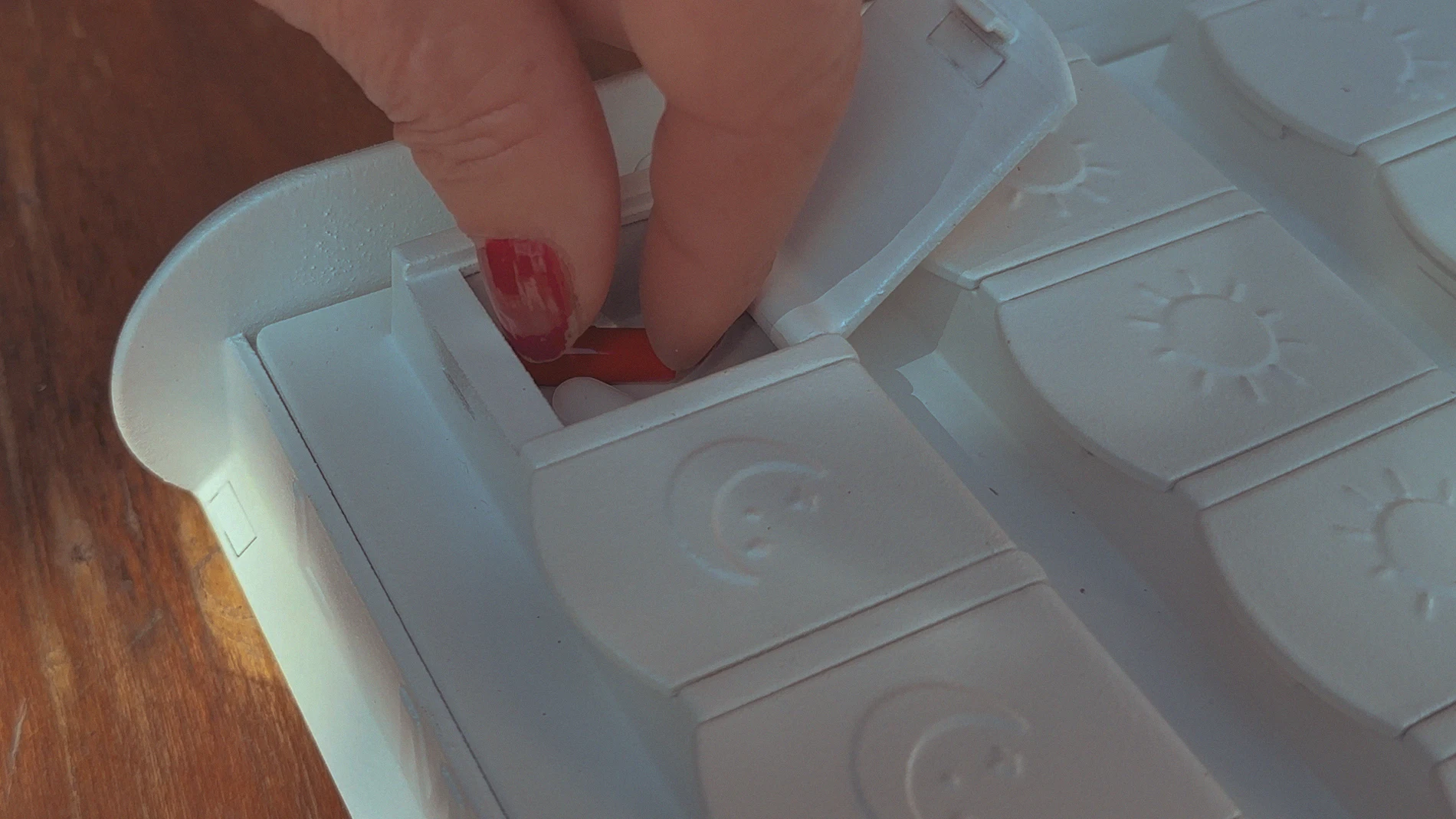
Aging has something of a technological paradox. We live surrounded by devices capable of measuring sleep, counting steps or detecting arrhythmias in real time, but one of the most basic actions, such as taking a pill at the right time, keeps failing with disturbing frequency.
It is not a minor detail. According to data from the Spanish Society of Geriatrics and Gerontology, half of older people who live alone do not follow their treatment correctly. And that mistake, repeated day after day, has cumulative consequences: it can increase the risk of mortality by up to 40%, a study concludes.carried out on more than one million volunteers over 65 years of age.
The usual response to this problem has been to add more technology. Apps, reminders, connected devices. But there is a place where this logic breaks: the so-called emptied Spain, where connectivity is not guaranteed and where, precisely, a significant part of that vulnerable population lives. And a significant part is a lot. A CSIC study indicates that approximately 72% of the almost 10 million people over 65 years of age live outside large citiesconcentrating a large volume in rural areas or areas with low demographic density. Although there is no single figure, more than a million older people reside in rural municipalities of the aforementioned emptied Spain.
To solve this, a team of experts from Servier, Aritium and VML Health proposes something that is almost counterintuitive in the midst of a digital boom: an intelligent system that works without WiFi or SIM cards. And yet it works, Pill Guardian.
The key is how you communicate. Instead of relying on the internet, it uses a technology called LoRaWAN, a type of long-range, low-power transmission that It can travel kilometers using already existing infrastructure, such as radio antennas spread throughout the territory. The signal or message is sent and all the stations that repeat it send it to the destination. It is, in a way, a return to basics: less data, more reach.
From a scientific and technological point of view, this is interesting because it raises an idea that is often overlooked. Innovation is not always about adding layers of complexity, but about adapt the technology to the physical and social context where it will operate. Here, the limitation, the lack of connectivity, is not only not avoided, but is incorporated into the design.
The result is a system that does something seemingly simple: detect if a person has taken their medication and, if not, notify a caregiver or contact. But behind that gesture there are several layers of engineering. On the one hand, the design of the pill box itself, optimized for organizing weekly treatments, introduces a physical structure that reduces human error. It is ergonomics applied to health: making the right thing the easiest.
On the other hand, the communication system transforms a local action (open or not a compartment in this case) into remote information. This translation, which today we take for granted in connected devices, here occurs in much more adverse conditions, with weak signals and dispersed environments.
And finally, there is the most difficult factor to quantify: human behavior. Taking medication is not just about remembering a task. It involves habits, routines, moods, even the perception of being accompanied or not. In that sense, Pill Guardian does not act only as a control device, but as a link system. When notifying family members or caregiversintroduces a form of presence at a distance. It does not replace care, but it amplifies it.
In an urban environment, where everything is connected, the problem may seem trivial. But in a small isolated municipality, where coverage is irregular and resources limited, the equation changes. There, every forgetfulness counts more. Thus, the final objective is that what we know as the emptied Spain does not also become the forgotten one.