
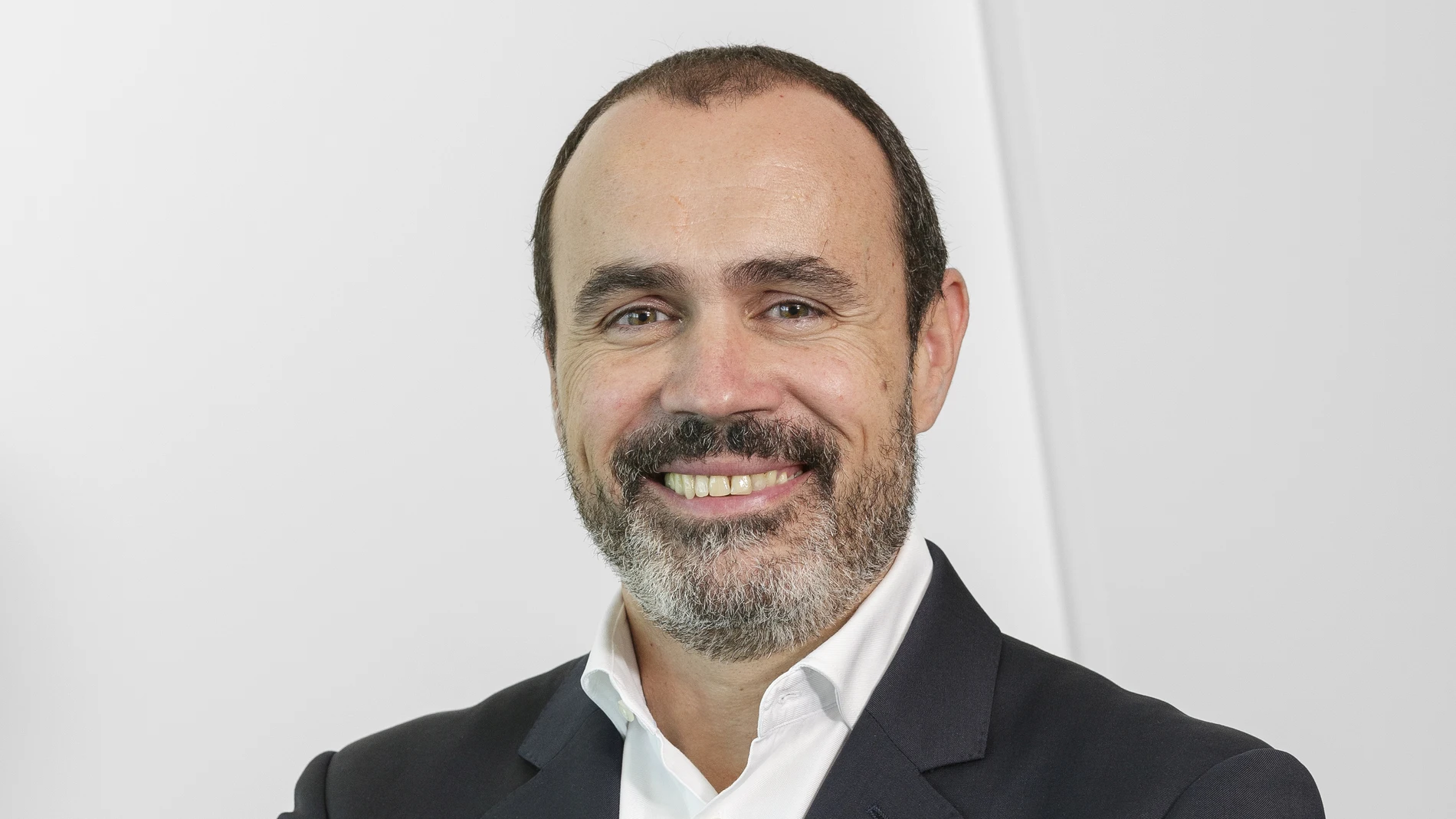
The concept of “R&D department” is far away. In the complex board of the global energy transition, innovation has become the axis on which the largest companies in the world gravitate. Carlos Ayusodirector of Projects and Innovation Processes at Moeve, explains in this interview how the energy company is transforming its business model to turn disruptive ideas into tangible realities.
From a artificial intelligence specialized in reducing emissions to sustainable fuels produced by microalgae, passing through organic solar panels, all solutions are developed in a real industrial environment within their facilities. «We have put innovation at the center of the company. It is not outside the business, we have it integrated into industrial operations. “It is the heart of the company,” says Ayuso, pointing out that what differentiates them is the ability to bring developments to a productive scale.
To bridge the gap that separates a laboratory experiment from its use in a chemical megaplant, the company has created in its innovation centers «exact operational replicas of our industrial units,” describes Ayuso.
«These controlled and flexible environments allow us test any technology under very similar conditions which we will later have in our energy parks or chemical plants,” he explains. It is “a rigorous system of simulations that works in parallel to operations”, which allows “reducing risks and accelerating the learning curve without stopping the production of essential infrastructures.”
An example of this success is the Detal technology developed by Moeve, which allows the creation of biodegradable detergents and which is today the world standard. «We managed to scale it and, since the 2000s, practically no new company uses other technology that is not ours,” he says.
More than 400 startups
The challenge of decarbonization requires greater agility to adopt sustainable solutions. For this reason, Ayuso defends a open innovation model which allows co-creation with startups, universities and technology centers. “It gives you much more access to top-level scientific knowledge and, above all, speed,” he says.
In this ecosystem, it stands out Moeve Light Upthe corporate accelerator that in its first edition this year has selected 10 startups from more than 400 candidates. “It is a clear commitment to technologies that accelerate the production of green molecules, such as green hydrogen and biofuels, in line with our Positive Motion strategy for 2030.”
They are not only looking for “green” or digital solutions, but also deep scienceindustrial operations and even the legal-economic field. «In fact, two weeks ago we tested the solution of the startup Visualfya technology that uses artificial intelligence to translate critical sounds into visual alerts, improving the safety of employees with hearing disabilities, and it worked very well,” explains Ayuso.
However, the path is not without obstacles. The person in charge expresses that the most complex technologies, such as deeptech either cleantechare the most difficult to integrate due to industrial requirements and certifications. “For this reason, we always drive to scale,” he emphasizes, mentioning the use of IoT laboratories and spaces of his Innovation Center located in Alcalá de Henares (Madrid) to ensure that the jump to the real scale is safe.
And, for Moeve, the future does not belong to a single solution, but to a multi-energy concept. Ayuso agrees that, in the short term, 2G biofuels are the most mature technology, since they can be used in current infrastructures without changes. However, he warns that “biological materials have a limit of availability”, which will force progress in CO2 capture and green hydrogen.
In its innovation center, Moeve tests various methods to “hunt” CO2 and use it in the production of renewable fuels such as e-fuels or synthetic fuels, such as e-methanol, sustainable aviation fuel (e-SAF) and synthetic natural gas. For its part, hydrogen is emerging as “the solution for sectors where electricity does not reach, such as maritime or air transport, where batteries cannot be installed.”
Regarding costs, Ayuso is optimistic: «As we scale the solutions and see more projects on the market, costs are going to get cheaper. “It’s going to be very short term.” Spain, he says, has before it “a unique opportunity to lead these clean energies thanks to its renewable potential”, an idea that is supported in the report ‘Innovation Policies for the development of green hydrogen’ carried out by Moeve in collaboration with thirty organizations and which will soon be published by the COTEC Foundation.
One of the main conclusions of the document is the good work of Australia. COTEC Foundation praises the example of strategy developed by the government of this country, which today already produces low-carbon hydrogen at the most competitive price in the world. Among the most effective policies is the promotion of public-private collaboration aimed at consortia of regional hydrogen centers.
In Spain, Moeve is promoting driving projects such as Andalusian Hydrogen Valley and the 2G biofuels plant in Huelva. The addition of this new infrastructure to the facilities that the company has active in the area will make up the largest industrial complex in southern Europe for this type of biofuels. For this reason, Ayuso concludes by pointing out that “if we combine innovation, industry and collaboration, we have an excellent opportunity to become a benchmark in sustainable energies.”