
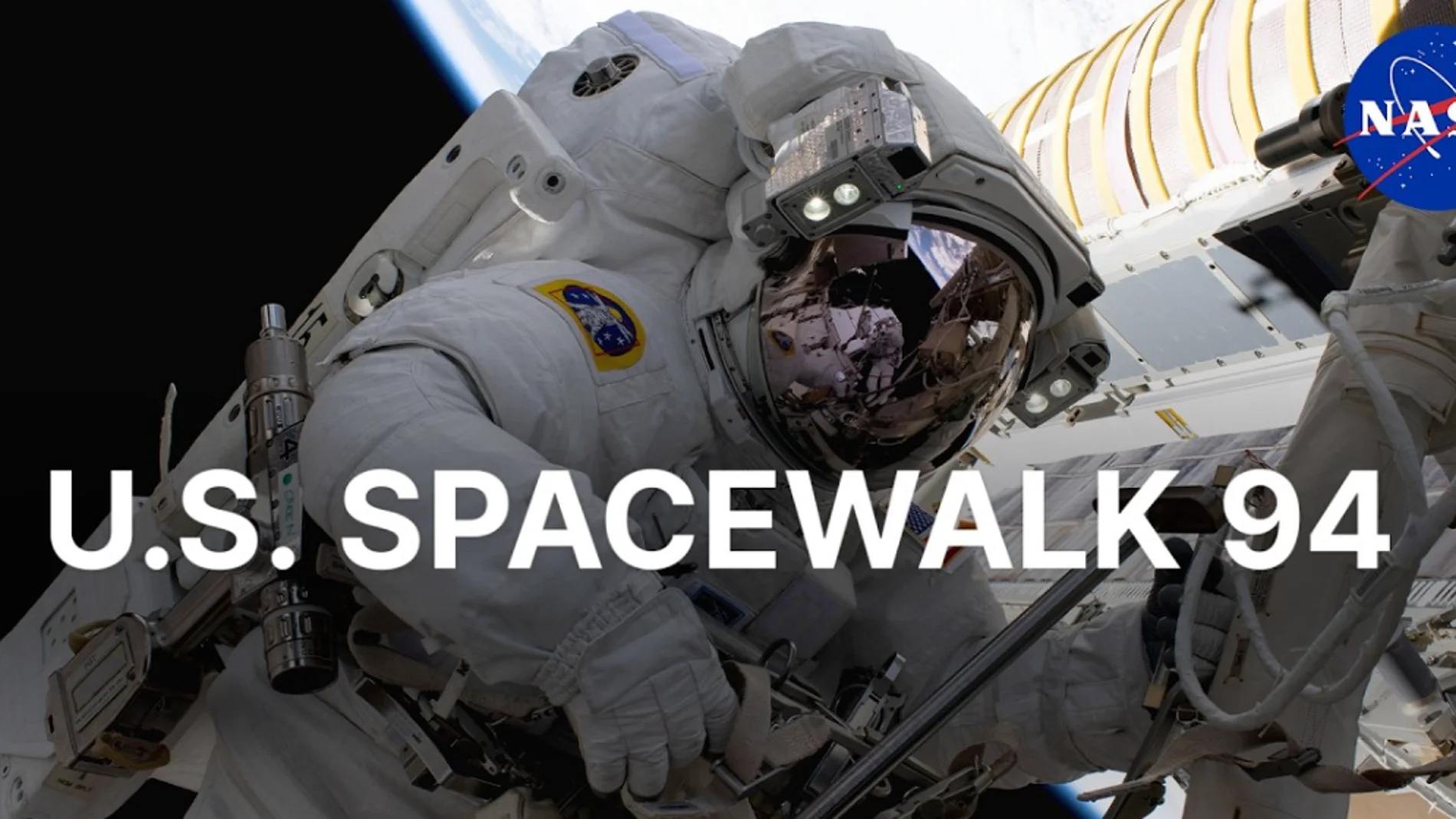
Spacewalks, or more correctly extravehicular activities, are some of the most delicate and spectacular moments in space exploration. During them, the astronauts leave the relative safety of the ship and They work outside, floating more than 400 kilometers above the Earth, protected only by a pressure suit.
that suit It is not a simple “uniform”: it is a miniature spaceship. It regulates temperature, provides oxygen, eliminates carbon dioxide and protects against radiation and micrometeorites. Without it, a human being would lose consciousness in a matter of seconds.
Space walks have left some figures that seem impossible. The longest on record lasted eight hours and 56 minutes, carried out in 2001 by astronauts James Voss and Susan Helms. At the opposite extreme, the shortest one barely reached 19 minutes, after a mission that had to be interrupted.
And then there are the anecdotes: gloves that wear out after hours of work, tools that float and must be secured with cables, or even the sensation described by some astronauts of “being suspended above a living planet.”watching auroras, storms and oceans move under their feet. But beyond the show, these outings have a very specific purpose: maintaining and improving infrastructure in orbit, such as the International Space Station (ISS).
TodayChris Williams and Jessica Meir, crew members of the ISS (the most complex laboratory in the universe), go outside again on a new maintenance mission. This is the so-called “spacewalk 94”, one of the activities planned by NASA in March 2026. to prepare improvements to the station’s energy system, including the installation of new solar panels.
The walk was initially scheduled earlier, but was delayed due to a medical evacuation at the station, forcing the operations schedule to be rearranged. As usual, The activity will last around six and a half hours, although these times are always approximate: in space, each task can be extended if unforeseen events arise. The good news is that you don’t have to be an astronaut to experience it.
NASA offers complete live coverage. The broadcast begins at 6:30 in the morning (US Eastern Time), that is, around 11:30 in mainland Spain. The signal includes real-time images from the astronauts’ suits, audio with mission control and explanatory comments that help understand each maneuver.
Unlike a launch, where everything happens in minutes, a spacewalk is a leisurely spectacle. The movements are slow, calculated, almost choreographed. Each tool is held with care. Every turn of the body is done with precision. But that is precisely where its beauty lies. Because what we see is not just a technical operation. It is the demonstration of what we are capable of achieving as a species in the most challenging environment for life: the vacuum.