
Gas distribution networks constitute a strategic asset to guarantee security of supply, territorial cohesion and the efficient integration of biomethane in Spain
This is one of the main conclusions included in the report ‘The role of the gas distribution network in the Spanish energy system’ – published by the Naturgy Foundation and prepared by Deloitte – which examines in depth the contribution of gas to economic and social development, as well as the role of the distribution network as critical infrastructure and the challenges faced by the energy system in its transition towards decarbonization.
The document highlights that gas distribution networks will continue to be essential to guarantee energy security, industrial competitiveness and the transition towards a “net zero” energy system. The study identifies four fundamental attributes that consolidate the strategic value of these infrastructures: capillarity, resilience, biomethane integration and digitalization. According to the data provided in the report, these pillars allow the networks to provide firmness, flexibility and territorial cohesion, especially in a context of growing electrification and greater penetration of renewable energies.
Security of supply
According to the report, the gas distribution network is considered an essential asset to ensure the national energy supply. With more than 96,000 km of network and nearly 8 million supply points, it directly supplies 20.4 million people and offers potential access to another 6.5 million thanks to its extensive territorial coverage.
Regarding the thermal consumption of Spanish homes, the report points to a very significant seasonal use, with differences of up to 17 times between summer minimums and winter maximums. In Spain, the gas networks are designed both to respond to the peaks of this demand and to store it at a lower rate, which guarantees supply “on demand” at all times and in a stable manner.
Furthermore, according to the report, 85% of Spanish municipalities have medium or high heating needs and the great capillarity of the network allows it to meet the thermal needs of both large urban and industrial areas and thousands of municipalities with cold climates or agricultural and livestock activities. Likewise, the resilience of the system is reflected in the management of peaks in this demand: the daily peak has increased by 7% in recent years, while average demand remains stable. In the electricity sector, gas has reinforced its support role in stressful situations, especially after the blackout in April 2025, with an increase of more than 50% in generation to cover system restrictions.
Biomethane, key in decarbonization
The report highlights that biomethane is one of the most immediate and efficient solutions to reduce emissions in thermal uses and industrial sectors that are difficult to electrify. Its compatibility with existing infrastructure allows the use of current networks, boilers and equipment without the need for modifications, providing real optionality to the consumer.
Spain has a high potential for the production of biomethane from livestock, agricultural and urban waste, with between 80% and 90% of this activity close to the distribution network, which makes it the most efficient platform to transport this renewable gas.
This deployment requires an infrastructure capable of managing bidirectional flows through reverse flow stations, which allow locally produced biomethane to be evacuated to areas with greater demand. France already has more than 30 operating units of this type, while, in Spain, Naturgy has developed the first reverse flow installation in Capellades (Barcelona), which technically validates the model.
Digitization
Digitalization is presented as an essential factor for the distribution network in the future. The report indicates that its implementation will allow managing an increasing number of injection points, ensuring gas quality and optimizing operation in real time. According to the study data, it is necessary to incorporate advanced sensors, SCADA systems, chromatographs, telemetry, smart meters and digital twins, all technologies that facilitate the management of pressures and flows, monitor gas quality and guarantee safe and efficient operation in a distributed generation environment.
The Ministry for the Ecological Transition and the Demographic Challenge (MiTEco) is already working in this direction, specifically in the progressive deployment of smart meters, which will improve consumption efficiency, reduce losses, facilitate the integration of renewable gases and increase transparency for consumers.
European perspectives
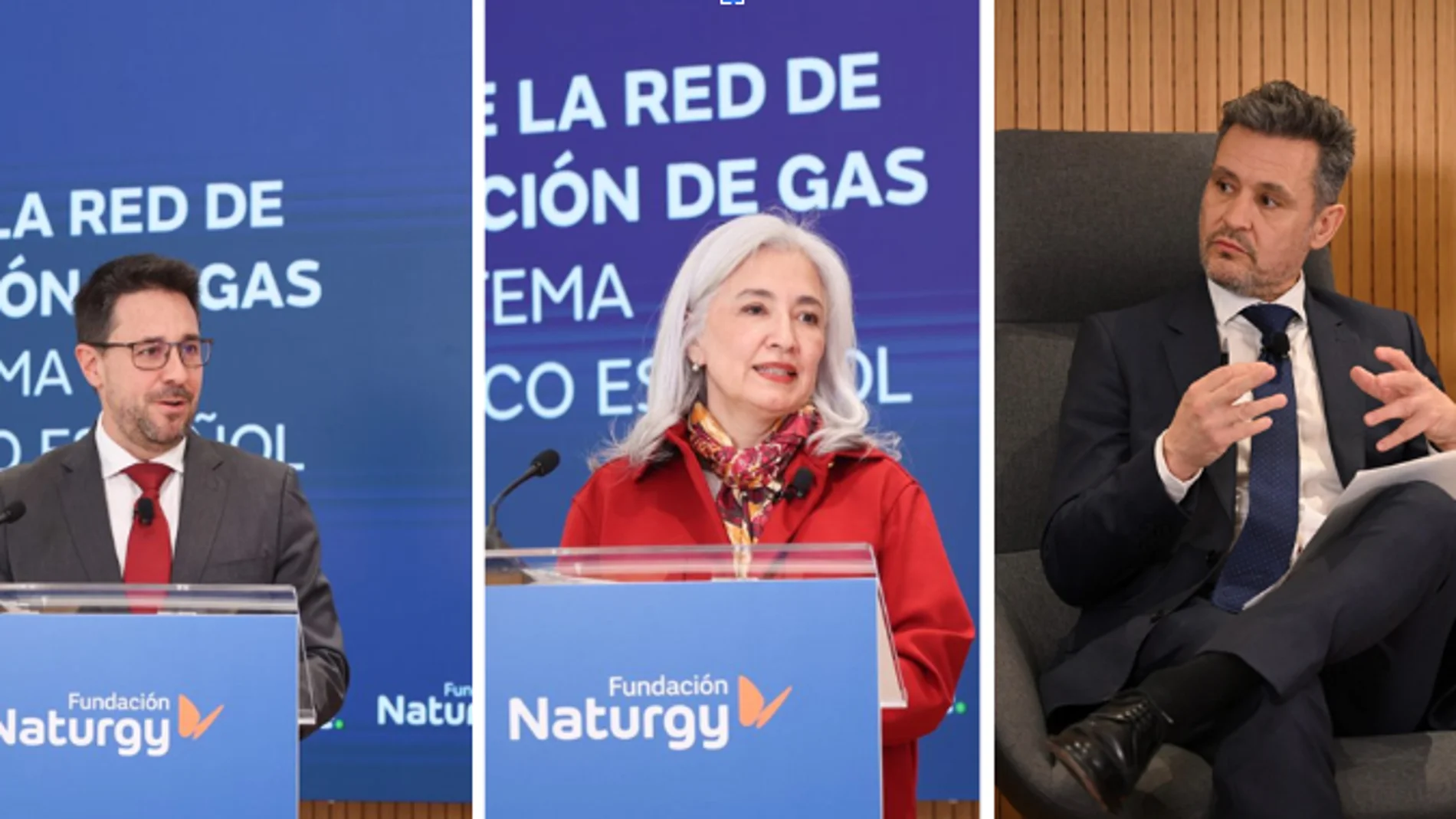
After the presentation of the report, business representatives such as Raúl Suárez, Paolo Gallo and Gabriel Sousa, CEOs of Nedgia, Italgas and Floene respectively, contributed their points of view on the role of the gas network in the energy transition.
The three agreed that at the European level The energy transition has to pivot simultaneously on three main axes, such as decarbonization, security of supply and affordability.
In the opinion of the CEO of Nedgia, Raúl Suárez, “the gas distribution network represents an asset whose solidity and capillarity will continue to be decisive in guaranteeing a safe, efficient energy system prepared for the challenges of the coming decades and consequently it is a fundamental piece of the Spanish energy model.”
For Paolo Gallo, CEO of Italgas, “Europe needs an integrated system in which electrons and renewable molecules work together.” And in this context, “gas networks are a strategic asset to accelerate decarbonization in a resilient and profitable way.”
Finally, Gabriel Sousa, CEO of Floene, defended gas networks as a strategic pillar for a balanced and competitive energy transition. “The transition is not electricity or gas, it is electricity and green molecules. We need a hybrid, resilient and accessible system,” he stated.