
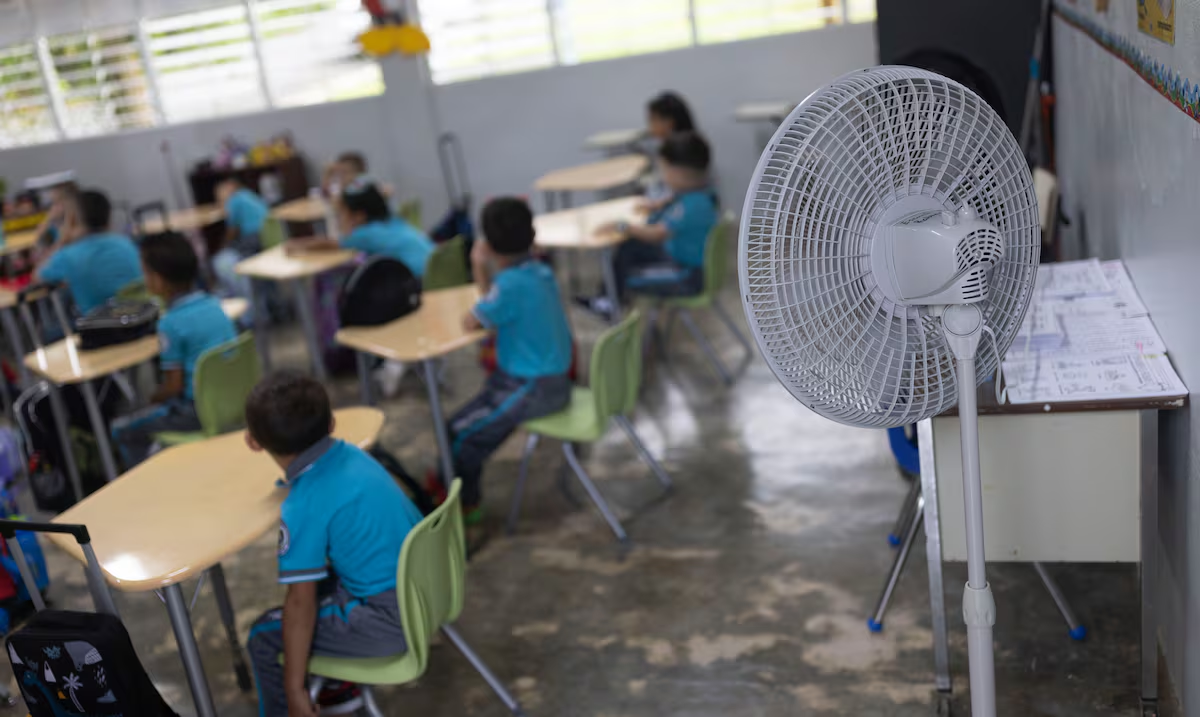
Caguas – The waves of extreme heat in Puerto Rico they no longer only cause discomfort, but, without adequate infrastructure, they affect learning, health and well-being inside and outside the schools. schoolswhere students and teachers face high temperatures.
This was reflected during the 3rd Meeting on Extreme Heat of Puerto Rico and the Virgin Islands, organized by the Caribbean Collaborative Action Network and which culminates this Friday, where a project from the Julián E. Blanco Specialized Ballet School was presented, undertaken by students since 2024, which proposes creating a school environment more resilient to heat.
The initiative began with a thermal diagnosis through the use of drones, which made it possible to identify the hottest and coolest areas within the San Juan campus, particularly the difference between structures exposed to the sun and areas with vegetation.
“Our main objective is to understand how environmental variables affect the distribution of heat, generate thermal maps and, from this data, develop strategies that help mitigate the effects of extreme heat in schools”he explained Priscilla Molina Coraresearch assistant, Graduate School of Public Health Medical Sciences Campus of the University of Puerto Rico (UPR), during one of the event panels.
At the school, sensors were installed that measured temperature, humidity and dew point in outdoor areas without air conditioning and conditioned classrooms. It was found that the warmest areas during the day are the cafeteria and the library, spaces that students and staff visit frequently.
Among the sensors used are the Blue Maestrowhich measures temperature, humidity and dew point within establishments; and the PurpleAir Zenwhich measures air quality, temperature, humidity and volatile organic compounds in outdoor spaces.
Preliminary data, from June to September 2025, shows an average of 85 degrees Fahrenheit (°F) at the Julián E. Blanco Specialized Ballet School.
Currently, sensors have been installed in five campuses, including the Dorado Ecological School, the UPR Elementary School and the Petra Corretjer High School in Manatí, in addition to three community stations in Caguas, Río Piedras and Toa Baja.
At the Petra Corretjer High School in O’Neill, classrooms that exceeded 82 °F and peaks of particulate matter 2.5 associated with traffic and industrial areas were recorded.
According to the data presented from the project, 62.7% of public schools lack air conditioning and 36% are exposed to high temperatures, causing extreme fatigue, lack of concentration, physical discomfort and dizziness in students.
The program turns teachers, students and communities into citizen scientists through four phases: initial contact from interested schools; virtual sessions with teachers to explain objectives and responsibilities; in-person workshops for students on climate risks and the use of sensors; and installation and continuous monitoring of the equipment.
“In a country like Puerto Rico, where high temperatures and humidity are part of our daily lives, we have to ask ourselves if we are ready and if our educational spaces are ready for that challenge”summarized the meteorologist Ada Monzónpanel moderator.
Impact on older adults
At the meeting – held at the headquarters of INTECOin Caguas–, it was also warned that prolonged exposure to extreme heat significantly affects the older adultswho spend much of the day in their homes. Through the investigations presented, it was documented that many experience more than six hours of heat during the day, especially between 12:00 pm and 1:00 pm, and more than 10 hours if hot nights are added.
These prolonged periods cause moderate to severe symptoms, such as fatigue, confusion, nausea, anxiety, headaches, and difficulty carrying out daily activities. Although 72% of homes have air conditioning, frequent electricity and water interruptions, along with the lack of water storage in 40% of homes, create structural barriers that increase the vulnerability of this population.
To address this situation, multisectoral strategies are promoted, including cooling centers with emotional support, visits to homes for the elderly, institutional protocols for heat events, and public health campaigns aimed at different populations.
“We already have enough evidence about how extreme heat impacts different sectors in Puerto Rico and the Virgin Islands. “What we need now is to coordinate efforts, involve agencies and communities, and convert that knowledge into concrete action to protect the population.”he stated Pablo Mendez Lazaroassociate professor in the Department of Environmental Health of the Graduate School of Public Health of the Medical Sciences Campus of the UPR.