
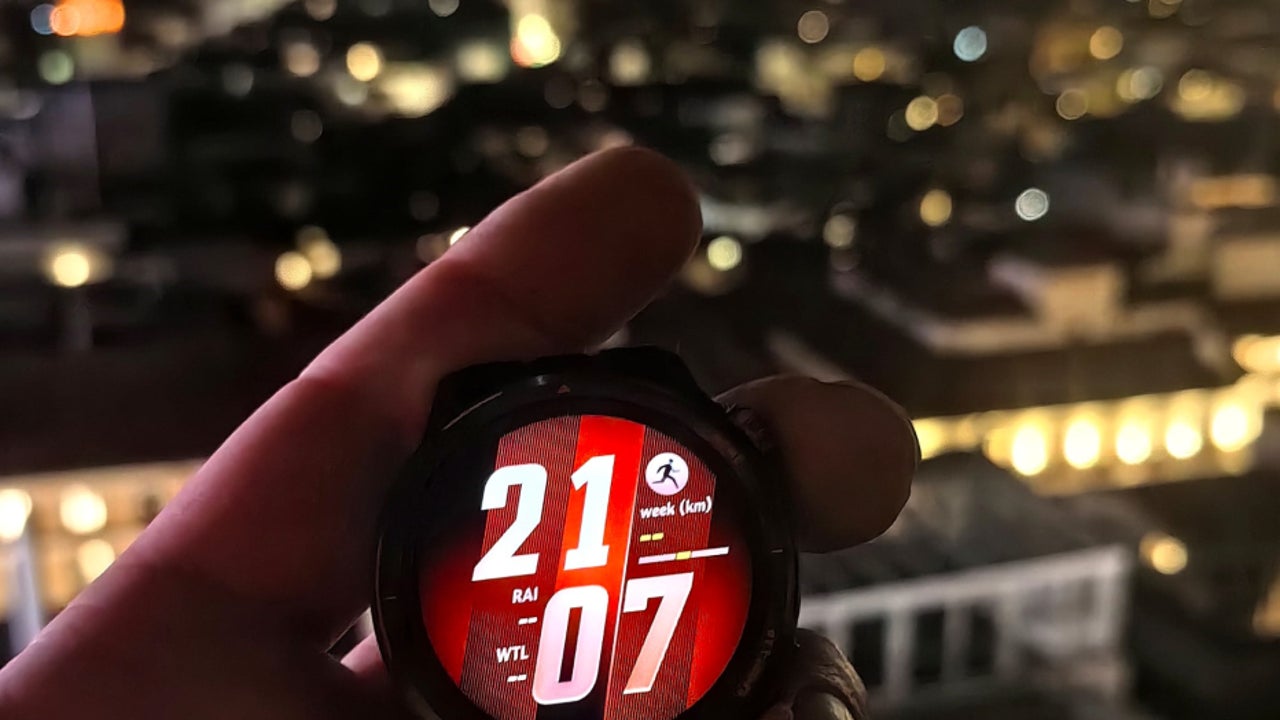
In his 1962 novel, The Age of EnlightenmentAlejo Carpentier recreated the echoes of the French Revolution, but in the Caribbean. Huawei has done something similar: Imagine a trainer on your wrist. And it has made it, more than reality, credible.
Not so long ago, a sports watch was used to record the distance traveled, count heartbeats or locate ourselves on a map. Since those times we have evolved and now most have qualities that allow them to be used as medical devices, They have satellite precision that rivals mobile phones and are capable of adapting to more than 100 sports.
But what Huawei has presented is not just a more powerful watch, nor a longer-lasting battery. Is a clear step towards wearable devices that understand our body, habits and also our goalsand who use that understanding to configure appropriate training.
Yes, we are talking about a watch with a battery that can last 34 hours if we “abuse” the satellites and ask for constant location… with a precision equivalent to 99.4% of a GPS with industrial characteristics. Or two weeks with conventional use. We are also faced with a watch with very “thin” sensors, a screen with very high brightness and a titanium cover that resists extremes.
But the key to the GT Runner 2 is not only in its sensors, but in how it interprets the information it collects. Thanks to advanced algorithms, including artificial intelligence modules and biometric models developed by Huawei, the watch not only measures: it analyzes, compares and predicts.
This analysis allows the device to evaluate progress not only by comparing distances, but also heart rate, pace per km traveled and recovery rates. This allows us to know if we improve, stabilize at a plateau of performance or decline.
The information also makes it possible to detect patterns and compare them over time. Thus It tells us that resistance is progressing, but that maximum speed is stagnating. And, most importantly, suggest specific training for it.
The GT Runner 2 also suggests recovery times by integrating heart variability and training load data. In short: when is it better to rest or when we can “give it a go”. And that when he not only talks about the day of the week, It also evaluates performance and discovers if we are more suitable for speed training in the afternoon and for long sessions in the morning and takes advantage of this. But this can alter it taking into account how we slept and whether we had adequate rest.
Another interesting detail is that we can signal an event in the application and plan the training to arrive in the best conditions… according to the time we have selected for the distance. As long as it is a logical goal and in accordance with our state.
Then, when the day of the competition arrives, the GT Runner 2 “coach” activates and tells us the appropriate pace, warns us about the need to hydrate, and predicts how close or far we are from the goal time. For added peace of mind, If he detects that we are showing signs of excessive fatigue, he may recommend breaks, hydration or prolonged rest.
Thus, the Huawei Watch GT Runner 2 represents a paradigm shift in the sense that it no longer records data: it interprets it and suggests it based on it. This leap is based on three pillars: its advanced sensors (obtain complex physiological data with precision), integrated AI and evolutionary personalization: adapt recommendations according to our history and goals. Carpentier’s novel portrays a rarely explored side of a revolution. GT Runner 2 explores a rarely exploited aspect of evolution. And he does it very well.