
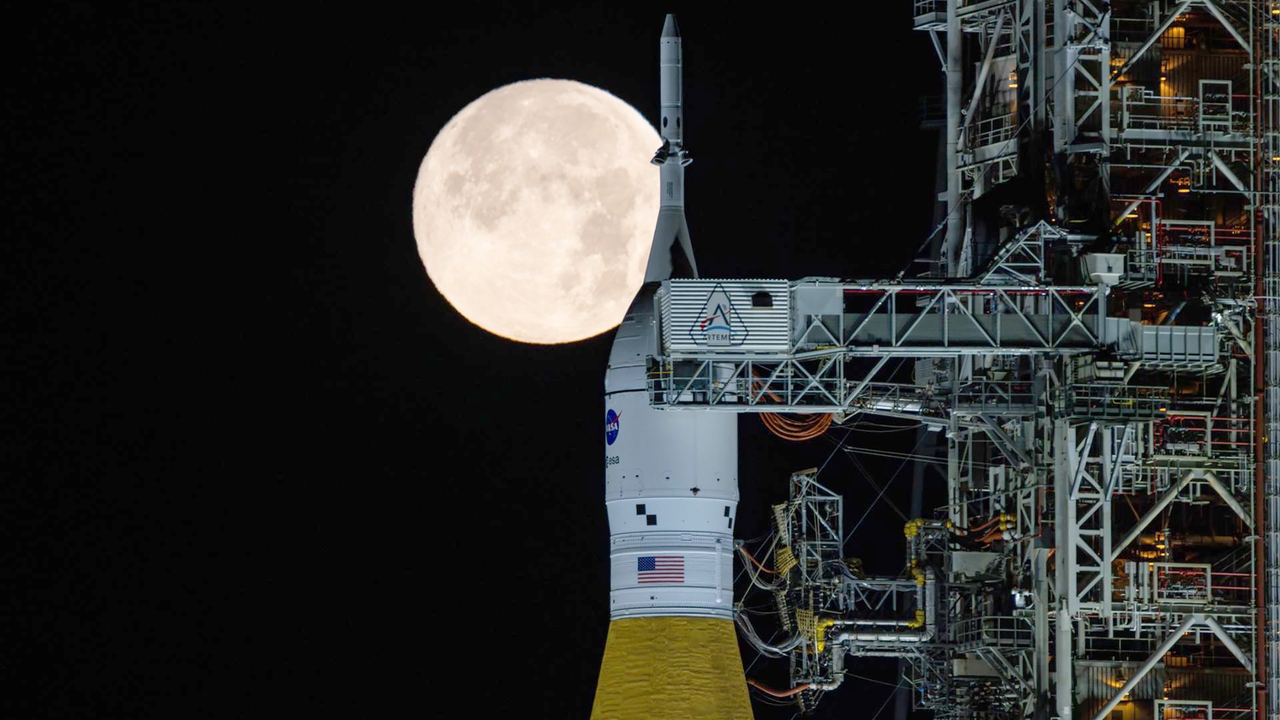
On February 6, the first of the launch windows planned by the POT for the mission Artemis IIwhich extend until April. The general launch rehearsal, which lasts two days and in which the rocket tanks are filled SLSdid not go as expected, which caused the postponement until the next one. The calendar ahead of Artemis II consists of five possible release dates in March (6 to 9 and 11) and six in April (1, 3 to 6 and 30). On each of these dates, the takeoff window lasts 120 minutes except March 11, 115 minutes.
This leaves alone 11 takeoff opportunities over a 61-day periodsome of which could be frustrated simply by bad weather. Artemis II has so few opportunities to launch due to to orbital mechanics and the specific requirements of this mission and Orionthe capsule with the astronauts that transports the SLS, as detailed by NASA in an article published last month.
The Canadian astronaut Jeremy Hansen and NASA astronauts Reid Wiseman, Victor Glover and Christina Koch will take off, in principle, on one of those dates from the Kennedy Space Center to take a trip ten days in which they will circle the Moon aboard Orion.
But the astronauts they do not address the satellite directly. The rocket Space Launch System (Space Launch System) will first place Orion in a high earth orbitat more than 35,000 kilometers altitude, where the crew and teams on the ground will carry out various checks to ensure that the capsule is ready for its trip.
Therefore, ‘launch day and time must allow SLS to place Orion’ in that orbit and in ‘proper alignment with the Earth and Moon at the time of the translunar injection maneuver’explains NASA.
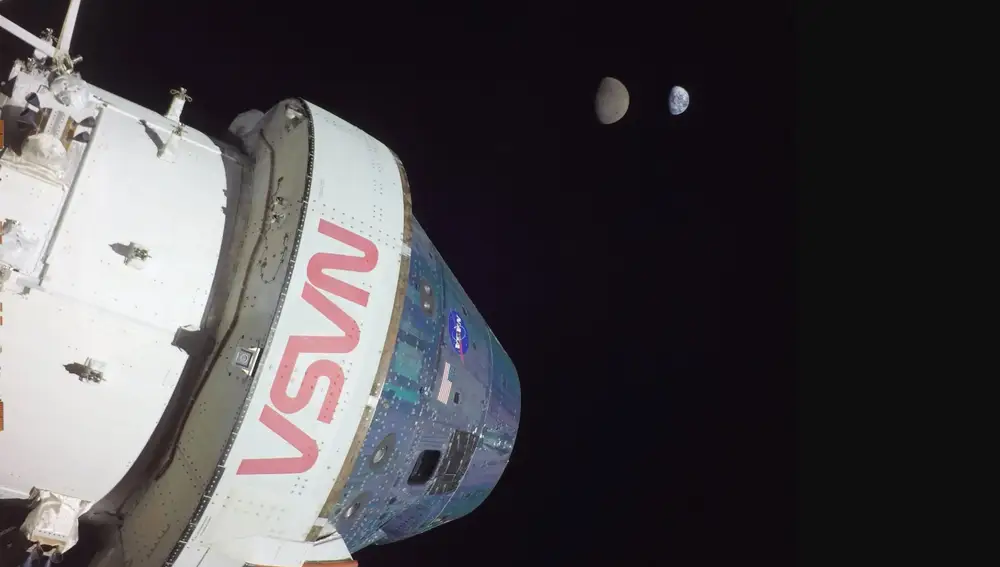
As its name indicates, That maneuver will put Orion on its way to the Moonwhich will fly over on a trajectory of ‘free return’. The capsule will use the lunar gravity to propel back towards Earth, without the need for another major engine maneuver.
Furthermore, the Orion power requirements They further limit the mission launch window. ‘The trajectory of a given day must ensure that Orion does not stay in the dark for more than 90 minutes at a timeso that the solar panel wings can receive and convert sunlight into electricity and the ship maintains an optimal temperature range. Mission Planners eliminate possible launch dates that would send Orion into prolonged in-flight eclipses‘, notes NASA.
Finally, viable release windows also have to take into account Orion’s return to Earthwhich will follow a specific reentry profile.
NASA maintains this calendar without determining any specific date because it must first overcome its ‘wet dress rehearsal‘, which is what the agency calls the aforementioned dress rehearsal and which also includes the entire countdown process. On February 2nd, a liquid hydrogen leak ruled out that month for the launch.
This is not the first time this has happened on the show. Artemis. The first unfinished ‘wet dress rehearsal’ of Artemis I took place in April 2022. There was a second in August and a third in September, before the mission managed to successfully lift off in November. So it is possible that we will have to wait again for the mission that will take humans further from Earth than they have ever been.