
Severe hidden energy poverty is a structural challenge that needs to be addressed from a broad perspective. This is one of the reasons why, The Naturgy Foundation has been working on the preparation and publication of several reports that help improve both efficiency and energy bills.
More than 40% of households with severe hidden energy poverty spent less than a quarter of what they would need to maintain adequate conditions of thermal comfort, which limits the impact of express rehabilitation and microefficiency measures alone and requires carrying out deeper interventions.
This is one of the main conclusions of the VAREX-2024 study, carried out by the Technological Research Institute (IIT) and the Chair of Energy and Poverty of the Universidad Pontificia Comillaswhich has evaluated the impact of nearly fifty express rehabilitation interventions promoted by the Naturgy Foundation’s Energy Rehabilitation Solidarity Fund.
The study has been collected in the document ‘Evaluation of the impact of express rehabilitation on energy poverty: analysis of new real cases in different Spanish provinces’. A report that has analyzed the impact of express rehabilitation measures on vulnerable households in ten Spanish provinces, focusing on the effect of the interventions on three key aspects: the evolution of theoretical energy expenditure, the energy poverty gap and the percentage of households in a situation of hidden energy poverty.
Thus, the study concludes that express rehabilitation measures generate significant energy savings of 6%, although insufficient in many cases to lift households out of energy poverty. Given the severity of the cases analyzed, The percentage of households in hidden energy poverty fell from 71.7% to 68.3% and the gap of this energy poverty was reduced by around €70.
Lines of action
To improve the effectiveness and scope of energy rehabilitation policies in line with the measures proposed by the new National Strategy against Energy Poverty (ENPE 2026-2030), The VAREX-2024 study proposes scaling structural interventionsprioritizing measures with greater impact such as wall insulation, replacement of windows and inefficient appliances; and designing public financing mechanisms that allow NGOs and local administrations to undertake these more costly reforms in vulnerable households.
On the other hand, it affects the need to promote the combination of microefficiency measures, as well as improve monitoring and impact evaluation, so that the analysis of energy poverty can be expanded, incorporating additional indicators of disproportionate spending into this study and improving the analysis of inadequate temperature; and evaluating other factors that affect well-being, such as humidity, leaks or the state of appliances.
Finally, the authors consider it essential to strengthen institutional collaboration, promoting alliances between public administrations, NGOs and companies to increase the coverage and sustainability of the programs; and expanding the express rehabilitation pilot projects proposed in the new ENPE 2026-2030.
The School of Energy
In the same line, the Energy School of the Naturgy Foundation It has also presented a report containing the conclusions on the work of supporting vulnerable families carried out by the School itself.
According to the report “Support for vulnerable families: Naturgy Foundation energy school and energy advice points” Some figures are especially striking, such as that, thanks to the training and application of the recommendations suggested by the School, the assisted households have achieved average savings of 467 euros.
For Almudena Laguillo, head of the Energy School, “training is one of the fundamental levers to alleviate energy poverty.” In fact, Laguillo valued the work of the School he manages, thanks to which “3,800 workshops and almost 44,000 training sessions have been carried out in 925 municipalities throughout Spain”with which the use of the “social bonus has gone from 12% to 55% in accompanied households.”
For your part Rafael Villaseca, president of the Naturgy Foundation, He assures that these data are essential “in an area as complex as the fight against energy poverty.” Information that gives results, since “we have evaluated nearly 500 express rehabilitation and micro-efficiency interventions, and the data confirms their effectiveness in reducing energy poverty.” In addition, he pointed out that “studies show the clear impact that training and, especially, support for vulnerable families has.”
María Eugenia Coronado, general director of the Naturgy Foundation, highlights the work carried out with this study, which “demonstrates that rehabilitation helps not only reduce energy expenditure or the energy poverty gap, but also helps families have decent homes, greater comfort and a better quality of life.”
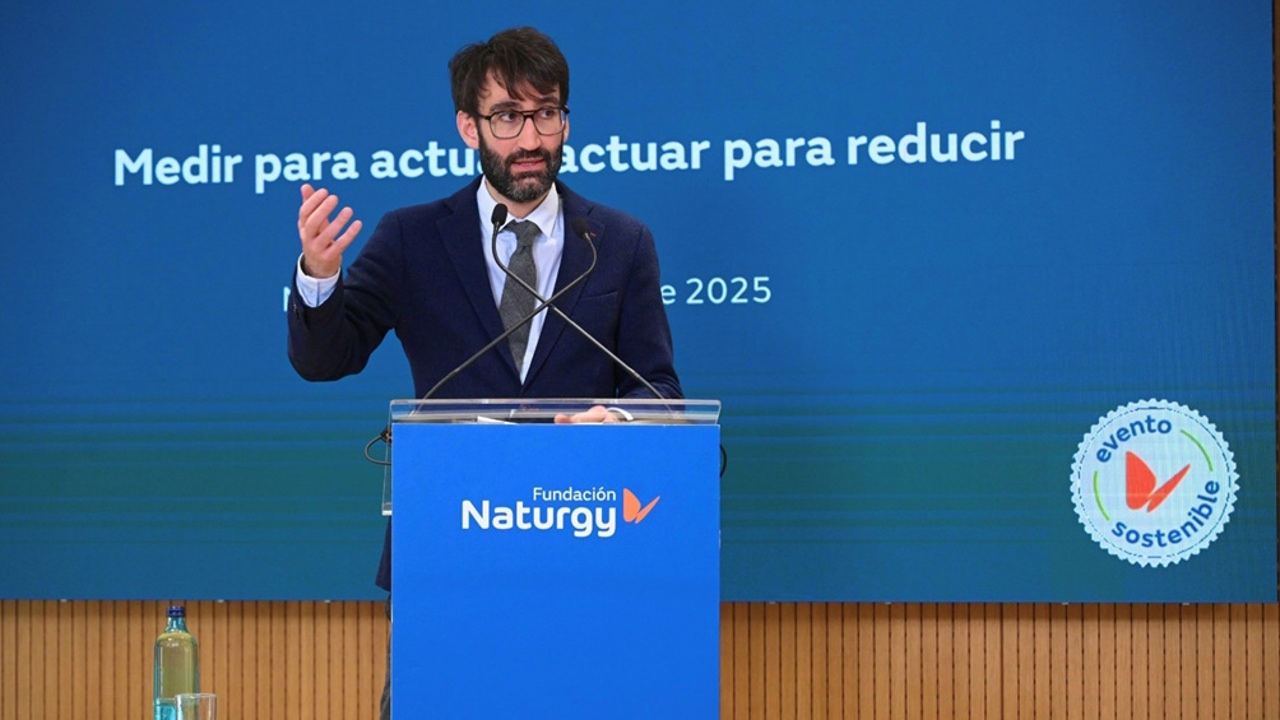
The presentation of these reports also included the participation of Víctor Marcos Morell, general director of Energy Planning and Coordination of the Ministry for the Ecological Transition and the Demographic Challenge (MITECO), who highlighted the importance of having measurable data to be able to address energy poverty, a problem that greatly worries the Government. “Average energy expenditure has fallen, especially at the lowest income levels, with decreases of 24% and 10%,” while “the minimum interprofessional wage has risen by 54%, which has increased the income of households with less income.” This reality forces us to analyze the data with “rigor,” since “we do not know if disposable income has really improved or if it has been used to cover other basic needs.”
From indicator to identification
In addition, a round table was organized, in which prominent experts such as Efraim Centeno, director of the Chair of Energy and Poverty at the Universidad Pontificia Comillas, participated; Jaume Cases, director of Transformation and Operations at Naturgy Clients; and Ángel Fernández, manager of the EMSV Getafe, moderated by Ester Sevilla, director of social and international projects at the Naturgy Foundation, which addressed the importance of having reliable data and statistics but also that the indicators and identifiers are appropriate since the casuistry of energy poverty is very complex.