
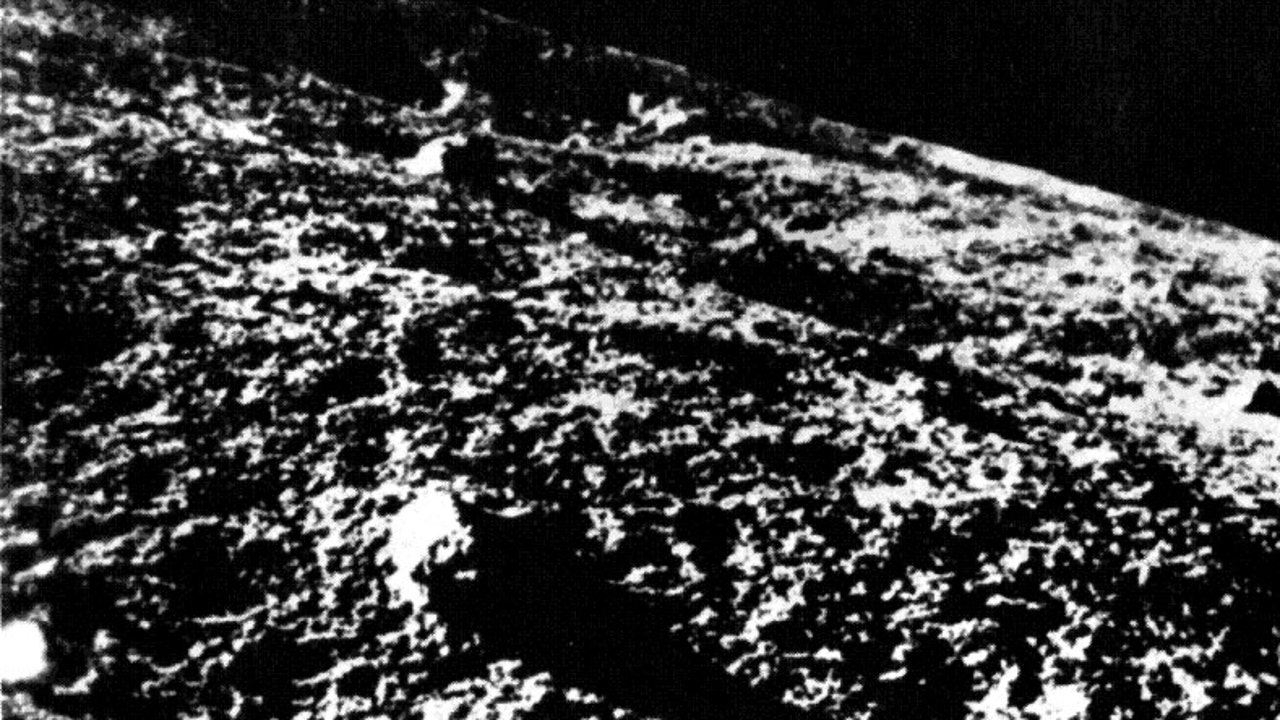
It was not until the late 60s that USA advanced to the Soviet Union in the space race. Before the arrival of the mission Apollo 11 to the Moon in 1969the USSR had launched the first satellite in 1957put the first man into orbit in 1961 and made the first soft landing (without crashing, to understand) on the Moon with the Luna 9 mission in 1966. The location of the latter, which during the three days it was operational took and transmitted the first images captured from the lunar surface in history, has remained a mystery for 60 years due to the bounce during landing and obsolete tracking data. Until now.
A team of University College Londondirected by Lewis Pinaulthas turned to artificial intelligence to solve this case and find Luna 9. To do this, they created a specialized machine learning algorithm capable of analyzing thousands of images of the lunar surface taken by the Lunar Reconnaissance Orbiter (LRO) from NASA.
The program is called YOLO-ETAshort for ‘You Only Look Once – Extraterrestrial Artifact’. It is specifically designed for identify objects of human origin in high-resolution lunar images and uses a machine learning algorithm that detects subtle, artificial alterations in the lunar regolith that the human eye might miss.
‘Trained on data from the Apollo landing sites, YOLO-ETA achieved balanced precision-recovery (F1 ≈ 0.60), an average confidence score of 80% in detecting landers in previously unseen images and correctly located the ship Moon 16‘, another Soviet mission, which validated its use, explain the researchers in the study published in the journal NPJ Space Exploration of Nature.
In 1966, the Luna 9 probe used a landing system that combined a spherical capsule, a braking motor and inflatable shock absorberswhich caused it to bounce Oceanus Procellarum before stopping and unfolding its characteristic four petal-shaped panels.
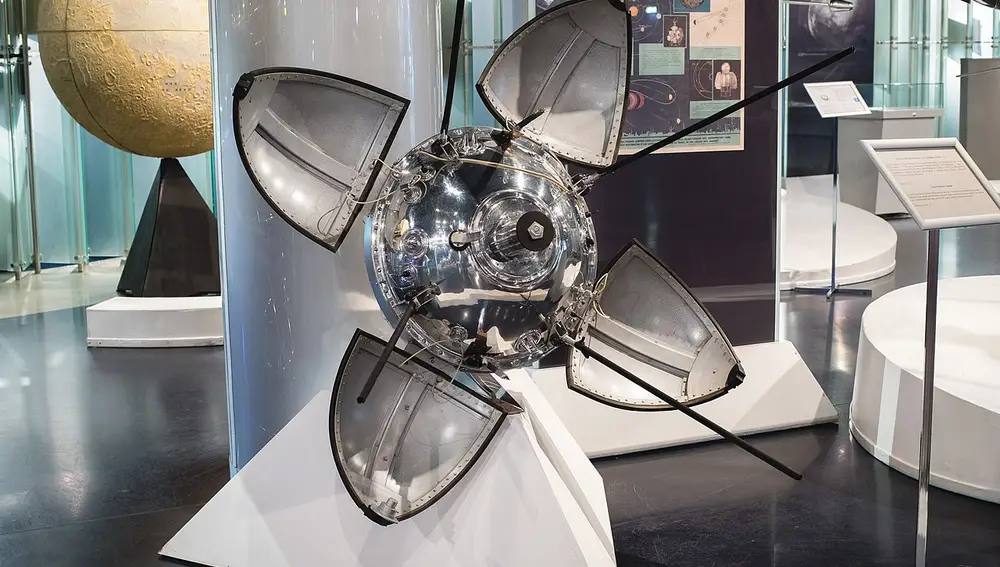
Although the LRO has been recording the Moon’s surface in detail since 2009, Luna 9 had remained hidden because it had moved from the original landing coordinates..
YOLO-ETA has been able to identify Luna 9 because it can recognize the specific way in which a human-made metal object casts its shadow on basaltic rock and the characteristic patterns that a propeller from the 1960s leaves in the disturbed soil.
The AI analyzed an area of 25 square kilometers of the lunar landing zone and narrowed the search to a few high probability locations where what remains of the ship, already six decades old, is probably located.
‘Application of the model to a 5 × 5 km region around the historically uncertain Moon 9 landing area yielded various high-confidence detections of artificial objects near 7.03° N, –64.33° E’, the study notes.
‘Topographic analysis indicates that the horizon geometry of the candidate site is potentially consistent with photographs of the surface of Luna 9‘, he adds.
To confirm 100% where Luna 9 is, researchers will use the data provided by the orbiter Chandrayaan-2 of the Indian Space Research Agencywhich plans to carry out a series of low-altitude passes over the area next March. Its modern cameras, launched in 2019, will be able provide the necessary clarity to verify the ‘artificial soil alterations’ detected by the YOLO-ETA algorithm.
If you can identify the four petal-shaped panels of the Luna 9 capsule, a 60-year-old unsolved case would be officially closed.