
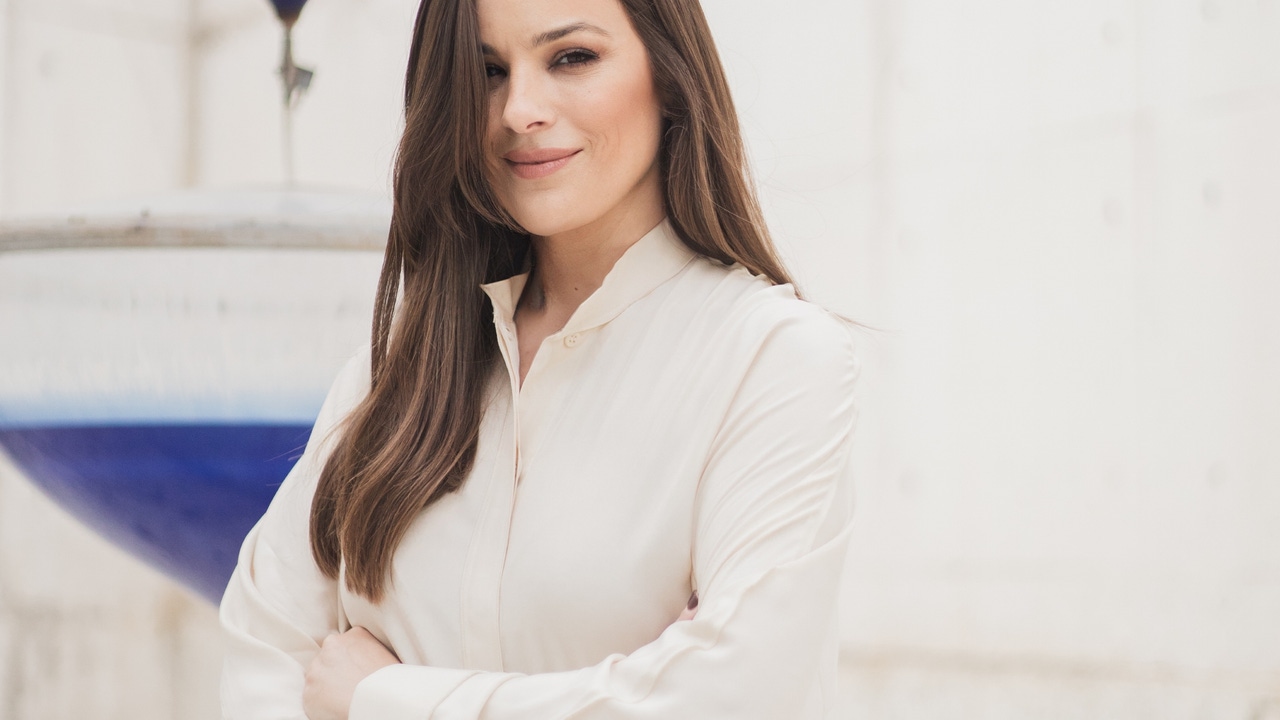
Meteorologist, oceanographer and scientific communicator specialized in climate change and sustainability, and editor and presenter of El Tiempo on Antena 3 Mercedes Martín, changes the screens for a few days for the I Congress of Art, Culture and Science-Biennal B, “Inhabiting the future”, which will be held at the Es Baluard Museu, in Palma de Mallorca. As co-director of the event, together with the museum’s director, David Barro, they will guide the round tables and activities of a meeting designed to unite different areas of knowledge and cultures in a joint reflection in pursuit of models of responsible transformation to face the challenges of the future.
What does a congress that brings together art, science and humanities consist of?
In practice, in this first edition, we have proposed, more than isolated presentations, a journey, a space for dialogue, an encounter between art, culture and science in which to think about issues such as how we build the city, how we inhabit the territory, how the climate crisis affects us, how people move and what models of life we are normalizing.
What idea did they start from to create this meeting?
Both David Garro, who is the artistic co-director, and I, who am the scientific co-director, think that seemingly separate areas such as art and science are needed in practice. One explains the limits and evidence, another works with sensitivity, with imaginaries, with ways of looking. By connecting both, much more interesting questions and unexpected, more versatile and more contemporary solutions appear. Furthermore, I believe that, in a time of so much immediacy, so much opinion and so little space to think about these current challenges that require nuances, doing so from a multidisciplinary point of view makes you change your perspective to seek and find new answers. Or new questions, perhaps much more interesting
Reconciling different knowledge, right?
Exact. To face the challenges of the present and the future, we must understand the complete map, from urban planning to energy, including culture and coexistence. Without understanding the whole, the decisions will be much more expensive, socially, environmentally and, of course, economically. By bringing together different academic fields, richer answers emerge.
What would be a good outcome of the congress?
For us, it is already a success to have been able to bring together so many international leaders from different fields to talk about how we inhabit the present and the future in terms of sustainability. A good result would be to generate that active conversation with the public, broaden their vision to ask new questions and look for new ways of facing the world.
Last year she was part of the NGO Homeward Boudn Transform’s expedition to Antarctica, in a group of more than 100 scientists to make the consequences of climate change visible. Did it leave a mark on you?
Very deep. It marked a before and after in my life. It came to me at a time when I really needed to reconnect science with my personal purpose. And, also, it gave me context. I have always told about climate change from data, reports, maps. But, in Antarctica time stops and there you understand exactly what is behind each figure, each report read and you notice that real impact, because you see how the glacier melts and you understand that what happens there impacts the rest of the world. Having that context gives you all the strength necessary to continue communicating and informing about why we must act now, that we do not have much time left to make good decisions and put a stop to climate change.
In your professional background there is a lot of study, effort and knowledge to do your job well as a communicator. How do you feel about so much effort dedicated to changing the chip and making climate change a woke issue?
It worries me, especially for young people. Misinformation is very dangerous and undoubtedly delays action. Because climate science, which is rigorous, attributes climate change to human activity and is based on thousands of peer-reviewed studies collected by the IPPC. There is no scientific doubt that it exists and social doubt is induced. Therefore, misinformation, rather than paralyzing me, pushes me to think and look for how I can change my narrative or my way of communicating climate change to find new narratives and attract the attention and trust of those people who doubt it and feel confused.