
Is it an innate part of our personality or do we learn it? Can we modify it over time? Science has shown that humans are biologically predisposed to generosity: activates brain reward circuits similar to those for food or sexpromoting physical and mental health. But being predisposed does not mean that we carry it out.
A new study published in PLOS Biology contributes a surprising insight in suggesting that generosity, at least in part, could lie in the activity of specific brain regions which, when stimulated, seem to increase the propensity to behave more altruistically.
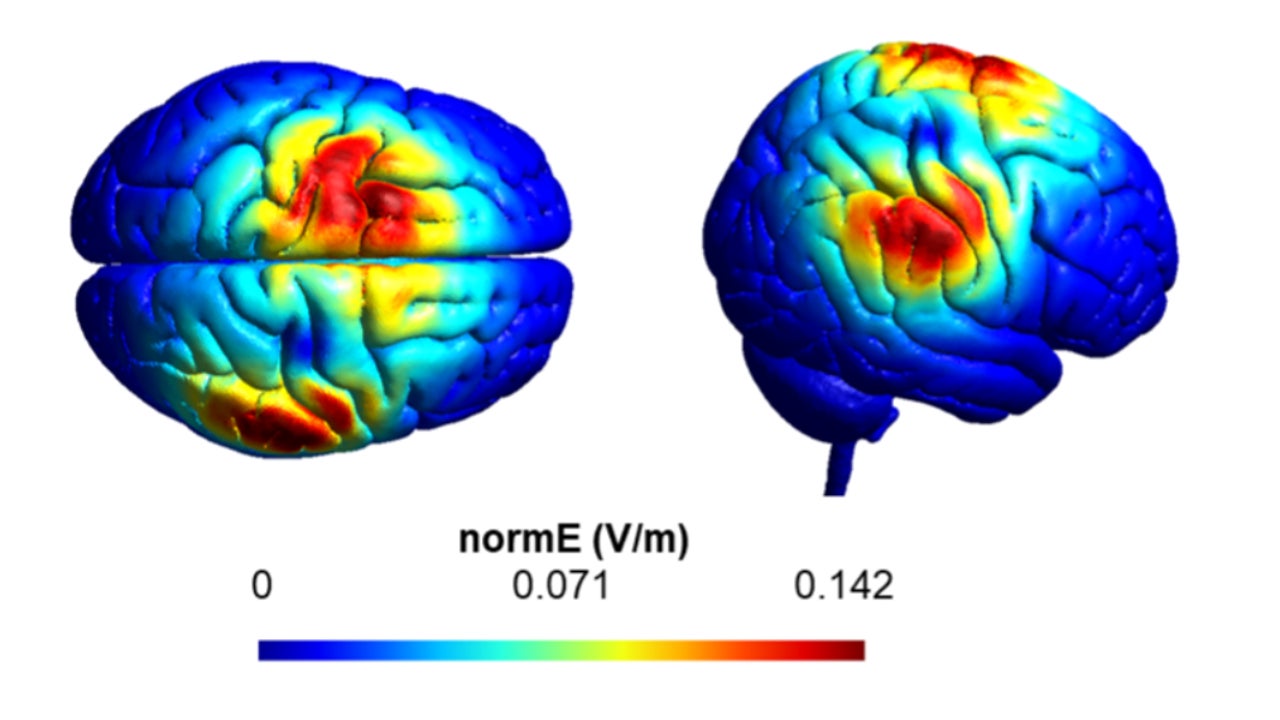
The study, led by Christian Ruff of the University of Zurich, focused on a small but crucial area of the prefrontal cortex, a set of regions known for its role in decision-making, planning and emotional regulation. Through non-invasive brain stimulation techniques aimed at this area, Scientists observed that participants tended to behave more generously in tasks that simulated real economic decisions. Instead of keeping more of a shared resource for themselves, they were more willing to share it with others, even when doing so was less beneficial to them individually.
What makes this work especially interesting is that It does not limit itself to observing a correlation between brain activity and behavior, but rather explores a causal relationship. By directly modulating the activity of a specific neural region, Ruff’s team was able to influence how allocation decisions were distributed.
“The results show that when this region of the prefrontal cortex is stimulated, people appear to more equally weigh the needs of others against their own,” says Ruff. This sentence summarizes the central idea: It is not just about thinking of self and other as separate entities, but rather the brain actively integrates the perspective of the other when deciding how to share resources.
The experiment was structured so that volunteers had to make decisions about how to divide money in contexts where they could benefit themselves more or favor someone else. Brain stimulation consistently increased the propensity in favor of more equitable options. The authors emphasize that it was not about “forcing” individuals to be generous, but rather about neurally facilitating a different balance between personal gains and the well-being of others.
For Ruff’s team this has profound implications. Generosity is not simply an abstract moral trait or a fixed personality characteristic, but a cognitive process subject to clear physiological modulations.
“Our findings offer direct evidence that generosity is, in part, a neural construct that can be influenced by stimulation of specific regions of the brain”Adds Ruff, highlighting that this does not imply magical solutions, but rather better understanding the mechanisms that support social behavior.
The study also warns about the need to interpret the results with caution. Stimulating the brain to promote generosity in a laboratory is not the same as applying it in everyday life, where human decisions are immersed in social contexts, much more complex emotional and cultural ones. Furthermore, the ethics of intervening directly in neural processes to change behaviors is still a matter of debate.
Thus, the study opens the door to both scientific and ethical reflections: Should we one day use these techniques to encourage prosocial behaviors? What limits should exist? And how do we balance individual autonomy with potential collective benefits?
In any case, Ruff’s study represents a significant advance in the neuroscience of social behavior. Show that generosity can have a neural basis (which was known), but that it is modulatable (which was not known until now), brings a new dimension to old debates about human nature and its capacity for cooperation.
By identifying specific brain regions involved in evaluating social costs and benefits, scientists not only expand our understanding of how the brain works, but also offer a conceptual tool to think about generosity not only as an ethical idealbut as a cognitive process subject to research, measurement and, potentially, intervention.