
Imagine a plot of cereal or saffron in the heart of La Mancha, newly born after the autumn sowing. For the farmer, the threats on the horizon are well known: weeds, fungi, insects and parasites that, each season, force him to enter the field on the back of large ground sprayers. Now, imagine that, Instead of applying agrochemicals at high doses all at once, the crop will be protected by millions of “nano-peasants” invisible, which release natural defenses in a controlled manner.
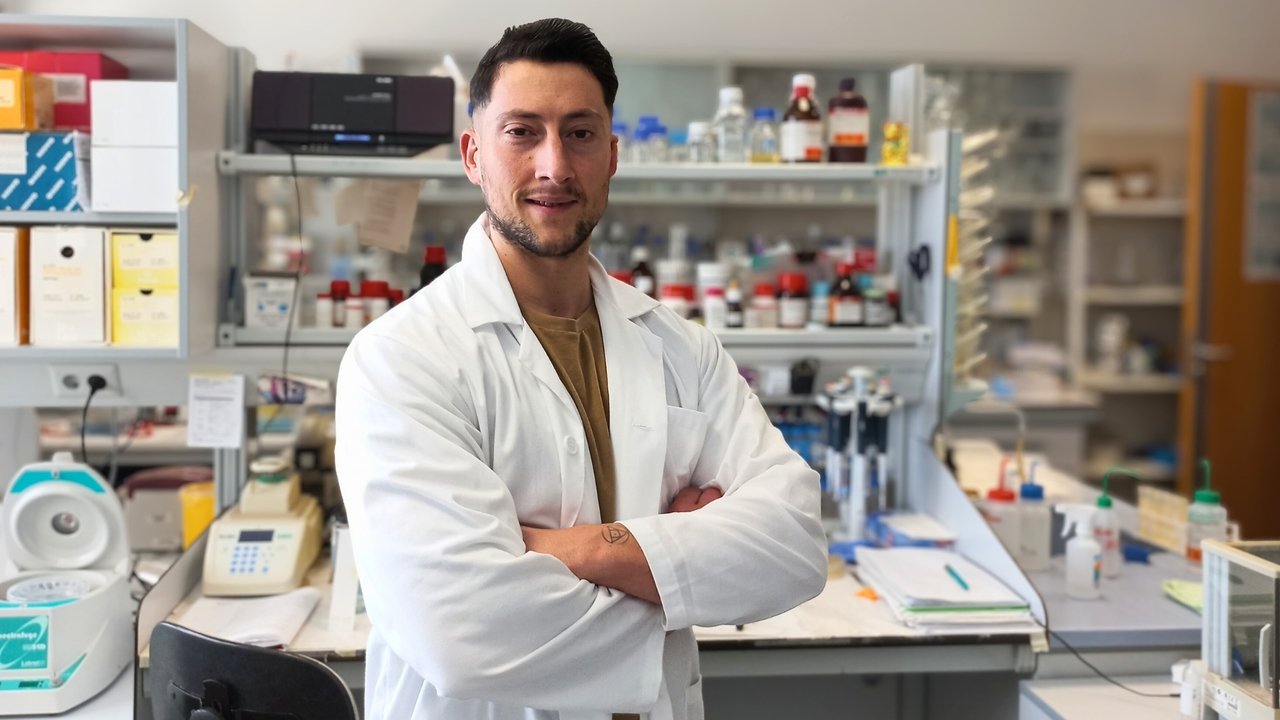
It is not science fiction, but the reality that is being born in the laboratories of the University of Castilla-La Mancha (UCLM) and the spin-off Nanolife. There, the doctor in Chemistry Enrique Nice and his team have developed smart hybrid bio-nanomaterials, which promise to retire conventional synthetic pesticides, offering an alternative that is, in their own words, “as effective as a chemical pesticide, but totally environmentally friendly.”
Nice has been working for seven years on a real alternative to conventional phytosanitary products to respond to the European Green Deal, which requires withdraw a good part of crop protection products before 2030 that today support agricultural production.
It should be noted that, in cereals, fungal diseases can cause losses of up to 60% of yield if they are not controlled in time. Furthermore, the continued use of these phytosanitary products has generated resistance in pests, contaminated soils and aquifers and infected wild species.
“A lot of product has been applied and in an imprecise manner,” summarizes the researcher, who warns of studies on red partridge, whose reproductive capacity has been reduced by consuming grains treated with triazoles. The damage, therefore, does not remain within the plot. And, given this scenario, nanotechnology appears as a promising tool to continue producing without breaking the balance of the field.
There are millions of “nano fists”
To explain what nanotechnology brings to the farmer, Niza uses a simple metaphor. «A fist exerts the force of a punch. But if you shrink that fist down to the nanometer scale, where one could fit before, now hundreds of millions of ”nano fists” fit. “The contact surface is greater and so is the efficiency.” Translated into the language of the countryside: with less dose, more effect is achieved.
These nanomaterials (structures 10 million smaller than one meter) act as “smart containers”, made from biological materials. Inside they encapsulate natural volatile organic compounds (VOCs).which plants themselves produce to defend themselves – such as terpenes, flavonoids or polyphenols – but which under normal conditions degrade quickly with the sun, wind or rain. Through green chemistry, these compounds are protected and fixed within the nanomaterials.
But what differentiates these systems is their intelligence. They do not release the load all at once, but in a gradual and controlled manner based on changes in the environment, such as a fungal infection. According to Nice, this allows for a drastic dose reduction and a much more targeted effect. «Precision agriculture exists. Well, this is ultra-precision agriculture,” emphasizes the researcher. And being of organic origin and biodegradable, they guarantee the safety of non-target organisms, such as bees.
Despite the scientific brilliance, the path to market is a financial and regulatory obstacle course. Registering a plant protection product in the European Union is a demanding processwhich can cost between 6 and 7 million euros, compared to the less than 100,000 euros that a biostimulant costs.
However, the university’s alliance with Nanolife is allowing these types of solutions to scale. In fact, Nice reveals an ambitious objective: if the trials and procedures continue their course, In 2028, the first nanotechnology product registered in Europe could hit the market born from a public university. It would be a milestone for Spanish research and an example of public-private collaboration aimed at solving real problems in the field.
Furthermore, nanotechnology is already being adapted to specific crops and very localized diseases. One of the open fronts is botrytis, a fungus that is especially aggressive in vineyards like those of Almansa. The objective is to protect the grapes without leaving chemical residue and without penalizing the final quality of the wine. “We are making nature itself work for us,” summarizes Niza.
In a country that is often behind in R&D investment, this advance positions Castilla-La Mancha at the technological forefront. The message from Nice is clear: to ensure the safety of the farm-to-fork food chain, it is vital that companies invest in high technology and in the talent of universities.