
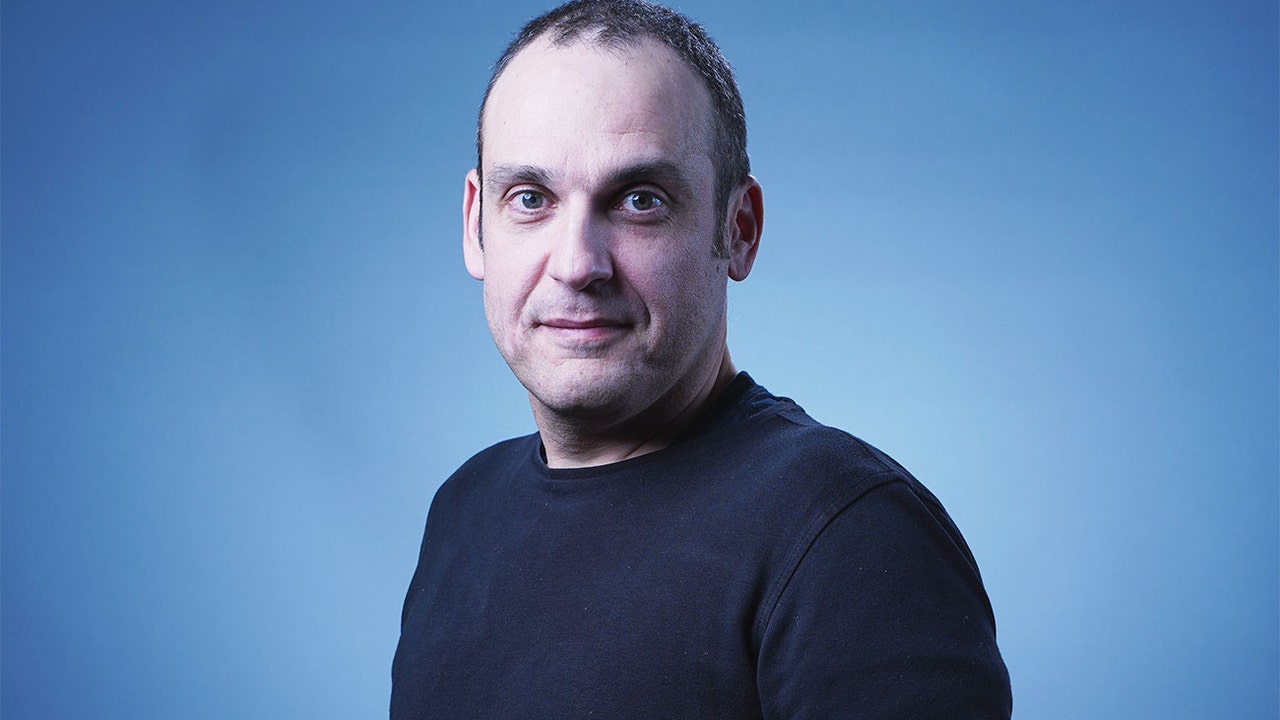
We shared a moment of chat with Michele Caletti, Development and Creative Director at Milestone and one of the names that is on the team that will bring us the return of ‘Screamer‘. With a career closely linked to driving, since ‘MotoGP‘ to ‘Hot Wheels Unleashed‘, now leads an arcade-spirited production loaded with large doses of history and personality.
The world of ‘Screamer’ is set in a near future with dystopian overtones. In that period there were the so-called Screamer tournaments, Extremely dangerous and totally illegal street racing. The game follows a tournament organized by someone known as Mr. A(played by Troy Baker). To give context, in this new installment you play with the five competing teams, with a total of fifteen characters.
A long wait
Now it returns more than 30 years later, and with the collaboration of the prestigious Japanese studio Polygon Pictures (known for Transformers Prime and Ajin), who have created over 30 minutes of cutscenes with a cyberpunk anime aesthetic. The designs of the vehicles have been made by the studio Plumeheadseeking to reflect the unique personality of each runner to return to the market. To do so, the developer has decided to maintain its irreverent, particular and unique soul, the same one that made it famous at the time of its release, but presenting it with a new skin.
“We want to offer a purer experience, closer to the feeling of arcades. We only ask that you play and have a good time. When players enter Screamer, they will get to know the world, the characters and also their game mechanics.”
How have you approached the arcade spirit of ‘Screamer’ so that it works today?
“We have not stopped at making an ‘old-fashioned’ arcade, we have updated it by incorporating combat mechanics inspired by fighting games. That has been our main reference, also because the characters have a crucial role in both the narrative and the gameplay.” As he tells it, he suggests that the narrative part has been something tremendously stimulating for the team. “It is not enough to have a format with solid gameplay and visuals with an identity. Today, to keep the player interested and get them truly involved, something more is needed, a narrative thread.”
Did you want to get away from the usual clichés of a racing game?
“The characters in Screamer are there for deeper reasons than winning or losing a tournament, such as revenge, revenge or the need for affirmation. There are several plots that will be discovered, crossed and resolved as the story progresses. It will be one of the reasons to keep going, to see what is happening and what will happen later. We are convinced that there will be surprises for all players.”
You talk about loops. Where does that idea come from and how does it fit into the game’s approach?
“When looking for a theme for Screamer, I was really interested in an idea. In racing games you usually go around a circuit, repeating loops. It seemed like a good opportunity to talk about the different ‘loops’ that people, as human beings, can get trapped in. That’s why I find it very interesting that we’re bringing such a deep narrative to this game, because it’s not something you usually find in racing titles, especially those in the arcade genre.”
Of course, the new Screamer tournament is the biggest ever held?
“Yes. That has involved a large international cast, because we believe that the story will gain credibility by choosing people who speak their native language and who come from those regions. The narrative justification is that, as it takes place in the near future, there is a technology called Universal Translator, implanted in the skull, which allows each person to speak in their language and it is immediately translated for the rest.”
Visually, echoes of the nineties are perceived, but with a very modern finish. What exactly were you looking for with the graphic style and what has been the biggest challenge so that nothing clashes?
“We like nice animation and that’s exactly what we were looking for. We tried c“We combined the atmosphere of the 90s with modern elements and we aimed for an animation style that mixed traditional Japanese drawing techniques with 2D and 3D CG.”
Does Screamer propose an arcade based on the characters?
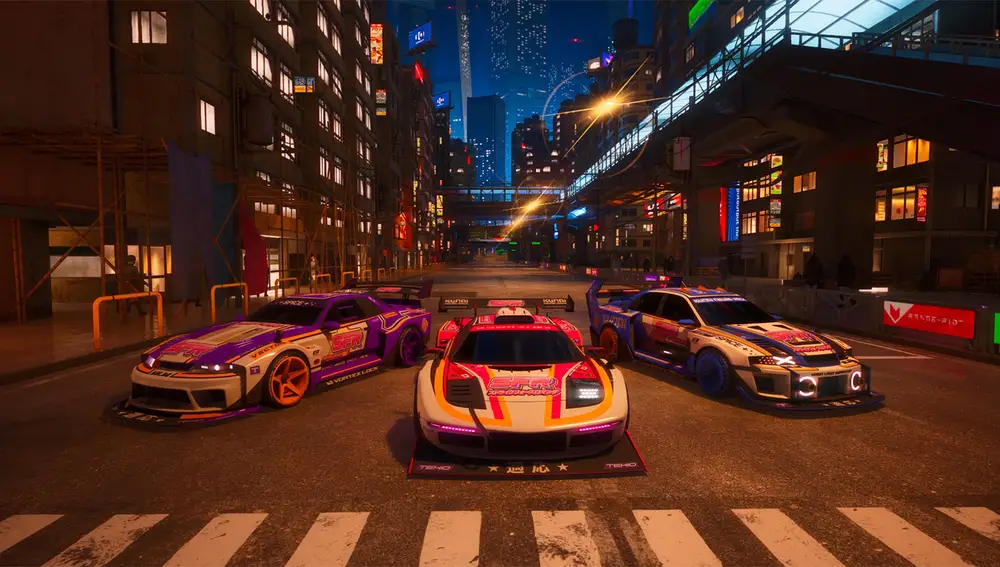
“Yes. We defined their aesthetics based on the narrative and from there, we created their vehicles, which had to represent who each character is and their story within the game. We have a team whose cars are a patchwork of parts from other vehicles, assembled precisely to compete. There is also another with a marked inspiration from space travel. Their vehicles include ship elements, as well as aerospace prototypes. So, each team and vehicle communicates its character, aesthetics and part of the history of each character.”
Are the settings in which the game takes place also closely linked to the story?
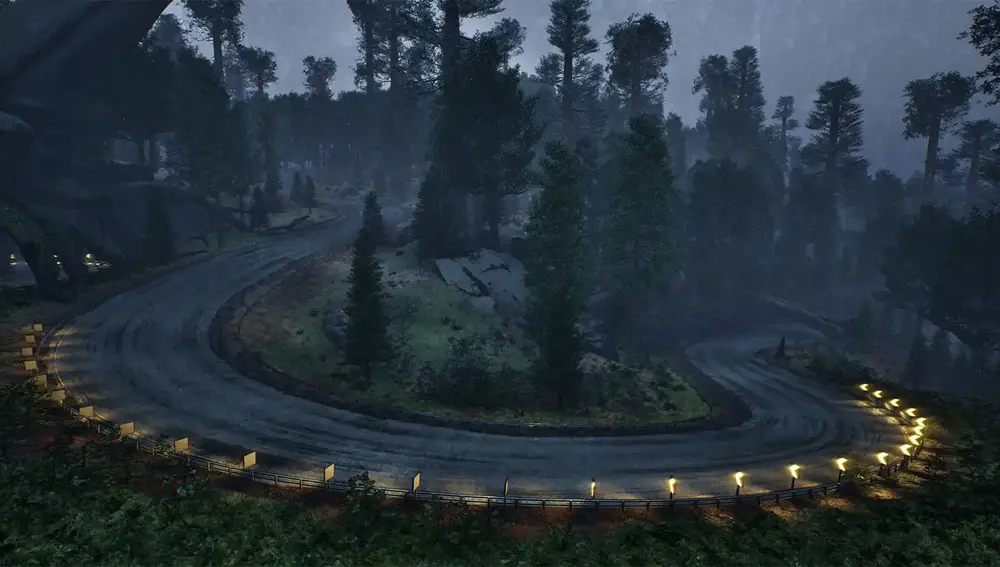
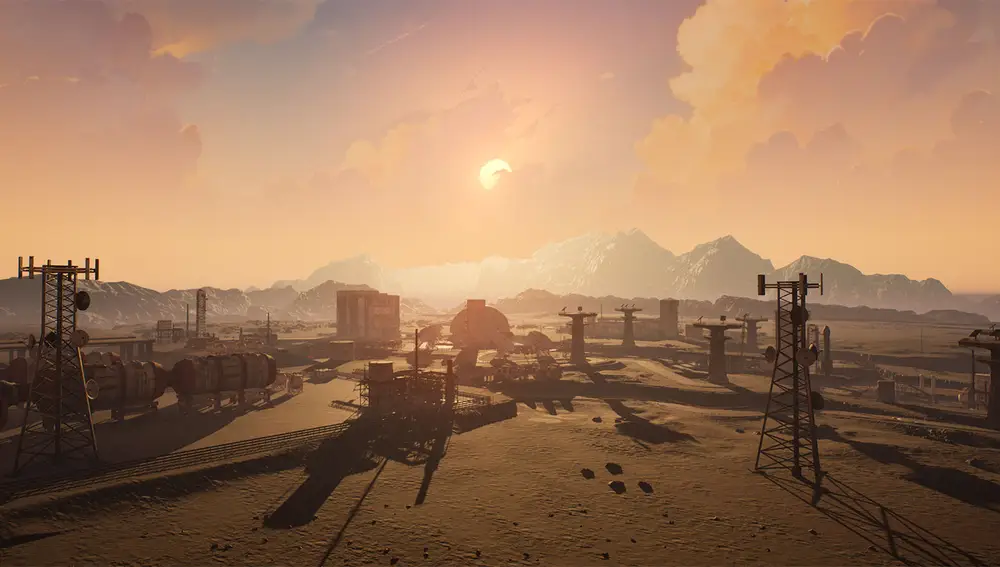
“One of them is the city, a clear reference to ‘Akira‘, a huge megalopolis and there are also other quite particular environments. For example, we run in a desert, but it is not a 100% natural environment and there is always a human presence that, in some way, transports the space towards a narrative integrated into the setting itself.” He explains that “the games that I remember have the power to surprise and disorient with the story and the gameplay. A friend once told me that everyone tells a story of loss, for example, a survivor who loses his daughter, a plumber who loses a princess. A good story tries to answer why that loss is important and how you go from there. Our story is about that, about returning.”
You talk about “breaking the limits” of arcade racing from the ground up. What led you to rethink the driving system?
“We have tried several ways and reviewed all the design rules of an arcade racer and started again from the design of the driving system itself,” he explains. “Normally, in a racing game you use one stick to steer and with the brake you execute the skid. We said it could work differently, maybe there is another method. We call that method twin stick. With one stick you control the direction, and with the other you control the skid, and both can be combined to have full control of the vehicle.” He goes on to detail that “when we managed to give the player complete control of the car’s actions, we asked ourselves: ‘Well, what other abilities can we give him?’ And from there were born the systems that are part of Screamer, boost, strike, overdrive… functionalities that would not be possible, at this level of control, without the existence of the twin stick.”
In addition to twin stick control, do the characters have their own abilities that change the way they run and fight?
“Of course, taking inspiration from fighting games, we said to ourselves, We have characters and cars, but like in fighting games, these characters need an extra gear. And that extra gear is each one’s own abilities, which drastically change how you approach all these mechanics,” as he explains to us. For him, everything converges very naturally because “we have a shared, unique and particular vision.”
Something you are very proud of at Milestone is that the gameplay mechanics are connected to the plot. None of your actions will be “just because,” and nothing in history will be disconnected from your actions.
“There is a powerful interconnection that makes it really unique,” he says. “At first they were little more than a name and a profile. That had to become characters with structure, history and a life of their own. And we have achieved that, even collaborating with people outside Milestone, like Plumhead, who helped us develop the vehicles. We gave them references and inspirations, and they created cars that don’t exist, but could fit in the real world. Some are a little crazy, but they could be real vehicles.” Before saying goodbye, Caletti reaffirms that “seeing the world of Screamer born before my eyes has been an incredible professional experience and was almost magical. I think all of that will be noticeable to the players when they try it.”